



Bespoke Table Size Guide for Your Home
A dining table can look perfectly proportioned in a showroom, then feel surprisingly large once it is surrounded by chairs, children’s bags and the gentle bustle of everyday life. This bespoke table size guide starts with the space around the table, not simply the table itself. When a piece is made to order, you have the chance to create something that sits naturally in your home and becomes part of the way your family lives.
A well-sized solid wood table should give everyone a comfortable place to eat, work, celebrate and linger. It should also leave enough room to pull out a chair without asking someone else to shuffle sideways. That balance is what turns a beautiful table into a useful one for years to come.
Start with the room, not the number of seats
Before choosing a length or shape, measure the clear floor area where the table will stand. Measure between walls, radiators, sideboards, doors and any furniture that needs to remain accessible. Then consider what happens when the chairs are occupied, not just tucked neatly underneath.
As a practical rule, allow at least 90cm between the edge of the table and a wall or other furniture. This gives enough room for a chair to be drawn back and for someone to pass behind. If the dining area is also a busy route to the kitchen, garden or hallway, 100cm to 120cm will feel more generous.
In smaller rooms, 75cm can work where the table is against a wall and only used from three sides. It is a compromise, however, and one worth making only if your household is happy with a cosier arrangement. A bespoke table allows you to gain valuable breathing room by adjusting both length and width by a few centimetres, rather than settling for an off-the-shelf size that is nearly right.
How much room does each diner need?
For relaxed dining, allow around 60cm of table edge per person. This gives each place setting enough elbow room without the table feeling overly spread out. If you enjoy generous serving dishes, large charger plates or long Sunday lunches, 65cm to 70cm per person feels especially comfortable.
A 120cm table will usually seat four, while a 150cm table can seat six when used efficiently. For six adults to dine comfortably every day, 180cm is often the sweet spot. At 220cm to 240cm, a rectangular table generally seats eight with ease, depending on the width of the chairs and whether people are seated at the ends.
These figures are useful starting points rather than fixed rules. A family with young children may be happy sitting closer together. A household that regularly hosts friends, or uses wider upholstered dining chairs, will benefit from more space. It is also worth thinking about the future: the table that suits a couple now may later become the setting for birthdays, homework and holiday gatherings.
Typical rectangular dining table sizes
| Table size | Comfortable everyday seating | Occasional maximum seating |
| --- | --- | --- |
| 120cm x 80cm | 4 | 4 |
| 150cm x 90cm | 4 to 6 | 6 |
| 180cm x 90cm | 6 | 8 |
| 200cm x 100cm | 6 to 8 | 8 |
| 240cm x 100cm | 8 | 10 |
| 300cm x 100cm | 10 | 12 |
The width matters as much as the length. An 80cm-wide table works well for everyday meals in a tighter space, but may feel limited if you like to place serving bowls in the centre. A width of 90cm to 100cm offers more room for shared food, candles and flowers while still allowing easy conversation across the table. Beyond 110cm, a table becomes a true statement piece, though reaching the centre can become less practical for daily use.
Choosing the right shape for your space
The best bespoke table size is often determined by the shape of the room. Rectangular tables make excellent use of longer dining rooms and open-plan kitchens. They are straightforward to extend in length, suit benches particularly well and create a natural focal point beneath a pendant light.
A square table brings a more intimate feel, as every guest is close enough for easy conversation. A 120cm x 120cm square will usually seat four generously, while 140cm x 140cm can work for eight in the right room. Their footprint is substantial, though, so they need a near-square space and plenty of clearance on all sides.
Round tables are wonderfully sociable and soften rooms with fewer hard lines. As a guide, a 120cm diameter table seats four, 150cm seats six, and 180cm can seat eight. They are particularly useful where people need to move around the table, as there are no corners to navigate. The trade-off is that a large round top can occupy more floor area than expected, and centre pedestal bases are usually the most comfortable option for legroom.
For awkward spaces, a made-to-measure oval or softened-rectangle top can be an elegant answer. It retains much of the seating capacity of a rectangular table while making circulation easier in a narrower room.
Do not forget chairs, benches and table bases
The dining chairs you love should be part of the measurement from the beginning. Measure their overall width, depth and height, including arms if they have them. Armchairs often need more room than standard side chairs, and their arms must clear the underside of the table.
Most dining tables sit at around 75cm high. Allow roughly 25cm to 30cm between the top of the seat pad and the underside of the table for comfortable legroom. If you are pairing chairs with a substantial solid oak top, check the apron or supporting frame too. Beautiful joinery should never come at the cost of knees meeting timber.
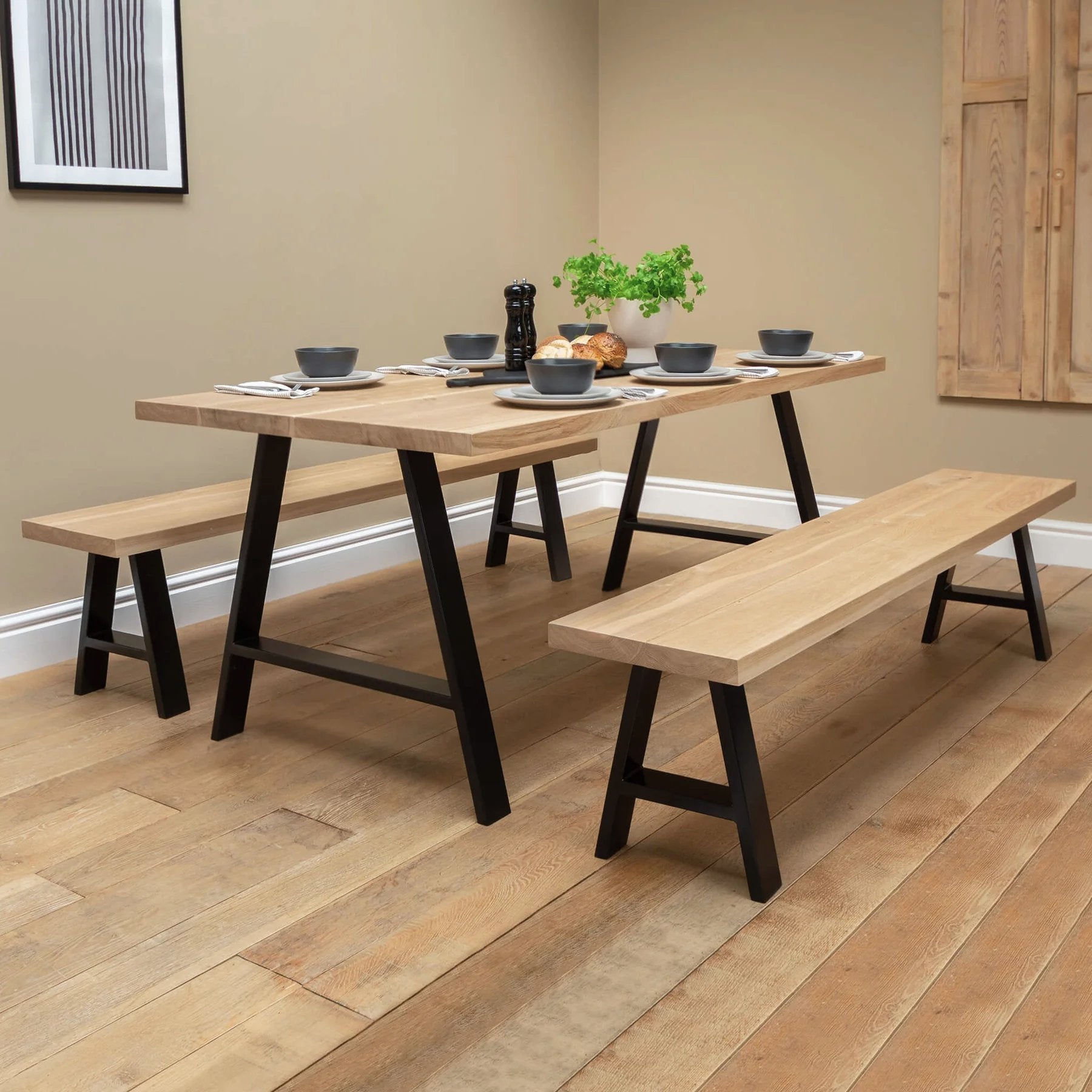
Benches can make a table feel welcoming and relaxed, especially in a farmhouse or industrial-style kitchen. They also tuck neatly beneath the top when not in use. A bench should generally be 25cm to 30cm shorter than the table so it sits comfortably between the legs or frame. Remember that a bench still needs clearance behind it when someone is seated, and it is often best suited to family dining rather than a formal dinner where guests may want individual chairs.
Base design affects capacity. Four corner legs are timeless and strong, but they can limit where diners sit near each corner. A central pedestal gives greater freedom around a round table. Metal U-shaped or trapezium legs create a distinctive industrial look and leave the ends clear, while their position needs careful consideration so chairs can slide in naturally. This is one of the real advantages of speaking to makers before a table is built.
Plan for daily life and the occasions that matter
It is tempting to choose the largest table the room will physically hold. Yet a dining table needs to work on an ordinary Tuesday as well as at Christmas. If it dominates the room, restricts a door or makes chairs difficult to move, it can become less enjoyable over time.
Think honestly about how often you host. If you entertain six people every weekend, size for six. If you usually eat as a family of four but host a larger gathering a few times a year, an extending design may be more appropriate. Alternatively, a 180cm table with occasional end seating can offer a useful middle ground without overwhelming the room.
A simple way to test your choice is to mark out the proposed table footprint on the floor with masking tape or newspaper. Add the chair positions and walk around them as you normally would. Open nearby cupboards, imagine someone carrying plates from the kitchen, and see whether the route still feels easy. It is a small exercise that can prevent an expensive mistake.
A bespoke table size guide for confident decisions
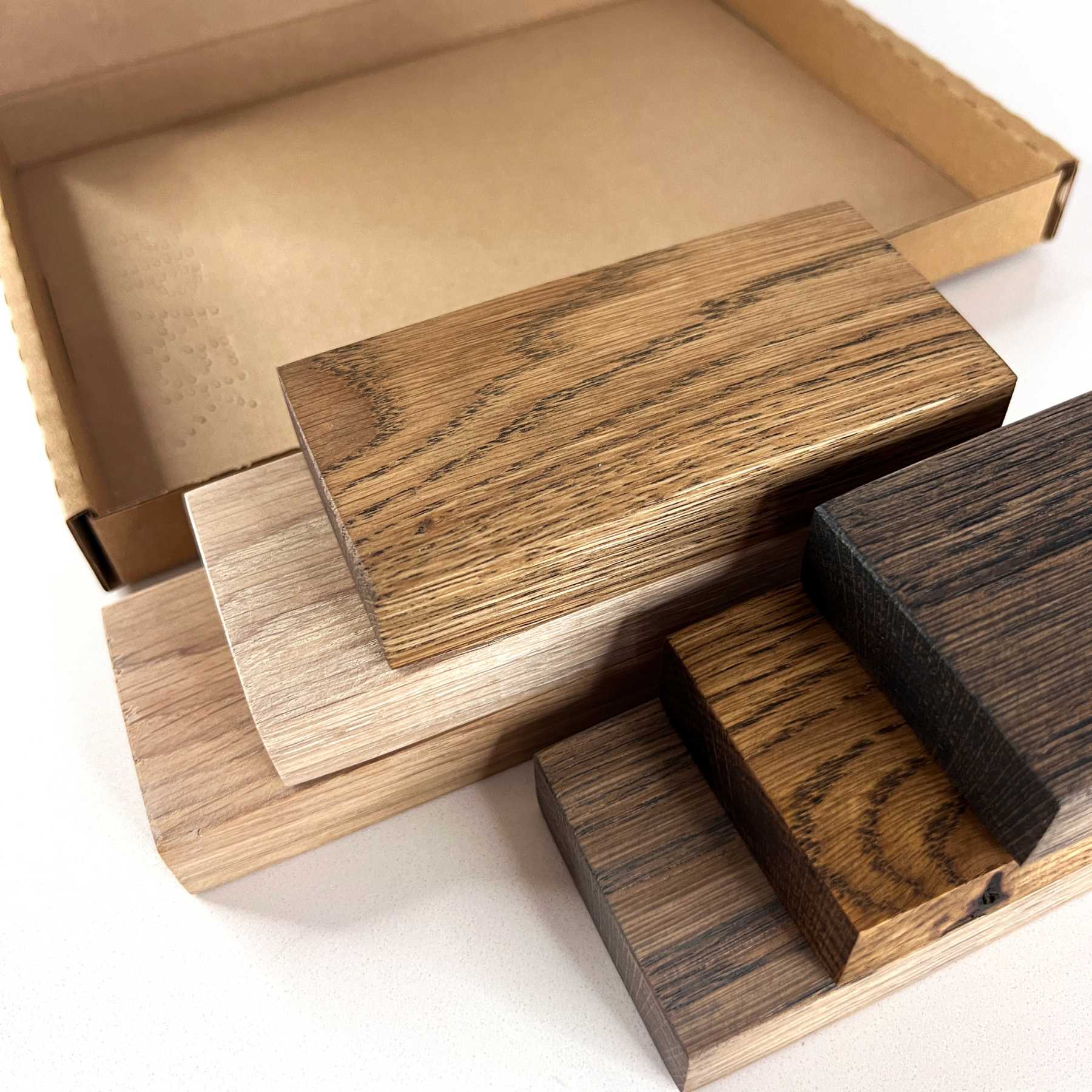
When choosing a made-to-order table, bring your room measurements, chair dimensions and a clear sense of how many people you seat most often. Photos of the room can be helpful too, particularly where there are alcoves, radiators, uneven walls or a busy open-plan layout. Material samples will help you judge how oak tone, grain and finish will sit alongside your flooring and cabinetry, but proportion should come first.
At Willen Rose, each table is lovingly made in Derbyshire with the understanding that furniture has to earn its place in a home. A few thoughtful centimetres can make the difference between a table that merely fits and one that feels as though it has always belonged there.
Choose the size that leaves room for chairs to move, food to be shared and people to stay a little longer. That is where the best family memories tend to begin.