



Can Oak Furniture Be Customised for Your Home?
A dining table that is 15cm too long can change the way a room works. Chairs catch on a radiator, guests cannot move comfortably, and a beautiful piece becomes a daily compromise. So, can oak furniture be customised? Absolutely. Solid oak is one of the finest materials for made-to-order furniture because it can be shaped around the way you live, rather than asking your home to fit a standard size.
Customisation is about far more than choosing a different length. It can mean adjusting proportions for an awkward alcove, selecting a top thickness that feels right for the room, choosing a base with enough legroom, or matching a finish to existing flooring. Done properly, it gives you a piece of furniture that looks considered from every angle and earns its place in family life for years to come.
What can be customised on oak furniture?
The possibilities depend on the item, its construction and the character of the timber, but solid oak gives a skilled maker considerable scope. Dining tables are often the most flexible starting point. Length, width and height can all be tailored, along with the shape of the top, the edge profile and the style or position of the legs.
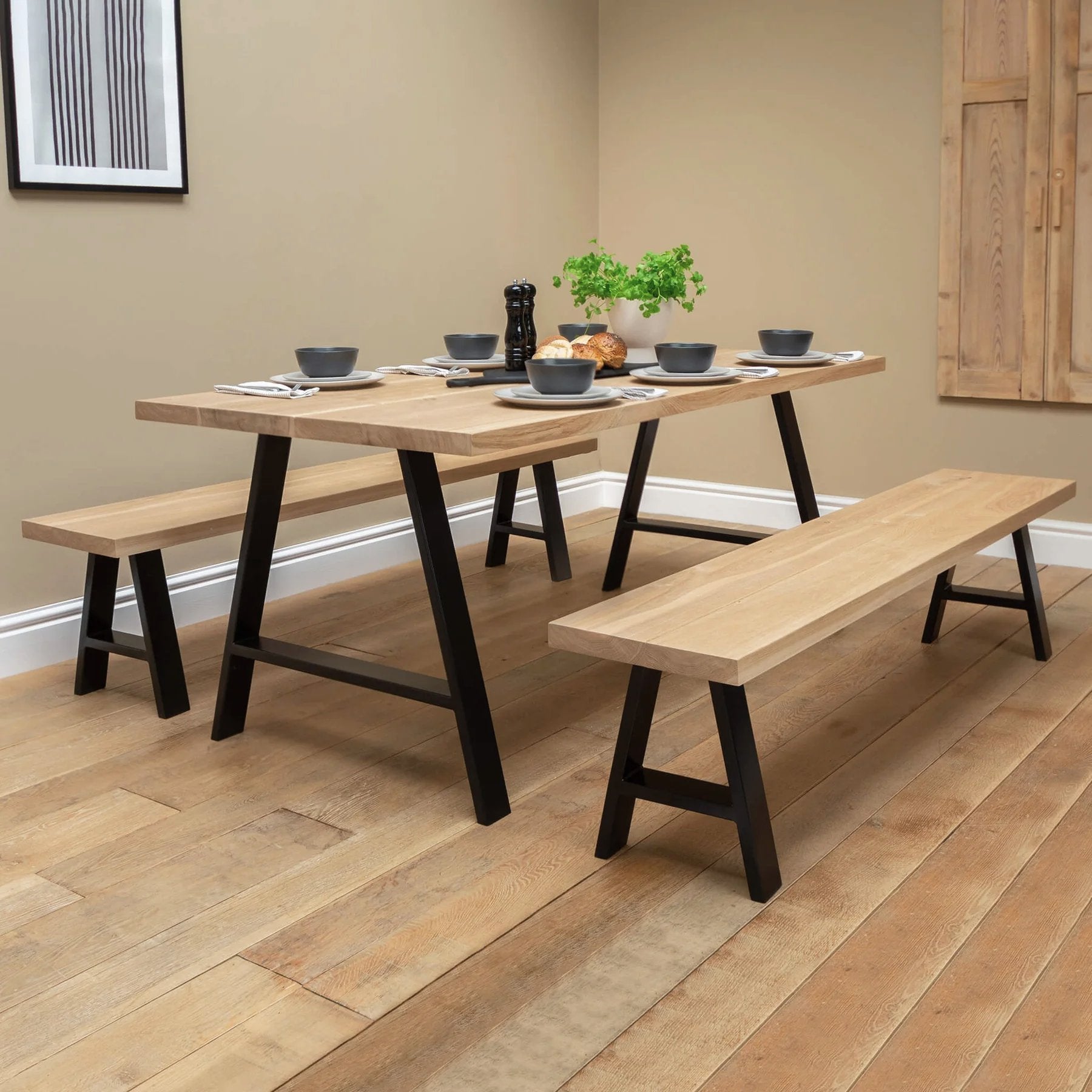
A large open-plan kitchen may suit a broad rectangular table with a substantial oak top and an industrial metal frame. In a narrower dining room, a slightly slimmer top or a pedestal base can create more room for chairs and knees. Round and oval tops can be particularly useful where people need to circulate freely, while a softened corner can make a busy family space feel more forgiving.
Beds, benches, coffee tables and storage furniture can also be made to suit a particular room. A bed frame may be designed around the mattress size you already own, with the headboard height adjusted to sit beneath a window or make a feature of a tall wall. A bench can be made to tuck neatly beneath a dining table. A sideboard may be planned to fit a wall precisely, with the balance of drawers, cupboards and shelves arranged around what you need to store.
Dimensions that work in real rooms
Measurements are where bespoke oak furniture proves its worth. Before settling on a size, think beyond the footprint of the piece itself. A dining table needs space for chairs to pull back, as well as a clear route around it. A coffee table should allow enough room to move between sofa and table without constantly brushing your shins.
For dining, allow roughly 60cm of table edge per person as a useful guide, although generous elbow room is always welcome. Consider who sits where, whether you regularly host, and whether a high chair will be part of the picture. A table that seats six every day but can comfortably welcome eight at Christmas may be a better answer than buying the largest size the room can technically hold.
It is also worth checking doorways, staircases and tight turns. Made-to-order furniture can sometimes be designed in sections or with removable legs where access is restricted, but this needs to be considered at the planning stage rather than on delivery day.
Style, shape and construction
Custom furniture should feel connected to the rest of your home, not simply different for the sake of it. Oak has a natural warmth that works beautifully with rustic, farmhouse and contemporary interiors, but the details shape the final character.
A clean, square edge and simple timber legs can feel calm and modern. A gently bevelled edge softens the look and feels comfortable under the hand. A live edge celebrates the natural line of the tree, with knots and undulations that make every top individual. Metal bases bring an industrial note, while a traditional wooden pedestal or turned leg creates a more classic feel.
The same applies to storage. Handle choices, door styles, shelf layouts and leg profiles all influence how a cabinet sits within a room. A bespoke piece does not have to be elaborate. Often, the most successful design is one with restrained details, honest materials and proportions that simply look right.
Can oak furniture be customised without losing its character?
Yes, provided the design respects the material. Oak is not an inert sheet material made to identical factory dimensions. It is a living, natural timber that carries grain variation, medullary rays, knots and changes in tone. Those marks are not faults to be removed at all costs. They are part of what makes solid wood furniture feel warm, enduring and genuinely yours.
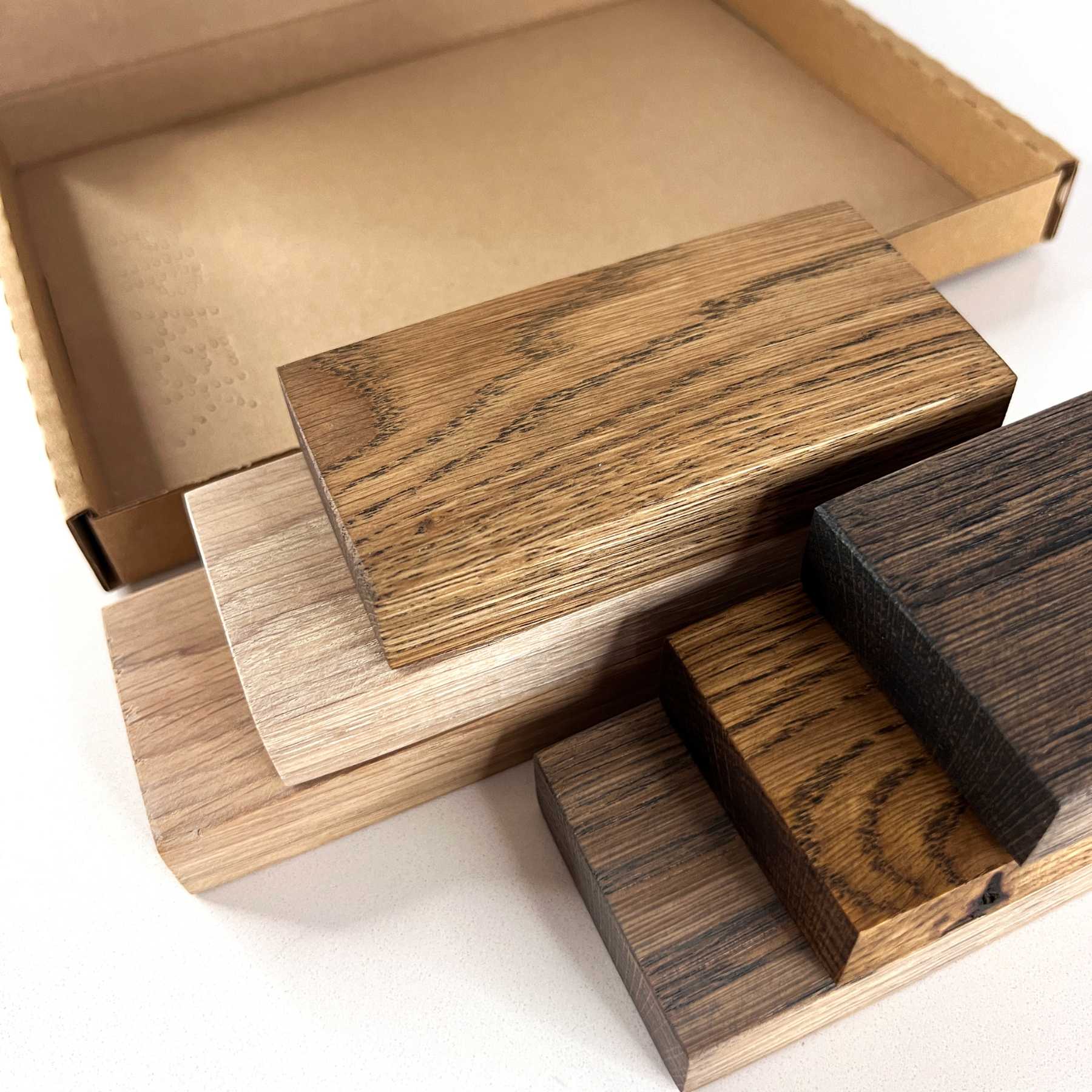
No two oak boards are the same, so an exact match to a photograph cannot be promised. A sample pack is useful because it lets you see the finish in your own light, against your paint, flooring and fabrics. Even then, the finished piece will have its own grain pattern and colour variation. That individuality is one of the pleasures of choosing real oak.
Timber also responds to its surroundings. Changes in humidity can cause oak to expand and contract slightly through the seasons. Experienced furniture makers allow for this movement in the joinery and fixing methods, particularly on wide table tops. This is why bespoke should mean properly engineered, not merely cut to a requested size.
Avoid placing solid oak furniture directly beside a radiator or in persistent strong sunlight where possible. A stable home environment helps the timber mature gracefully. With sensible care, small signs of use become part of its story rather than a reason to replace it.
Choosing the right oak finish
The finish has a practical job as well as an aesthetic one. It affects how pale or rich the oak appears, how visible the grain is, and how the surface copes with everyday spills, sticky fingers and busy meals.
A clear or lightly toned finish keeps the natural character of the timber at the forefront. Warmer finishes can complement older homes, darker floors or more traditional schemes. A paler finish may suit a light-filled kitchen or a quieter, Scandinavian-inspired room. There is no universally right choice: the surrounding light matters as much as the shade itself.
Ask how a finish will wear and how it should be maintained. Some finishes allow local repair more easily than others; some offer stronger resistance to spills but may alter the feel of the grain. A dining table used for homework, family suppers and weekend entertaining needs a finish chosen for real life, not only for the first photograph.
A good bespoke brief starts with how you live
The most helpful customisation conversations begin with everyday habits. Do you need to seat two adults and three children most nights? Is your kitchen table also your work-from-home desk? Do you prefer dining chairs, a bench, or a mixture of both? Is the piece intended to be a quiet backdrop or the focal point of the room?
Photos, a simple floor plan and a few measurements give a maker a strong starting point. It helps to include ceiling height, nearby doors, radiators and windows, plus anything that must remain accessible. If you have samples of flooring, paint or upholstery, bring those into the decision too.
Be honest about your priorities. A very wide table may be ideal for serving platters, but it can dominate a compact room. A live edge can be wonderfully tactile, but it uses a little more visual and physical space than a crisp straight edge. Metal legs can look striking, yet their placement must allow chairs to slide in comfortably. Good design is usually a thoughtful balance, not a collection of every possible feature.
Questions worth asking before you order
Ask whether the quoted measurements include the top overhang, and where the legs or base will sit in relation to diners. Confirm the final height if you are pairing the table with existing chairs. For larger pieces, ask how delivery access will be assessed and whether assembly is included.
It is sensible to ask about lead times too. Handcrafted oak furniture is made with care, and the process includes selecting timber, preparing it, building the piece, finishing it and allowing that finish to cure. Waiting a little longer for a table made for your home is very different from waiting for a generic item that may still require compromise.
At Willen Rose, bespoke furniture is lovingly made in Derbyshire with these practical details in mind, from the timber and finish through to the dimensions that make daily living easier.
When customisation may not be the best answer
Bespoke is not always necessary. If a standard size suits your room, budget and style perfectly, it may be the simplest route. Custom work usually costs more because it requires individual planning, skilled workshop time and materials selected for a particular piece. It can also take longer than an off-the-shelf alternative.
But where a room has unusual proportions, where a table will become the centre of family life, or where you have struggled to find the right balance of size and style, customisation can be the more economical long-term choice. A well-made oak piece does not need replacing when your home begins to feel more settled. It becomes part of it.
The best oak furniture does not shout for attention every day. It simply fits: beneath your hands at breakfast, around the people you love at supper, and quietly at the heart of a home made for living.