



Choosing the Right Rustic Oak Bench

A rustic oak bench earns its place in a home very quickly. It is where children perch before supper, where guests gather when the table is full, and where everyday life leaves its small marks over time. Done well, it is not just extra seating. It becomes part of the rhythm of the room.
Why a rustic oak bench works so well
There is a reason oak has remained a favourite in British homes for generations. It has weight, character and a natural grain that softens a room even when the design is clean and simple. In a bench, those qualities matter even more because the piece is often used hard. It gets pulled in and out, moved from room to room and asked to handle everything from family meals to muddy boots in the hallway.
Rustic oak brings another layer of warmth. Knots, grain variation and gentle saw marks give the timber a lived-in feel from the outset, so the bench does not look precious or overly polished. That makes it especially well suited to real homes where furniture needs to be practical without feeling plain.
A bench also changes how a room behaves. Around a dining table, it creates a more relaxed setting than individual chairs. In an entrance hall, it gives you a useful landing spot without taking over the space. At the foot of a bed, it adds texture and purpose in a way that feels considered rather than decorative for decoration's sake.
Rustic oak bench styles for different homes
Not every rustic oak bench suits every interior, and this is where the detail matters. Some people picture a farmhouse piece with thick legs, a generous top and plenty of visible timber character. Others want something quieter - still rustic, but with straighter lines and a more refined silhouette.
If your home leans traditional, a bench with solid square legs and a chunky seat often feels right. It has presence and a sense of permanence. In kitchens and dining rooms with flagstone floors, painted cabinetry or exposed beams, that fuller style tends to sit naturally.
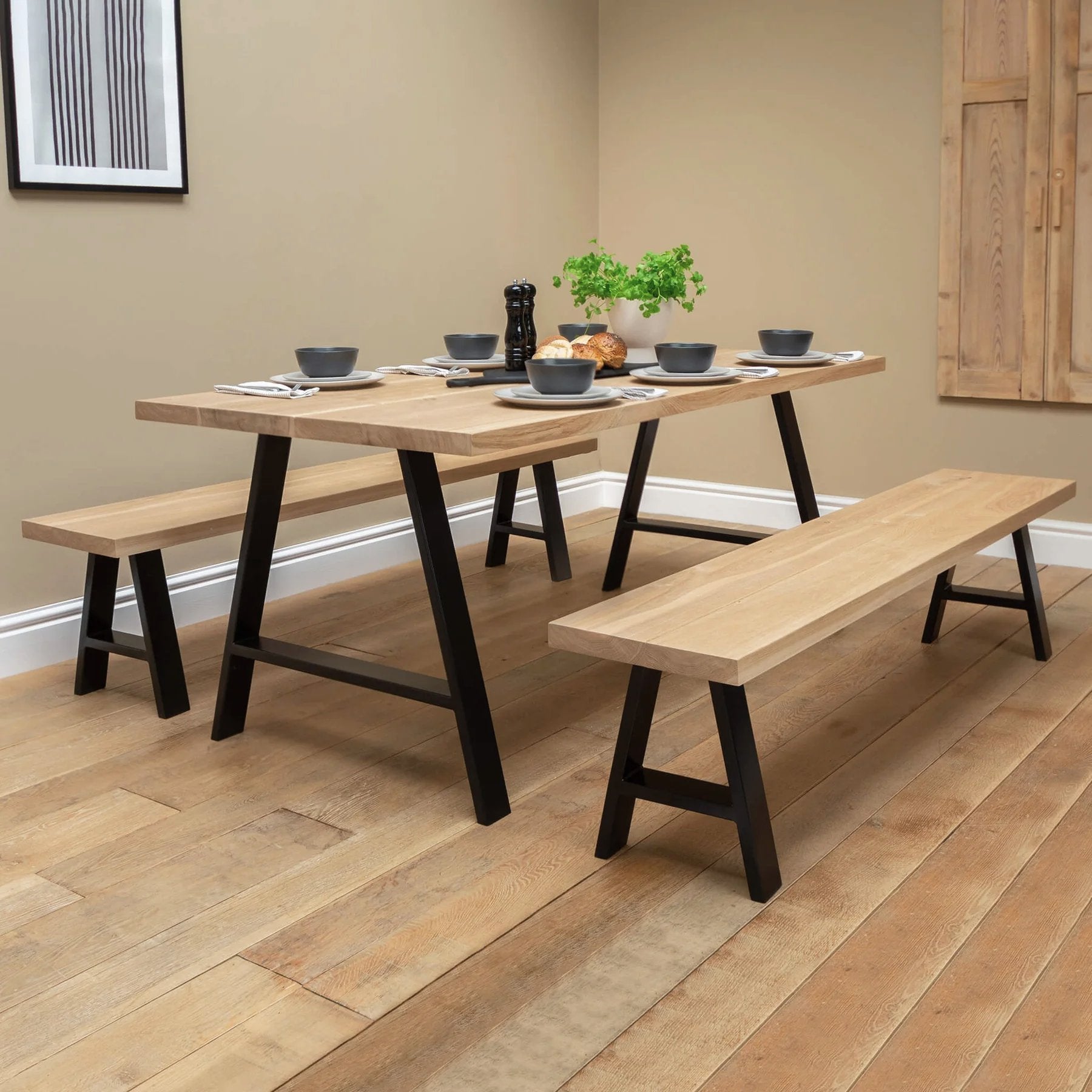
For more contemporary spaces, the same oak top can be paired with finer proportions or metal legs for an industrial edge. This keeps the warmth of the wood while giving the overall piece a lighter, more architectural feel. It is a good choice if you want the bench to connect with modern lighting, steel-framed doors or cleaner-lined dining furniture.
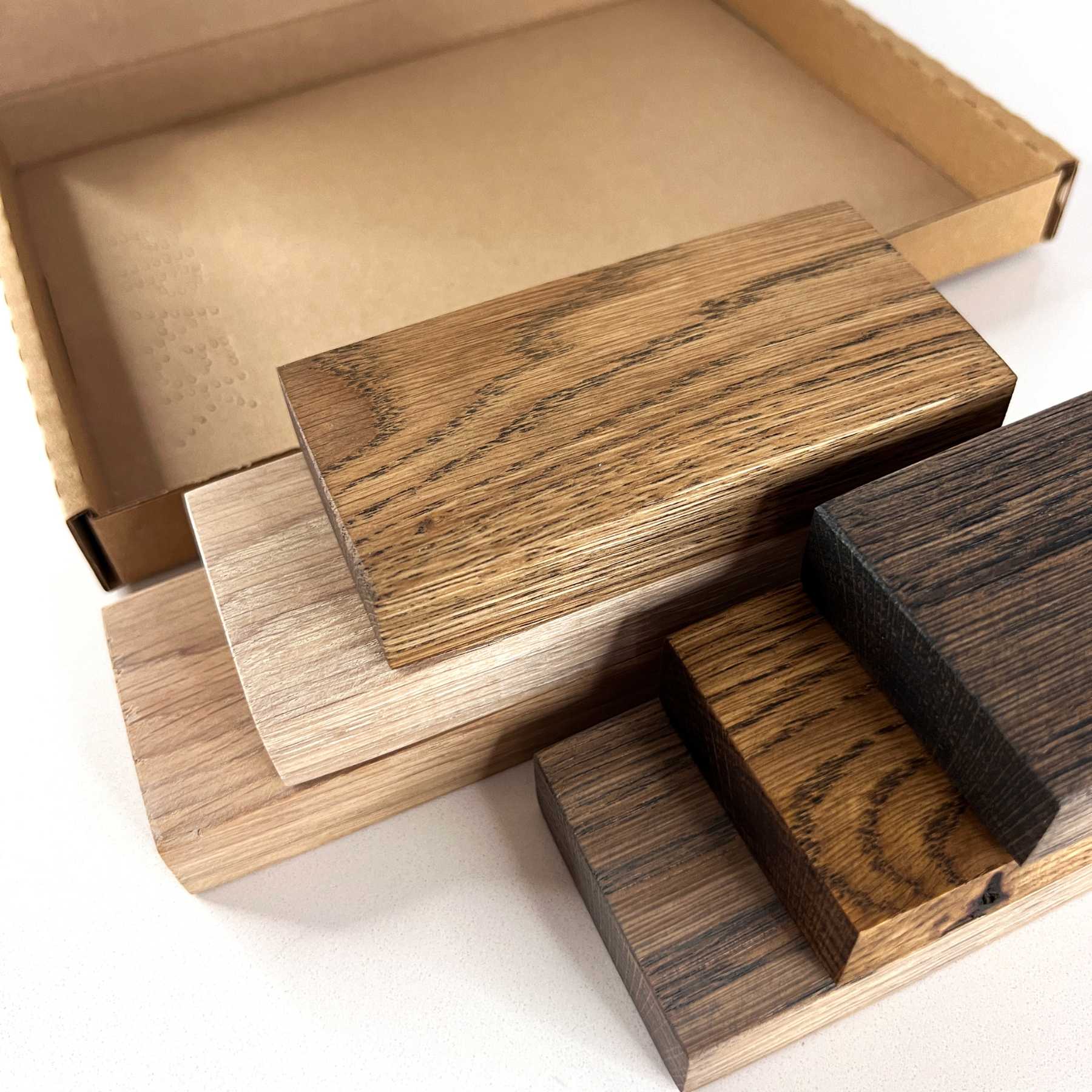
The finish matters as much as the shape. A lighter finish keeps oak looking fresh and relaxed, which suits airy family spaces. A deeper tone adds richness and can work beautifully in older properties or rooms with darker flooring. Neither is better in every case. It depends on the mood you want and how much contrast already exists in the room.
Getting the size right
The biggest mistake people make with a bench is treating it as an afterthought. Size affects comfort, movement and how balanced the room feels.
For dining use, the width should sit comfortably with the table rather than match it exactly edge to edge. A bench that is slightly shorter usually looks better and is easier to tuck in neatly. It also avoids corners jutting out into walkways. Height is equally important. Too low, and sitting for any length of time feels awkward. Too high, and the bench will knock against the underside of the table apron.
This is where made-to-order furniture makes a real difference. Homes are rarely standard, and neither are tables. If you have a narrower room, an alcove to work around or a table with a particular overhang, bespoke sizing saves a lot of compromise. A well-made bench should fit your space properly, not ask the room to adapt to it.
Depth deserves a moment too. In a hallway, a slimmer bench can be more practical because it leaves enough room to pass by comfortably. In a dining setting, a little more depth can improve comfort, especially if the bench is used regularly rather than just for occasional guests.
What makes a bench feel well made
From a distance, many benches can look similar. The difference shows itself over the years.
Solid oak has a depth and honesty that veneered or composite furniture simply cannot imitate for long. The edge feels substantial in the hand, the grain runs naturally through the piece, and the whole bench carries a reassuring weight. More importantly, it can be sanded, refinished and lived with for decades.
Construction matters just as much as the timber itself. Strong joinery, a stable base and careful finishing all contribute to how the bench performs in daily life. A bench should not wobble under movement or feel strained when several people sit down at once. It should feel calm and dependable.
A good rustic piece also knows when to stop. Too much distressing can feel forced. Too little character and it loses the appeal that makes rustic oak special in the first place. The best benches strike a balance - tactile, natural and full of interest, but still clean enough to sit confidently in a carefully designed home.
Where to use a rustic oak bench beyond the dining room
Although dining rooms are the obvious setting, a rustic oak bench is one of the more versatile pieces you can buy. In a hallway, it offers somewhere to sit while taking off shoes and a place to set down bags at the end of the day. In an open-plan kitchen, it can soften a wall or fill an awkward stretch of empty floor without introducing visual clutter.
Bedrooms are another strong option. At the foot of the bed, a bench grounds the room and gives you a practical spot for blankets, books or tomorrow's clothes. In larger landings or garden rooms, it can bring in a sense of purpose where a chair might feel too formal and a cabinet too heavy.
This flexibility is part of the bench's appeal. A family home changes over time, and furniture should be able to move with it. The dining bench you buy today may end up in a hallway in a few years, and still feel entirely at home.
Living with oak day to day
One of the pleasures of solid oak is that it does not ask for fuss. It does, however, reward a little common sense. Wipe up spills, avoid leaving standing water on the surface, and use gentle cleaning products rather than anything harsh. If the bench has an oiled finish, it may benefit from occasional re-oiling to keep the timber nourished and looking its best.
Part of rustic oak's charm is that it is allowed to age. Tiny marks, shifts in tone and the softening that comes with use are not flaws. They are evidence of a piece becoming part of your home. That is very different from furniture that looks tired after a year. Oak tends to look better because it has been used, not worse.
Sunlight is one of the few things to watch carefully. Like all natural timber, oak will mellow over time, and rooms with strong direct light may develop more noticeable changes in colour. Usually this adds to the character, but it is worth being aware of if you are styling the bench beside existing furniture.
Choosing with confidence
When buying a rustic oak bench, it helps to ask a few straightforward questions. Is it made from solid timber? Are the dimensions right for how you will actually use it? Does the finish suit the rest of the room? And perhaps most importantly, does it feel like something you will still want in ten years' time?
Trends come and go, but honest materials and good proportions tend to hold their ground. That is why handcrafted furniture continues to matter. It offers something mass-produced pieces rarely can - a sense of fit, permanence and care.
At Willen Rose, that belief sits at the heart of how we make furniture in Derbyshire. A bench should feel personal to the home it is going into, whether that means a particular length, a preferred finish or a style that ties in with an existing table.
The right bench is rarely the flashiest piece in the room. More often, it is the one that quietly proves its worth every day, becoming part of family life without ever needing to shout for attention.