



Custom Furniture Lead Times: What to Expect
A dining table is often the first thing people picture when they imagine a finished room: chairs gathered round it, Sunday lunches running long, children doing homework at one end while supper is prepared at the other. Yet before that table becomes part of family life, it needs time in the workshop. Custom furniture lead times are not simply a wait between placing an order and answering the door to a delivery team. They are the time needed to make something properly, for your home rather than a warehouse shelf.
For many homeowners, that difference is exactly why made-to-order furniture is worth choosing. You can specify the length, width, timber, finish and details that make a piece feel right in your space. The trade-off is that a handcrafted oak table, bed or storage piece cannot be picked from a stack, packed in minutes and sent out the same day. Each stage has a purpose, and knowing what happens along the way makes planning your purchase far more straightforward.
Why custom furniture lead times vary
A made-to-order piece begins with decisions. A table made for a compact kitchen-diner has different proportions from one designed for a generous farmhouse room. A family may need room for six every day and eight at Christmas. Another customer may be matching an existing oak floor, working around a radiator, or choosing a bench that slides neatly beneath the table when not in use.
Those details affect the work involved. Once a design and specification are agreed, the right timber must be selected, prepared and worked into the finished piece. Solid wood is a natural material, not a printed surface with the same pattern repeated on every panel. Its grain, knots and tonal variation are part of its character. Choosing boards that sit well together, particularly for a wide table top, is a considered part of the making process.
Workshop schedules also matter. A family-run workshop balances several commissions at different stages: timber preparation, cutting, joinery, sanding, finishing, quality checks and delivery preparation. Busy periods, especially in the run-up to Christmas or after a popular seasonal sale, can affect availability. A genuinely bespoke order may take longer than a standard-sized design because drawings, measurements or special materials need additional attention.
That is not a reason to accept vague answers. It is a reason to ask for a clear, current indication before ordering. A good maker will explain what is being made, what has been agreed and when you can expect the next update.
What happens between order and delivery?
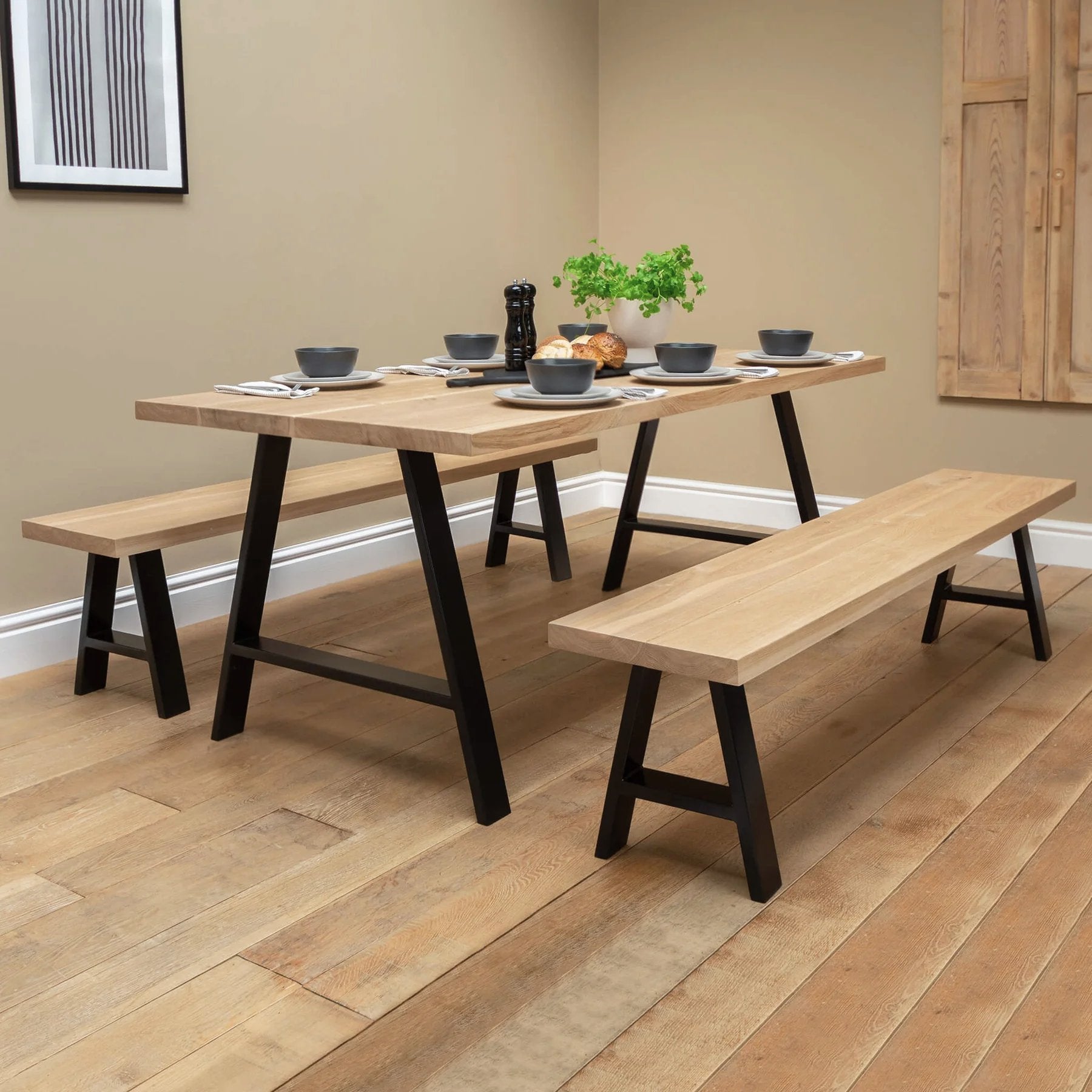
The visible part of furniture making is often the most satisfying: the grain coming alive under oil, the crisp line of a steel frame against rustic oak, or a finished table standing proudly in the workshop. Much of the care, however, lies in the quieter stages that come first.
Timber selection and preparation
Solid timber needs to be suitable for the job. Boards are selected for their quality, appearance and structural use, then cut and prepared. Oak can be wonderfully hard-wearing, but it still needs thoughtful handling. Proper preparation helps create a table top or bed frame that is stable, beautifully proportioned and ready for years of ordinary life.
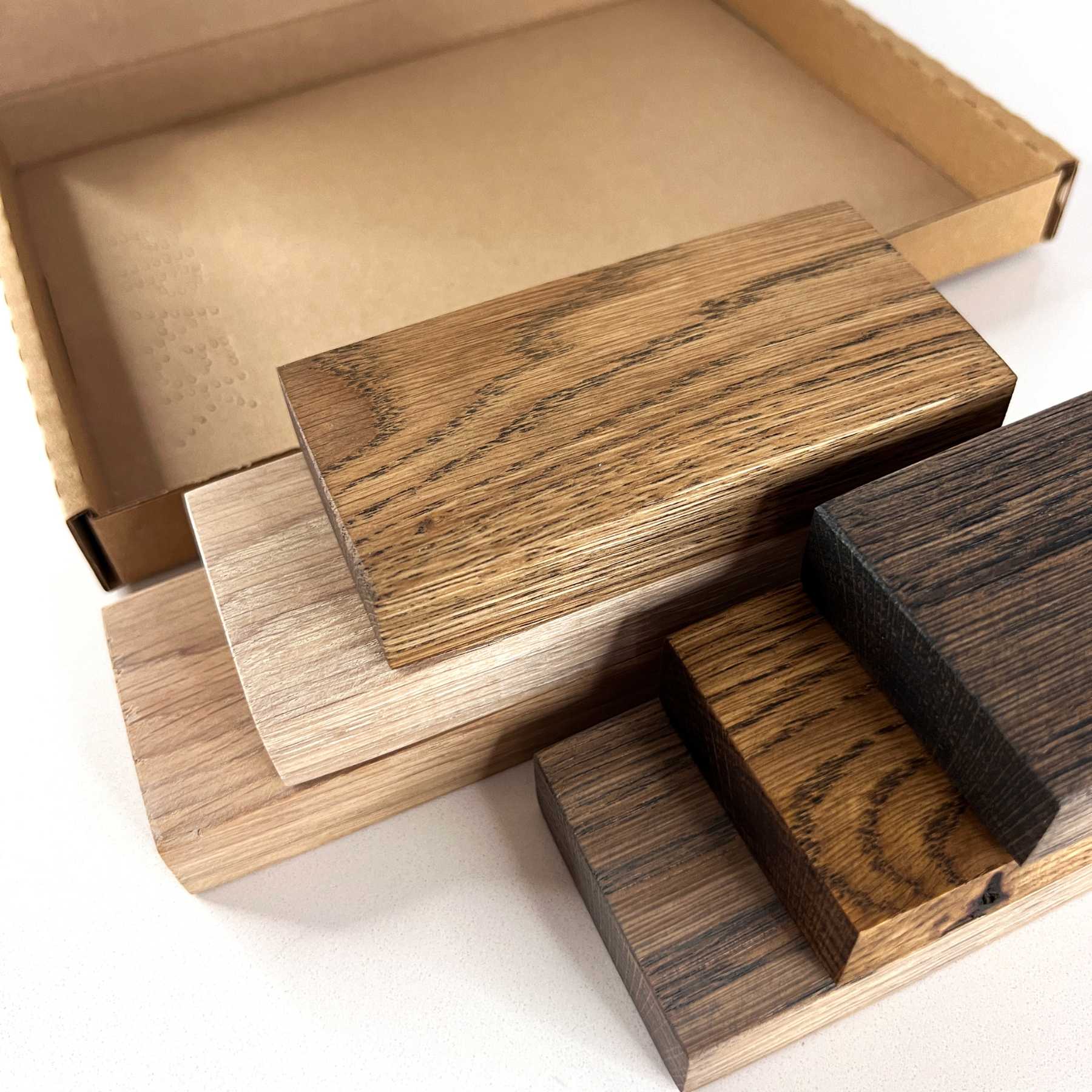
At this stage, natural features may become clearer. Knots, grain lines and colour variation are not faults to be hidden by a uniform coating. They are what give real wood its warmth. If you have ordered samples or discussed a particular look, this is the point at which those choices guide the material selection and finish.
Joinery, shaping and assembly
The parts are then made and brought together. Depending on the design, that can mean shaping legs, building aprons and frames, forming drawers, fitting shelves, or preparing metalwork for an industrial-style base. Bespoke dimensions are more than numbers on an order form. They influence balance, support and the way the finished furniture feels in use.
A long dining table, for example, must look graceful without sacrificing strength. A wooden bed needs a solid, dependable structure beneath its clean lines. There is no useful shortcut here: careful joinery is what allows furniture to stand up to daily use rather than merely look good on delivery day.
Sanding and finishing
Sanding is one of the most time-consuming parts of the process, and one of the easiest to underestimate. A good finish should feel inviting to the hand as well as look right in the room. It brings out the depth of the grain while preparing the surface for the protective treatment selected for the piece.
Finishes need appropriate drying and curing time. Rushing this stage can compromise both appearance and durability, particularly when the furniture is destined for a busy family home. The aim is a piece that arrives ready to be used and enjoyed, not one hurried out of the workshop before it is properly finished.
Checks, protection and delivery planning
Before dispatch, furniture is checked, cleaned and protected for transport. Larger pieces require sensible delivery planning too. Access through doorways, stairwells, gates and narrow hallways can be just as important as the dimensions of the room itself. A beautifully made table is of little use if the route into the house has not been considered.
For this reason, delivery timing is sometimes arranged once the piece is nearing completion rather than fixed on the day an order is placed. It gives both the workshop and the customer room to make sure the practical details are right.
How to plan around a made-to-order purchase
The best time to order is usually earlier than you think, particularly if your furniture is for a house move, renovation, wedding, Christmas gathering or other fixed occasion. Leave room for choices, making time and delivery rather than treating the delivery date as the start of the process.
Before confirming an order, have four things to hand:
- the maximum dimensions your room can comfortably take, including space for chairs to move;
- photographs and measurements of access points, especially for large tables, beds and storage pieces;
- a sense of the finish and style you want, with samples where available;
- your ideal delivery window, plus any date that cannot be missed.
It is worth resisting the temptation to order a table to fit the room at its absolute limit. Consider walkways, radiator positions, doors, sideboards and the extra space required when chairs are pulled back. The right bespoke size is not always the largest possible size. It is the one that gives the room enough breathing space while bringing people together comfortably.
When a longer lead time is the right choice
There are occasions when a quick purchase is necessary. If you need a temporary table for a new home next weekend, stock furniture may be the practical answer. But when you are choosing the central piece for a settled home, speed is rarely the only measure of value.
A custom-made dining table can be built to sit naturally with your chairs, your room and the way your household gathers. A bed can be made to the dimensions and style that suit your bedroom. A storage piece can solve an awkward space without looking like an afterthought. These are the pieces that earn their place over time.
At Willen Rose, furniture is lovingly made in Derbyshire with the understanding that a table or bed is not just another purchase. It becomes part of the backdrop to everyday life: meals, conversations, celebrations and the ordinary moments that matter most.
Questions worth asking before you order
Ask for the current estimated lead time for your exact specification, rather than relying on a general guide. Confirm when the estimate starts, whether it includes delivery, and how updates will be shared. If you are working to a deadline, say so early. A workshop may be able to advise honestly on what is realistic, or suggest a design and finish with fewer variables.
You should also ask whether your chosen dimensions, timber treatment or metalwork introduce any additional making time. This is especially useful for large tables, non-standard sizes and commissions with detailed requirements. Clear communication protects everyone from disappointment and lets the maker concentrate on the work itself.
A little patience has a practical reward. When the delivery day arrives, you are not receiving an anonymous item pulled from a shelf. You are welcoming in a piece made for your home, with the weight, warmth and quiet confidence of furniture built to make memories around for years to come.