



Dining Tables Made for the Life Around Them
A dining table is rarely just a surface for dinner. It is where schoolbags are emptied, birthday candles are lit, Sunday roasts linger into the afternoon and friends stay for one more cup of tea. The best dining tables earn their place through years of ordinary, busy, happy use. Choosing one well means looking beyond a photograph and considering the room, the people around it and the timber beneath your hands.
For a permanent home, a solid wood table is an investment in the life that happens around it. Its character deepens with time, and a well-made piece can be refinished, repaired and passed on rather than replaced when fashions change.
Start with the room, not the table
It is tempting to fall for a particular style before taking a tape measure to the dining room. Yet proportion is what makes a table feel settled in a space. A beautiful oak top can still feel awkward if chairs cannot be pulled out comfortably or people have to turn sideways to pass behind them.
As a useful rule, allow around 90cm between the table edge and a wall, sideboard or other furniture. This gives enough room for a chair and for someone to move around a seated guest. In a tighter kitchen-diner, 75cm can work, but it will feel more intimate and less forgiving during a busy meal.
Think about the route through the room too. If the table sits between the kitchen and garden doors, it needs to accommodate daily traffic as well as dinner guests. Marking out the proposed dimensions on the floor with masking tape is a simple way to test this before committing. It quickly reveals whether a slightly narrower table would make everyday life easier.
How many seats do you genuinely need?
A place setting needs roughly 60cm of table width per person, although 65cm to 70cm is more comfortable for leisurely meals and generous dinnerware. A 180cm table will usually seat six with ease. At 220cm, six people can spread out comfortably or eight can gather when needed.
There is no single right size. A family of four may be better served by a six-seater table that welcomes grandparents and friends, while a couple with a compact dining area might value clear floor space more than two rarely used end seats. Bespoke furniture is particularly useful here: the dimensions can be shaped around the way you actually live rather than a standard showroom size.
Choosing the right shape for dining tables
Rectangular dining tables suit most UK homes because they use the length of a room efficiently and offer a familiar, sociable layout. They work especially well in long dining rooms, open-plan kitchens and spaces where the table may also be used for homework or entertaining.
A round table softens a square room and allows everyone to face one another. It can make conversation easier, but it needs more floor area than many people expect because chairs extend all around the perimeter. Oval tables offer some of the same flow, while retaining the seating capacity of a longer design.
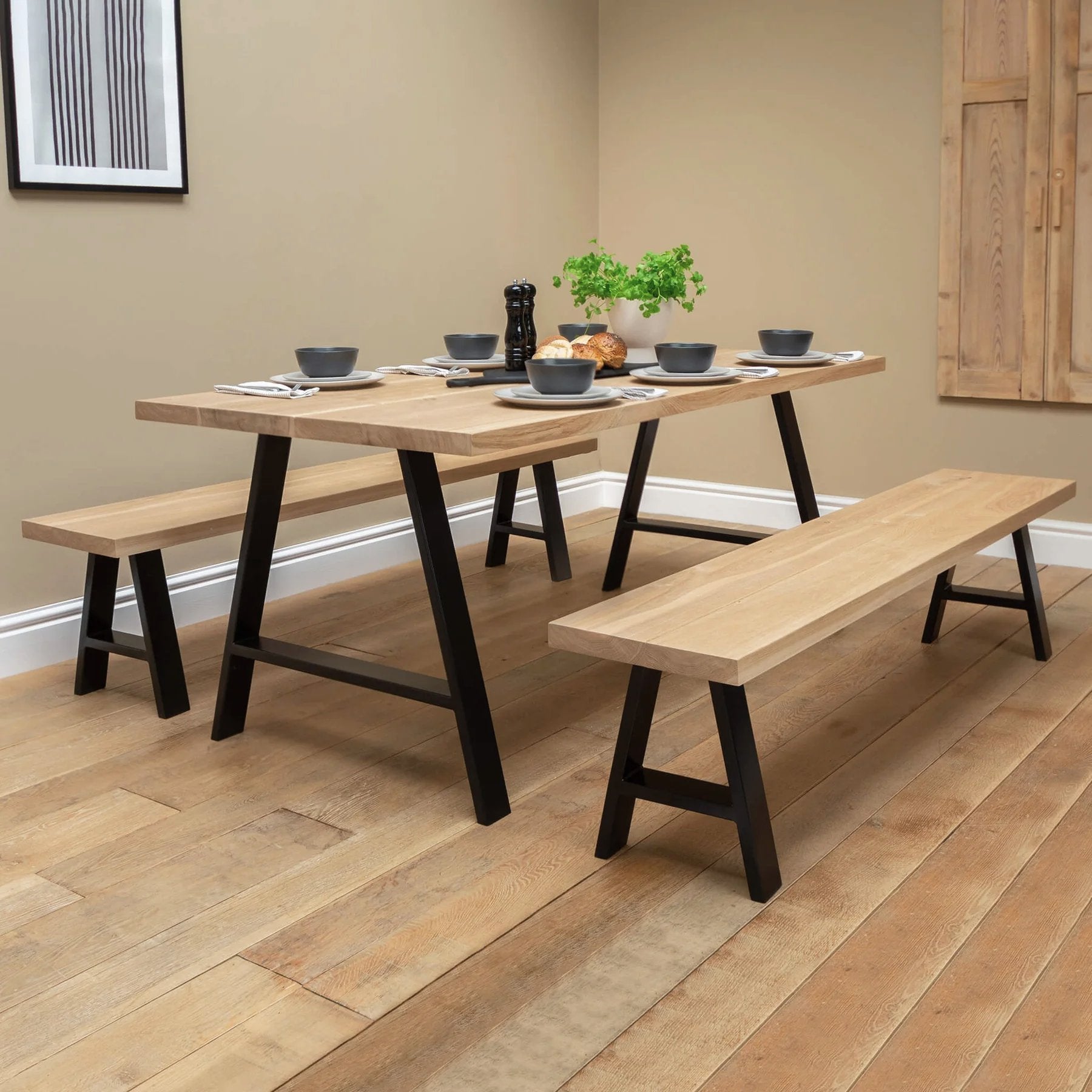
The base matters as much as the top. Four corner legs are traditional and dependable, but a pedestal or carefully placed metal frame can create more freedom for seating at the ends. Industrial-style steel legs bring definition to a rustic oak top, particularly in modern extensions and converted spaces. The trade-off is practical: check where knees will sit before choosing a bold frame design.
Why solid oak is worth considering
Oak has a quiet confidence that suits both farmhouse kitchens and more contemporary homes. Its grain brings warmth without requiring ornament, and its natural strength makes it well suited to the demands of family dining. A solid oak table has substance. It does not rely on a thin veneer laid over manufactured board, and that distinction becomes meaningful over years of use.
Timber is a living material, even after it has been crafted into furniture. It responds gently to changes in temperature and humidity, which is why thoughtful construction allows for seasonal movement. Small shifts in the grain are not a failure of the material. They are part of the honest character of real wood.
Knots, colour variation and occasional natural figuring make every top individual. Some homeowners prefer a cleaner, more uniform appearance; others are drawn to the bolder story of rustic oak or reclaimed timber. Neither choice is better. It depends on whether you want the table to sit quietly within the room or become its central feature.
At Willen Rose, tables are lovingly made in Derbyshire from solid sustainable timber, with the opportunity to consider dimensions, finishes and details before work begins. That direct conversation with the workshop is valuable when a piece needs to solve a particular problem, from an awkward alcove to seating for a growing family.
Finish matters as much as the timber
The finish protects the wood while shaping its appearance and feel. A natural-looking oil finish allows the grain to remain at the forefront and can often be refreshed locally if the surface becomes marked. This makes it a popular choice for homes where a table is used every day rather than kept for best.
Lacquered finishes can offer stronger resistance to spills and may suit households wanting a more sealed surface. They can, however, look slightly different from an oiled finish and repairs may require more care. There is no need to be precious about a family table, but it is sensible to understand what its finish asks of you before ordering.
A few simple habits keep solid wood looking its best: wipe spills promptly, use mats for very hot dishes and avoid harsh chemical sprays. A coaster under a cold glass is worthwhile too, especially if condensation is likely to sit on the surface. These are not burdensome rules. They are the small acts of care that help a well-made table age gracefully.
Details that make a table feel yours
The strongest interiors do not always follow one strict style. An oak table with clean lines can sit comfortably with painted cabinetry, upholstered dining chairs or a vintage dresser. Equally, a chunky rustic top paired with black metal legs can give a new-build kitchen some welcome weight and texture.
Consider the edge profile, top thickness and leg style as parts of the overall character. A square-edged top feels crisp and architectural. A softened edge has a gentler, more traditional presence. A substantial top can anchor a large open-plan room, while a slimmer profile may better suit a smaller dining area.
Benches are worth considering when flexibility is needed. They can tuck beneath the table when not in use and make it easier to fit children along one side. They are less comfortable for long, formal dinners than individual chairs, so many homes find the best balance in combining a bench with chairs at the other sides.
Order with confidence
Before placing an order, measure the room twice and check the access route into the house. Stair turns, narrow hallways and low ceilings can affect what is practical, particularly with a large solid wood top. Ask about delivery arrangements and whether the table will arrive in sections or as one complete piece.
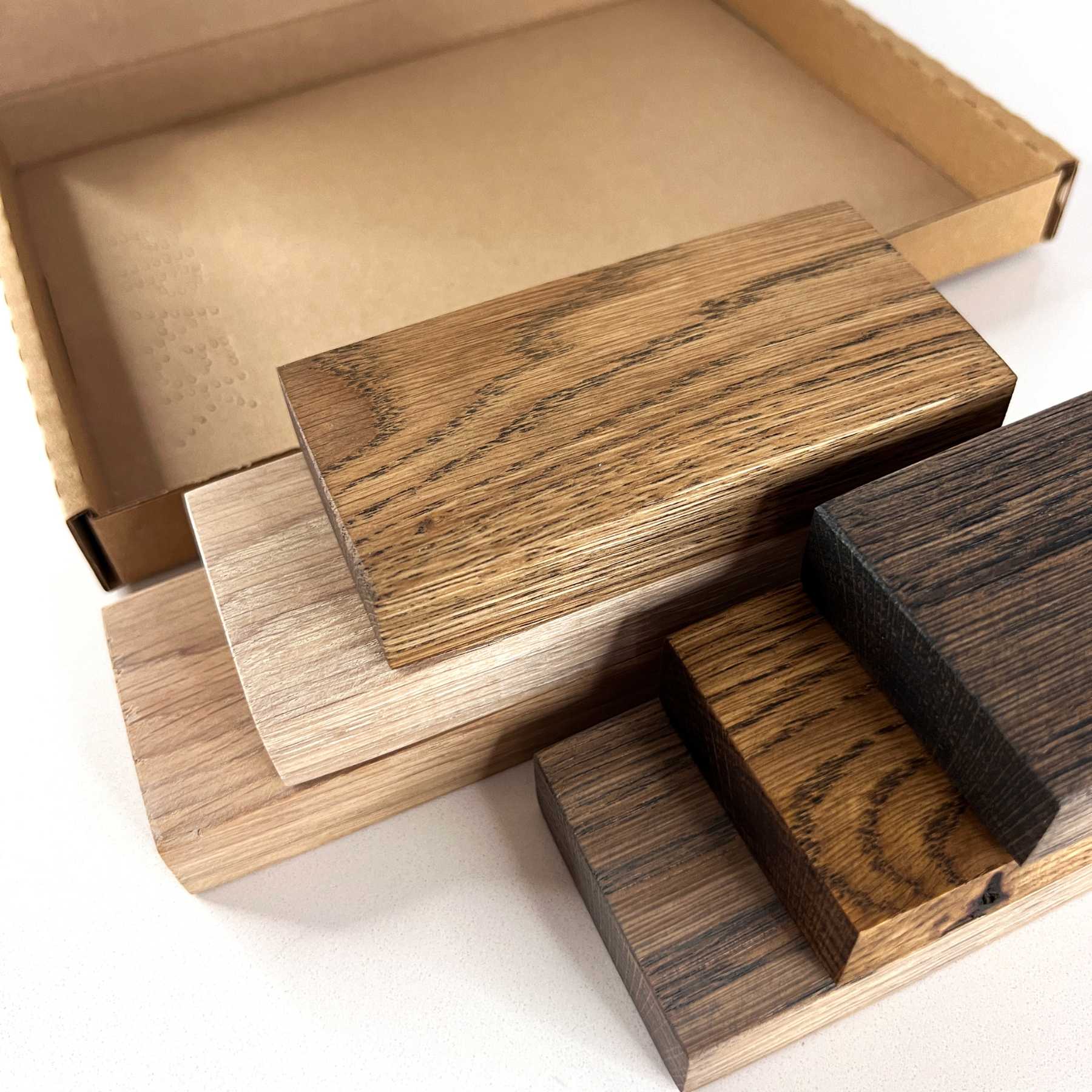
Material samples can also make the decision easier. Oak changes with daylight, and a finish that looks perfect on a screen may appear warmer or cooler beside your flooring, paint and kitchen units. Seeing a sample in your own home is one of the simplest ways to choose with confidence.
The table you choose should be generous enough for the people you love and durable enough for the life you lead. Give it room to breathe, choose honest materials and let it gather the marks, meals and memories that make a home feel truly lived in.