



Family Furniture Buying Guide for Lasting Homes
The table that hosts rushed breakfasts, homework, Sunday lunches and the occasional craft-project disaster needs to be more than handsome. A good family furniture buying guide begins with the real rhythm of your home: who uses each room, how often they gather there, and what daily life will ask of each piece over the years ahead.
For a permanent home, furniture should feel considered rather than convenient. That does not mean every piece must be precious or formal. It means choosing materials, proportions and finishes that welcome family life while still looking better for having been lived with.
Begin with the way your family lives
Before thinking about a particular style, consider the moments a room needs to hold. A dining table may be a place for six each evening but need room for ten at Christmas. A bedroom may need generous under-bed storage as much as a beautiful oak frame. A coffee table may need to cope with feet up, board games and a tray of tea without feeling like something everyone must tiptoe around.
This is where buying for a family differs from furnishing a show home. The best choice is rarely the smallest, cheapest or most delicate option. It is the piece that suits the room on an ordinary Tuesday as well as when friends come round.
Think honestly about your household. Young children bring spills, toys and energetic corners. Teenagers bring laptops, late-night snacks and a growing need for their own space. Dogs may favour the warm patch beneath the dining table. None of this rules out beautifully made furniture. It simply calls for furniture with substance and sensible details.
Measure the room, not just the furniture
A dining table can look perfect in a photograph and still overwhelm a room. Start by measuring the clear floor space, then allow enough room for chairs to be pulled out comfortably. As a useful guide, aim for around 90cm between the table edge and a wall, radiator or sideboard wherever possible. Tighter rooms can work, but they need careful planning and slimmer seating.
Do not forget the route into the house. Measure doorways, hallways, stair turns and any awkward corners before ordering a substantial piece. Solid wood furniture is made to last, which also means it has a reassuring weight to it. Delivery access matters.
Bespoke sizing is particularly valuable when a room is long and narrow, when an alcove dictates the dimensions, or when you want every seat at the table to feel properly useful. A few centimetres can make the difference between a dining space that flows and one that always feels cramped.
Choose the right table shape
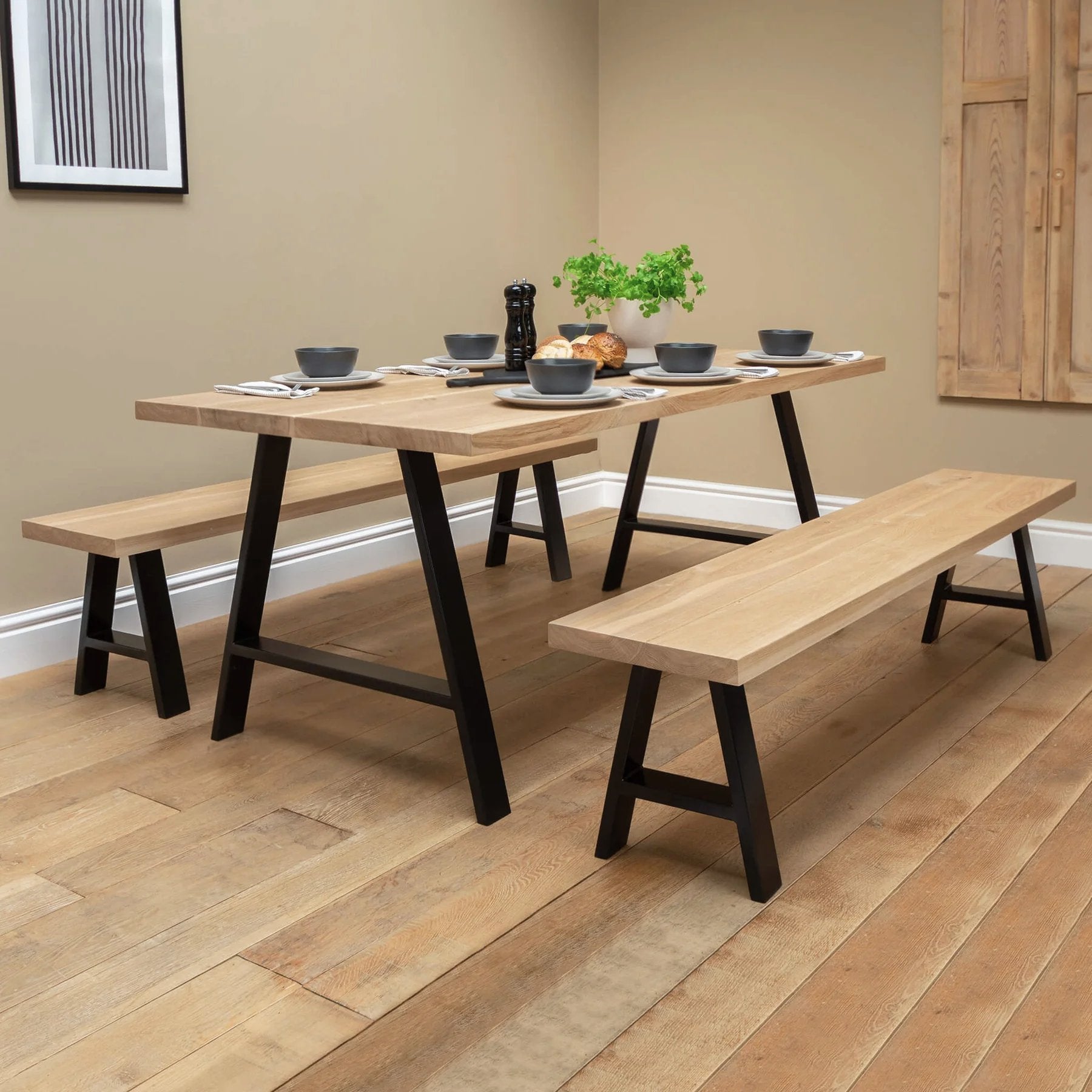
Rectangular tables make excellent use of length and are often the natural choice for family dining rooms and open-plan kitchens. They offer clear places at the ends as well as along the sides, and extending designs can be useful if entertaining is occasional rather than weekly.
Round tables encourage conversation and work well where there is a little more room around them. There are no sharp corners to navigate, which can be a welcome consideration with small children. The trade-off is that a round table needs a generous footprint for the number of people it seats.
Benches can be a practical companion to either shape. They tuck neatly underneath when not in use, fit children comfortably and create a relaxed, sociable feel. For lengthy meals, though, some families prefer the back support of dining chairs. A mix of chairs and a bench often provides the best of both.
Put material before trend
There is a reason solid oak has remained a favourite in British homes for generations. It has warmth, natural character and the strength to cope with proper use. Its grain and knots are not flaws to be hidden - they are part of what makes each finished piece individual.
Solid timber also gives you options that many veneered or flat-pack alternatives cannot. A minor mark can often be softened, a finish refreshed and a well-made piece enjoyed for decades. This is not an argument for expecting furniture to stay untouched. A family home should not feel like a museum. It is about choosing a material that can carry its history gracefully.
Reclaimed timber offers a more rustic character, with variation in tone, texture and markings that already tell a story. It suits relaxed farmhouse and industrial interiors especially well. If you prefer a cleaner, more contemporary look, select timber with a more even finish and pair it with simple lines or a refined metal base.
Metal-framed furniture brings useful visual contrast and can lend a table or coffee table an industrial edge. Look beyond appearance, however. The frame should feel stable, the joins should be sound, and the design should leave comfortable leg room. A striking base is not much use if it stops people sitting naturally around it.
A family furniture buying guide to finishes
A finish should protect the timber while allowing its natural character to remain visible. The right choice depends on how you use the piece and how much maintenance you are happy to undertake.
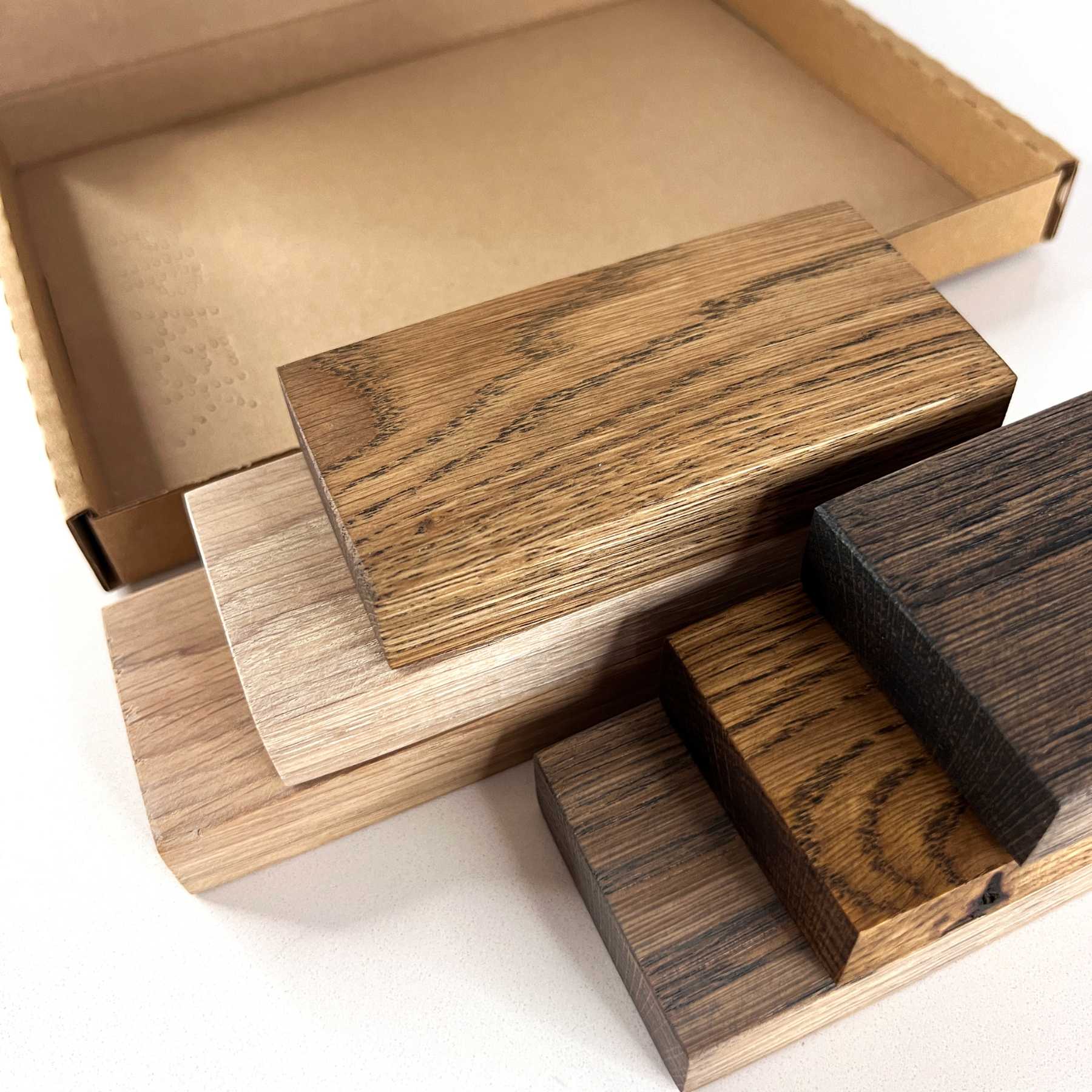
Oiled finishes give wood a wonderfully natural feel and can be straightforward to revive over time. They are well suited to people who appreciate the evolving character of timber and do not mind giving it occasional care. Lacquered finishes can offer stronger day-to-day protection and a lower-maintenance surface, though they may feel less natural to the touch.
Ask for a sample before committing, particularly if you are matching existing flooring, cabinetry or painted walls. Oak can appear warmer or cooler depending on the light in your home, and photographs cannot fully show texture or tone. Looking at a sample in morning light, evening light and beside your other finishes is time well spent.
Whatever finish you choose, use coasters for hot drinks, wipe spills promptly and avoid harsh cleaning sprays. These small habits protect the surface without taking the pleasure out of using it.
Spend where the structure matters
When budgets have to stretch across several rooms, it is sensible to prioritise the pieces that receive the hardest use. A dining table, bed frame and main storage furniture are all worth buying well. Their structure, materials and joinery will affect daily comfort long after a cushion cover or lamp has been changed.
Pay attention to how a piece is made. Solid timber construction, strong joints, stable bases and well-fitted drawers are signs of furniture designed for the long term. Drawers should open smoothly without wobbling. Beds should feel quiet and secure. Tables should not flex or rock when weight is placed on them.
Price is only part of value. A lower initial cost can be tempting, but repeated replacement is rarely economical or satisfying. Made-to-order furniture asks for patience and a greater investment, yet it can save the compromise of buying something that is almost the right size, almost the right colour and almost strong enough.
At Willen Rose, this is why furniture is lovingly made in Derbyshire with the proportions, timber and details of real homes in mind. The aim is not to fill a room quickly, but to create pieces that become familiar parts of family life.
Let every room have room to breathe
A home feels more restful when every corner is not filled. Once you have chosen the larger pieces, leave space for movement, daylight and the changing needs of family life. A dining room may later need a homework station. A spare room may become a nursery, then a teenager's retreat. Flexible storage and well-proportioned furniture give you more options.
In living spaces, balance a substantial coffee table or media unit with softer elements such as a comfortable sofa, textured rug and gentle lighting. In bedrooms, allow enough circulation around the bed before adding extra chests or benches. The most welcoming rooms are not necessarily sparse, but they are easy to use.
It also helps to think in layers. Start with the piece that anchors the room, such as an oak dining table or wooden bed. Then build around it with seating, storage and smaller furnishings. This prevents the common mistake of collecting individual items that are lovely alone but competing together.
Buy with the next decade in mind
A family home changes slowly, then all at once. Children grow, routines shift and rooms take on new roles. The furniture that earns its place is adaptable enough to stay useful through those changes and distinctive enough that you still enjoy seeing it every day.
Choose the size you genuinely need, the material you can live with, and the craftsmanship that gives a piece a future. The first meal, bedtime story or rainy afternoon spent around it is only the beginning of what it will hold.