



A Practical Guide to Furniture Sample Packs
A dining table can look entirely different in your home than it does on a screen. The daylight from your kitchen window, the warmth of your flooring and the colours already in the room all play their part. This guide to furniture sample packs explains how to use timber, finish and fabric samples properly, so you can choose a piece with confidence before it is lovingly made.
For made-to-order furniture, a sample pack is not a small extra. It is one of the most useful parts of the buying process. It lets you see and feel the materials that will become part of daily family life - from hurried weekday breakfasts to long Sunday lunches and everything in between.
What is included in a furniture sample pack?
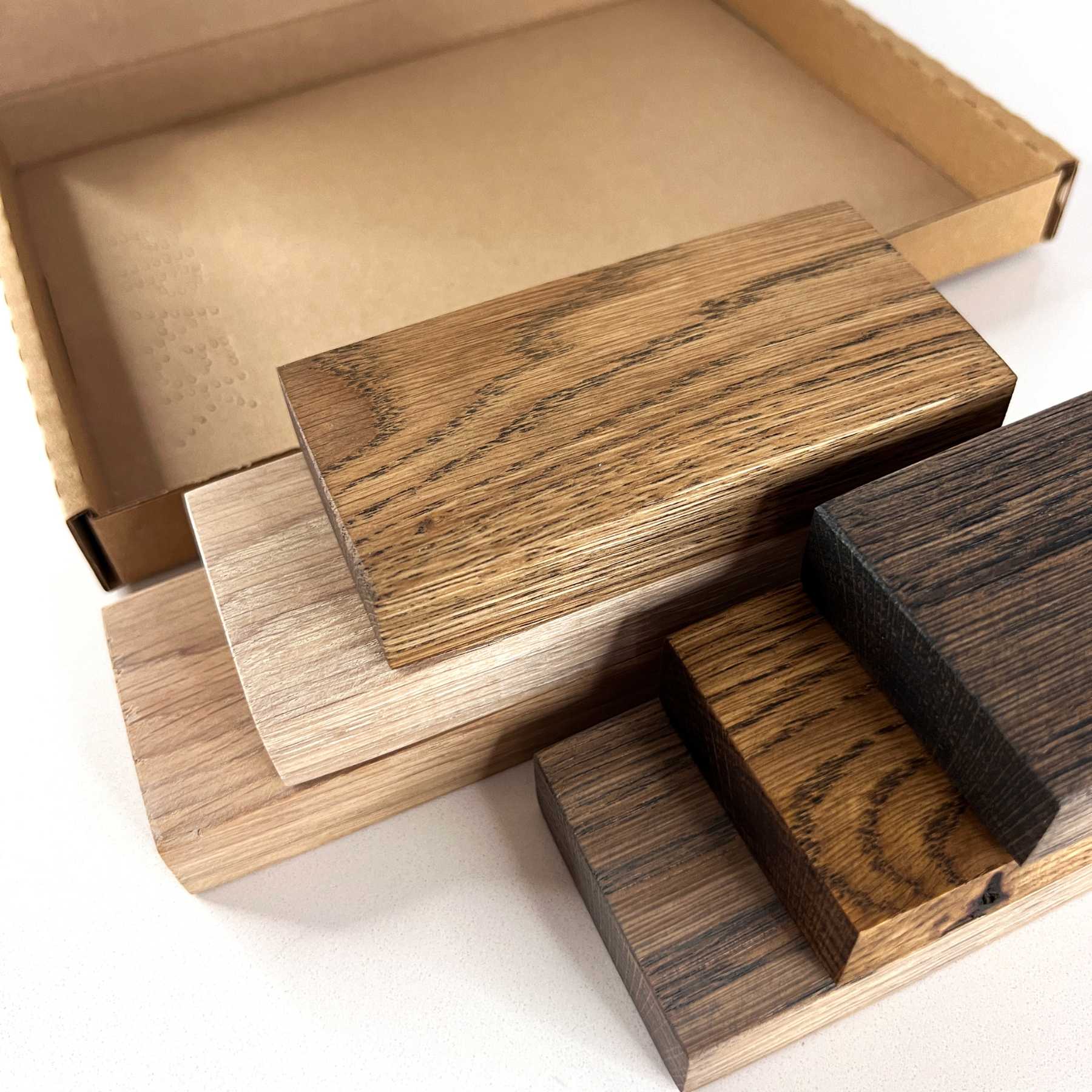
A furniture sample pack usually contains small pieces of the materials available for your chosen item. For a solid wood dining table, that may mean timber samples in different finishes. If you are considering an upholstered piece, it may also include fabric swatches in the colours and textures you are drawn to.
A proper timber sample shows more than colour. You can feel the grain, see the character of the wood and understand how a finish settles into the surface. Oak is never completely uniform. Its knots, medullary rays, grain lines and natural variation are part of what gives a handcrafted table its depth. A sample offers an honest indication of the overall tone and texture, rather than a promise that every inch of a larger tabletop will be identical.
This matters particularly when choosing solid oak, reclaimed timber or rustic boards. Natural variation is not a flaw to be eliminated. It is the evidence of a real material, shaped by time and finished by hand.
Why screens are not enough
Photographs are useful for seeing a table’s proportions, style and detailing, but digital images cannot reliably show a finish. Mobile phone and laptop settings alter colour, while professionally lit photography can make a pale oak appear warmer, or a dark finish look lighter, than it will in your own room.
The same is true of fabric. A charcoal weave may read as almost black on one screen and soft grey on another. A neutral linen-look fabric can take on cream, stone or taupe tones depending on the light around it. Seeing a swatch against your wall colour, sofa, rug and curtains gives you a far clearer answer.
There is also the matter of touch. A dining table is a working surface, not merely a picture. Running your hand across a timber sample helps you appreciate the smoothness of the finish and the tactile quality that makes solid wood furniture such a pleasure to live with.
How to use your sample pack at home
When your samples arrive, resist the temptation to make a decision in five minutes by the front door. Live with them for a few days. Place them where the finished furniture will sit and look at them at different times of day.
Morning light is often cooler, while late-afternoon sun can bring out honeyed tones in oak. In the evening, artificial lighting can change the picture again. Warm bulbs may enrich a natural finish, whereas cooler LEDs can make pale wood and grey fabrics appear crisper. If your dining area is open-plan, take the samples into the adjoining kitchen and living space too. The furniture needs to belong to the whole view, not just one corner of it.
Put a timber sample directly beside your flooring and skirting boards. Hold it against painted walls. Place fabric swatches next to cushions or curtains you intend to keep. These simple comparisons reveal whether you want a gentle tonal connection or deliberate contrast.
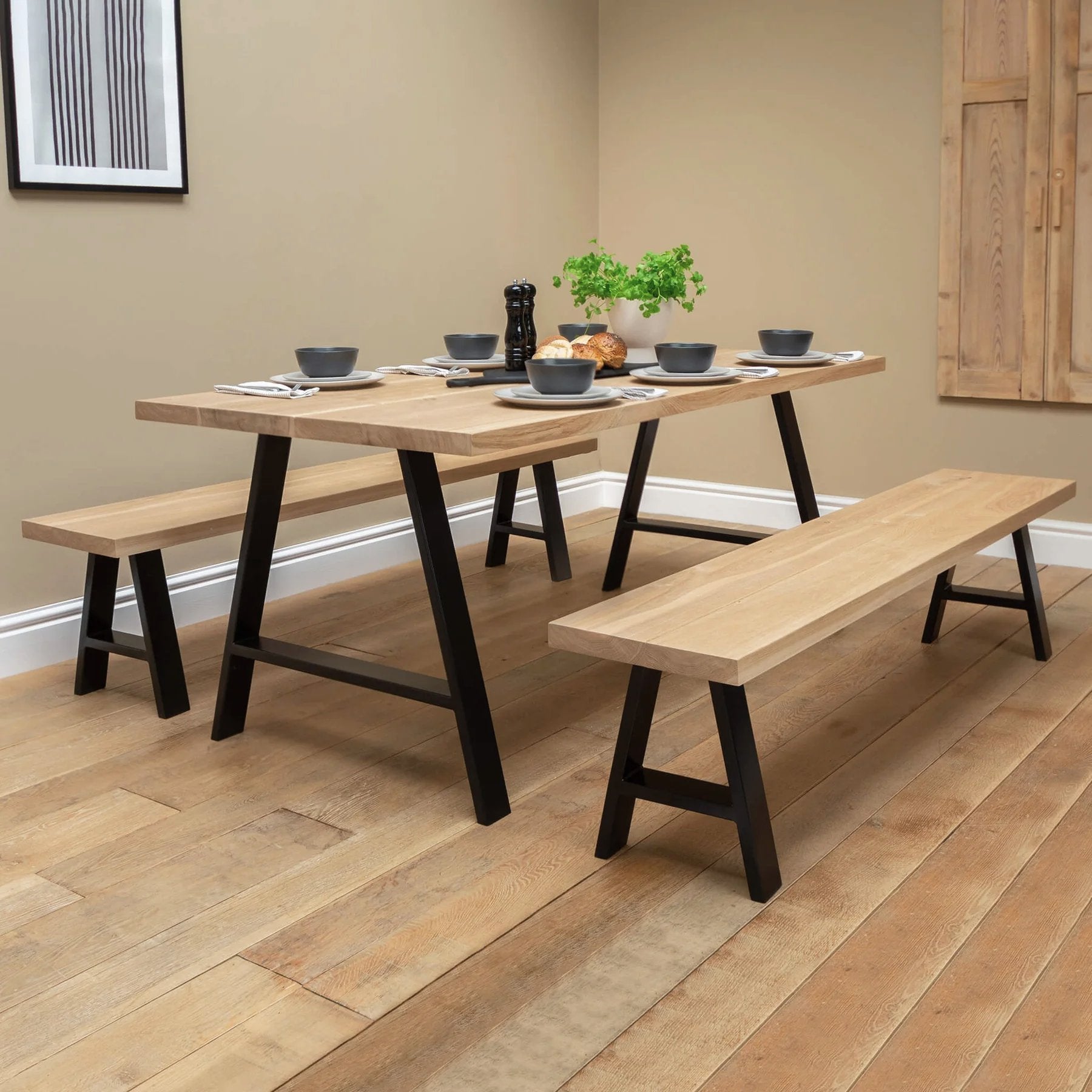
A pale natural oak finish may create an airy, relaxed feel beside light flooring. A deeper smoked or darker finish can ground a large room, work beautifully with black metal details and give an industrial-style base more presence. Neither is automatically the right choice. It depends on the light, the scale of the room and whether you want the table to blend quietly or become the focal point.
Check samples against fixed features
Start with the parts of your home that are unlikely to change soon: flooring, kitchen cabinetry, worktops, fireplaces and existing fitted storage. These are more useful reference points than movable accessories, which can be replaced later.
If your kitchen has warm cream cabinets and a wooden floor, choosing another warm-toned oak can make the room feel settled and cohesive. If everything is already timber-heavy, a slightly contrasting finish or a table with a metal base may give the space needed definition. In a room with grey stone, black hardware or exposed brick, warmer oak often prevents an industrial scheme from feeling cold.
View fabric in the right position
For sofas, chairs or upholstered benches, lay fabric swatches on the seat or arm of your current furniture rather than holding them upright. Texture catches light differently when it is horizontal, and this is how you will see the fabric day to day.
Consider practical life as well as appearance. A pale fabric can be beautiful in a calm sitting room, but a busy family room with children, pets or regular visitors may call for a more forgiving mid-tone or textured weave. Darker shades can hide some marks, though they may show lint or pet hair more readily. Ask yourself what will still feel good after a muddy walk, a dropped biscuit or a lively Christmas gathering.
Choosing a timber finish with confidence
Finishes do two jobs. They influence the final colour, and they help protect the timber while allowing its natural character to remain visible. The ideal finish is not simply the one that looks best under perfect showroom lighting. It should suit the way your household uses the furniture.
Natural and lighter oak finishes tend to suit homes seeking a fresh, timeless look. They let the grain lead and pair easily with painted cabinetry, soft neutrals and contemporary interiors. Mid-toned finishes bring added warmth and can sit comfortably with traditional furnishings, terracotta, olive green and richer textiles.
Darker finishes have real impact. They can make a large oak dining table feel more formal, give contrast against pale walls and complement black steel legs or industrial details. The trade-off is that dark surfaces may make a compact or low-light dining room feel heavier. If the room is small, a lighter top with a darker metal frame can offer a balanced middle ground.
Remember that the final table will have a far larger visual presence than a hand-sized sample. A finish you love in a small square can feel much stronger across a three-metre tabletop. Step back from the sample occasionally and imagine that colour repeated across the full surface.
Expect variation, not a copy-and-paste result
Handcrafted solid wood furniture is made from individual boards, and each board has its own grain, knots and movement. A sample represents the species and finish, but it cannot replicate the exact figure of your finished tabletop. This is especially true with rustic oak and reclaimed timber, where saw marks, filled knots and historical character can be part of the design.
That is worth embracing before you order. If you need perfectly repeated colour and grain, a printed veneer or factory-made surface may be more predictable. If you want depth, individuality and a table that gains character over years of use, solid timber offers something far more rewarding.
A good maker will be clear about this distinction. The goal is a table with a harmonious overall appearance, not a lifelessly uniform surface. Small shifts in tone are often what make a piece feel warm, considered and unmistakably real.
Use samples to make the whole design work
Material choices should sit alongside your decisions on dimensions, edge profile and base style. A thick rustic top with a black industrial base will feel different from a slim, clean-lined top on oak legs, even in the same finish. Samples help you establish the mood, but proportions complete the picture.
If you are planning a bespoke table, take a photograph of the samples in the intended room and keep notes on the finishes you prefer. It can make conversations with the workshop much more straightforward. Mention what you are matching, what you would like to soften and whether you are concerned about light levels. These details help turn a general preference into furniture that feels made for your home.
At Willen Rose, the purpose of sampling is simple: to give you the reassurance to choose well before your furniture is crafted in Derbyshire. Take your time with the pieces in your pack. The best choice is usually the one that still feels right when the room is quiet, the light has changed and you can picture the people you love gathered around it.