



How to Choose Family Sofas Built to Last

The sofa is often where family life lands. It catches the school bags, Sunday films, muddy paws, impromptu naps and the quiet cup of tea after everyone else has gone to bed. Choosing family sofas is therefore about far more than finding a colour you like. It is about bringing home a piece that feels generous, looks right in your space and continues to earn its place through years of proper use.
A well-chosen sofa need not look overly practical or cautious. The best designs balance comfort, character and resilience, allowing a living room to feel welcoming without making you worry about every biscuit crumb or pair of feet tucked beneath a cushion.
Start with the way your family really lives
Before considering arms, legs or upholstery, think honestly about how the room is used. A formal sitting room that comes alive at Christmas calls for something different from the main family room, where the sofa may be occupied from breakfast until bedtime.
Consider how many people sit together most evenings. A large corner sofa can be a wonderful choice for a busy household, creating a relaxed, sociable place where everyone can stretch out. In a narrower room, however, a three-seater paired with a compact armchair may offer more flexibility and leave clearer walkways.
It also helps to think ahead. Young children grow, teenagers tend to gather in groups, and visiting relatives may appreciate a higher, more supportive seat. Buying for the next several years rather than just the room as it stands today usually leads to a better long-term decision.
Measure beyond the floor space
A sofa can fit the room on paper and still feel too dominant once it arrives. Mark out its footprint with masking tape, including the depth of the seat and the room needed to walk around it. Check that doors, drawers, radiators and cabinets can still open as they should.
Do not forget the journey into the house. Measure front doors, porches, halls, stairways and tight turns, especially in older properties where generous living rooms are often reached through narrower entrances. A beautiful sofa is only useful if it can be delivered safely into the room where it belongs.
Choose a size that invites people in
Deep seats look wonderfully relaxed, but they are not automatically the most comfortable option for every household. If taller family members enjoy lounging, a deeper seat can be ideal. For those who prefer to sit upright with their feet on the floor, a moderate depth and supportive back may be the better fit.
Seat height matters too. Low, softly squashed cushions can suit a laid-back contemporary scheme, while a slightly higher seat is often easier for grandparents and anyone with less mobility. The right choice is personal, which is why sitting on a sofa before committing is worthwhile whenever possible.
Look at the proportion of the arms as well. Slim arms can create valuable extra seating room in a compact space, while wider arms lend a traditional, substantial feel and provide somewhere to rest a book or a head during a lazy afternoon. Neither is universally better - it depends on whether your priority is maximum seating, visual presence or both.
The upholstery question: beautiful, practical, or both?
For most homes, family life makes fabric choice the biggest decision. Natural fibres such as linen and cotton have a lovely softness and texture, but some can crease, fade or mark more readily than a hard-wearing woven blend. Wool brings warmth and excellent natural resilience, while velvet can offer a rich, inviting finish when chosen in a durable upholstery grade.
If children, pets or frequent entertaining are part of the picture, look for fabrics designed for everyday use. A textured weave can be forgiving of minor marks and may disguise the odd bit of wear better than a very pale, flat surface. Mid-tones, earthy greens, warm greys and softened blues often provide a practical middle ground: lighter than a dark, heavy-looking sofa, but less demanding than cream.
Removable covers can be useful, though they are not essential for every family. A fixed-cover sofa in a high-quality, resilient fabric may keep its shape and tailored appearance beautifully. What matters is knowing the care guidance before you buy. Ask how spills should be dealt with, whether professional cleaning is advised and whether cushion covers can be removed.
Leather deserves consideration too. It can be easy to wipe clean and gains character with age, but it may feel cooler in winter and warmer in bright summer rooms. Some families love its lived-in patina; others prefer the softness and visual warmth of woven fabric. There is no wrong answer, only the finish that feels most at home with your routine.
What sits underneath matters just as much
A sofa is not simply an upholstered shape. Its comfort and longevity rely on the quality of the frame, suspension and cushions inside it. This is where a lower price can sometimes reveal its compromise after a few years of daily use.
Look for a well-made frame with sound joinery and a reassuringly solid feel. Hardwood frames are valued for their strength, while good suspension helps the seats retain support rather than sagging into a hollow dip. A sofa should feel comfortable from the first sit, but not so soft that it offers no structure at all.
Cushion fillings involve a genuine trade-off. Feather-filled cushions have a wonderfully relaxed, sink-in quality, but they require regular plumping to remain at their best. Foam offers more structure and often needs less day-to-day attention, although very firm foam can feel less inviting. Fibre and foam combinations can give a useful balance of softness, support and easier care.
For a busy household, a little maintenance is normal rather than inconvenient. Rotate reversible cushions, plump loose fillings and avoid always sitting in the same favourite corner. These small habits can help a good sofa wear evenly and retain its comfort for longer.
Family sofas should belong with the rest of the room
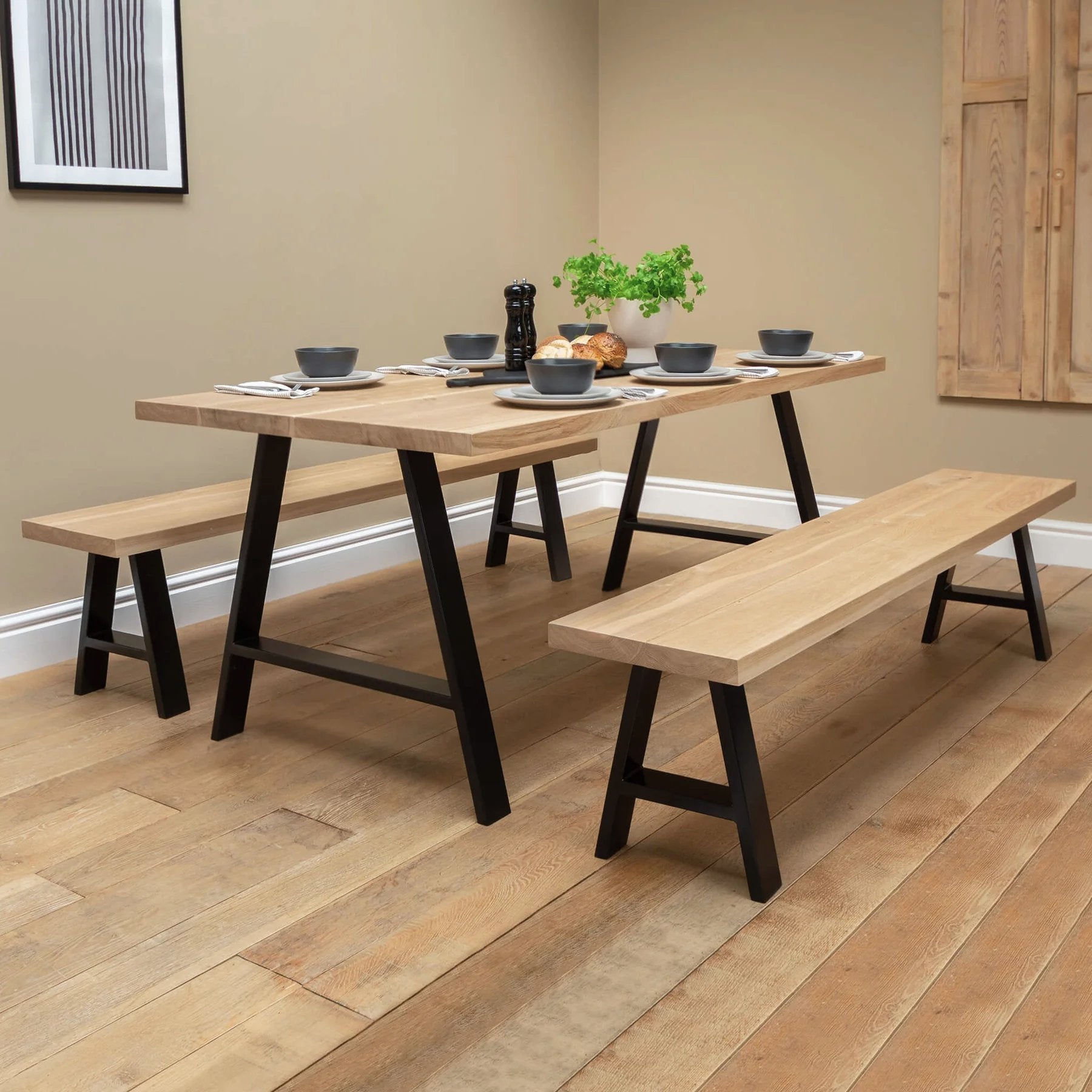
The living room works best when its larger pieces speak to one another. A sofa with softly rounded arms and a tactile woven fabric can bring warmth to a rustic oak coffee table, while a cleaner-lined design may sit beautifully beside industrial-style metal and timber furniture. The aim is not to match every finish perfectly, but to create a room with a shared sense of material, proportion and care.
If your home already has natural oak, reclaimed timber or exposed brick, consider a sofa colour that complements those tones rather than competing with them. Oatmeal, moss, charcoal, rust and muted navy can all sit handsomely alongside wood. Add personality through cushions, throws and lampshades, which are easier to refresh as tastes and seasons change.
Pattern can be a practical choice as well as a decorative one. A subtle check, herringbone or textured plain brings depth without making the sofa the only thing the eye sees. If you do choose a bolder fabric, keep the surrounding furniture calmer so the room retains a restful feel.
Take your time with a made-to-order choice
A family sofa is a significant purchase, and there is value in slowing down before placing an order. Request fabric samples where available and view them in the actual room at different times of day. Daylight may reveal a cooler undertone, while evening lamplight can make the same fabric appear warmer and deeper.
Think about delivery early, particularly if access is awkward or you are coordinating a room renovation. Made-to-order furniture asks for a little patience, but it also gives you the chance to choose a piece with intention rather than settling for what happens to be held in a warehouse.
At Willen Rose, that belief in considered, lasting furniture runs through everything we make and select for the home. The right sofa should feel like part of the family story, not a temporary stop between replacements.
When you have found a shape that suits your room, a fabric you are happy to live with and a level of comfort everyone enjoys, trust that combination. A good sofa will not stay pristine - nor should it. It will soften, settle in and become the place where ordinary days turn into the memories that make a house feel like home.