



How to Style a Dining Bench in Your Home
A dining bench changes more than the number of people you can seat. It changes the feeling of the room. Where individual chairs can make a dining area look formal and fixed, a well-chosen bench brings an easy, gathered-together quality - the sort of setting that suits weekday suppers, children’s homework and long lunches that run on into the evening. Knowing how to style dining bench seating is about balancing that relaxed look with enough comfort and space for real family life.
A solid wood bench earns its place when it feels considered rather than squeezed in. It should relate to the table, the room and the people who use it every day. The best arrangements look simple, but there is often careful thought behind their proportions, materials and finishing touches.
Begin with the table, not the accessories
The dining table is the anchor, so let it guide every decision. A bench can sit neatly beneath an oak table, run along one side, or make a statement at either end. Before thinking about cushions or tableware, consider the shape and scale of the table itself.
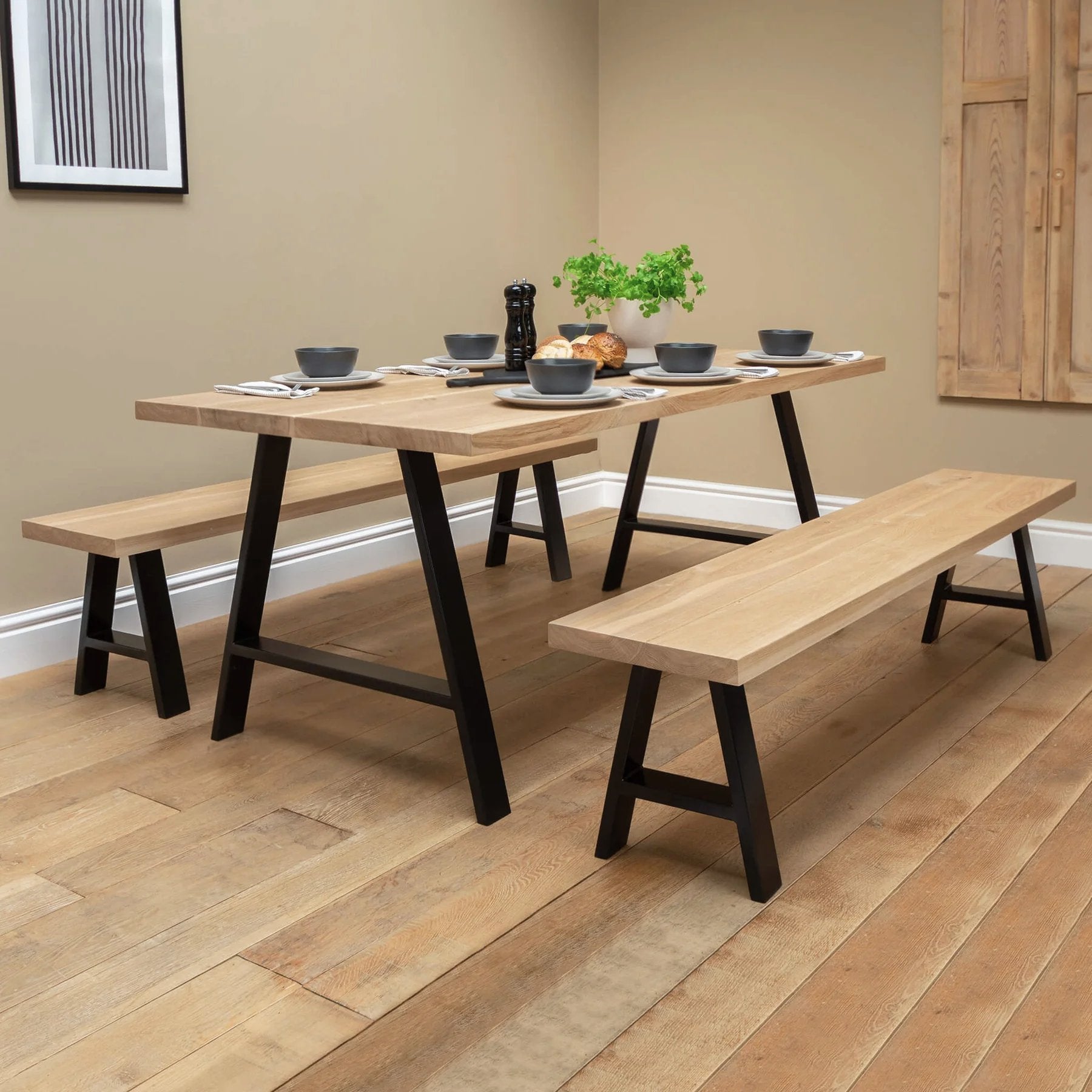
For a rectangular table, a bench along one long side is often the most natural choice. It softens a row of dining chairs opposite and keeps the room feeling open. This works especially well in kitchens and open-plan spaces where chairs need to be tucked away after meals. A bench at each end of the table creates a more symmetrical, farmhouse-inspired arrangement, while benches on both long sides offer generous seating for larger families or regular guests.
A round table is usually better served by chairs, as a straight bench can interrupt its easy flow. That said, a small curved banquette or a bench placed nearby as occasional seating may still be useful in a generous dining room.
Material matters too. Matching the bench timber to the tabletop creates a calm, built-in look. Oak with oak feels timeless, allowing the natural grain and warm tones of the wood to do the talking. A contrasting bench can work beautifully, but it needs an obvious connection elsewhere - perhaps black metal legs that echo pendant lights, or a darker reclaimed timber finish that picks up the colour of a sideboard.
Get the proportions right
A dining bench should look generous, not overgrown. As a useful rule, choose one that is around 20 to 30cm shorter than the table length. This leaves room at each end, stops the arrangement looking cramped and makes it easier for people to get in and out.
Seat height deserves just as much attention. Most dining tables are around 75cm high, and a bench seat of roughly 45cm tends to offer comfortable clearance beneath the table. If the bench includes a cushion, allow for its depth when measuring. A seat that is too high leaves knees pressed against the underside of the table; too low, and guests will find themselves perched rather than settled.
Do not overlook the surrounding space. Leave enough clearance behind the bench for someone to sit down without shuffling furniture across the floor. In a tighter kitchen-diner, a backless bench is especially practical because it can slide completely under the table when not in use. In a larger room, a bench with a back can create a more defined, relaxed dining zone, though it will naturally need more floor space.
Made-to-order furniture is particularly valuable here. Awkward alcoves, radiators, bay windows and narrow dining rooms rarely suit standard sizes. A bench crafted to the exact length and height of your table can make a compact space feel purposeful rather than compromised.
Mix chairs and benches for an inviting look
One of the easiest ways to style a dining bench is to avoid making every seat identical. A bench paired with chairs brings rhythm to the room and makes the dining set feel collected over time rather than bought as one rigid unit.
For a warm, traditional scheme, pair an oak bench with painted wooden chairs in soft stone, sage or deep blue. Choose a colour that sits comfortably with the timber rather than competing with it. Creamy neutrals keep the look light, while a darker shade can give a pale oak table more presence.
If your home leans towards industrial style, a solid timber bench with black metal legs works well beside simple metal-framed or leather dining chairs. Keep the palette restrained: aged black, tobacco brown, warm oak and natural linen have enough texture to feel interesting without making the room busy.
In more contemporary homes, combine a clean-lined bench with upholstered chairs. The contrast between honest timber and softer fabric gives the table a welcoming, lived-in quality. It also offers a practical compromise. Upholstered chairs provide support for lingering meals, while the bench remains hardwearing and easy to clean after everyday use.
There is no need to match every chair perfectly. What matters is a common thread - a repeated timber tone, leg finish, fabric colour or overall silhouette. The room should feel coherent, not coordinated to within an inch of its life.
Add comfort without hiding the craftsmanship
A beautiful bench does not need much dressing, but a little softness can make it more comfortable and help it belong in the room. The key is to add layers that can be removed easily for mealtimes.
A tailored bench cushion is the most practical option, particularly for households that use the table for long dinners, board games or working from home. Choose durable upholstery such as washable cotton, linen blend, wool or leather, depending on how the bench will be used. For young families, darker fabrics and subtly patterned weaves are more forgiving than pale, delicate materials.
Loose cushions can look inviting, especially on a bench against a wall, but keep them purposeful. Two or three well-filled cushions in complementary tones are often enough. Too many can make people feel they need to clear the seat before they can sit down. If the bench sits free-standing at the table, cushions may be better reserved for the occasional relaxed meal rather than left there permanently.
A sheepskin or woven throw can add welcome texture in winter, particularly in a rustic dining room. Use it sparingly. Solid oak has character in abundance, and covering the whole bench can hide the very grain and workmanship that made it worth choosing.
Build the room around natural texture
The best dining spaces have a sense of balance: hard timber is softened by fabric, clean lines are warmed by natural materials, and practical pieces still feel personal. Once the bench is in place, look beyond the table to the surfaces around it.
A textured rug can help define an open-plan dining area, provided it is large enough. It should extend beyond the table and bench so that the furniture remains stable when pulled out. Flatweave wool or hardwearing natural-fibre rugs tend to suit dining spaces better than deep pile, which can make benches wobble and collect crumbs.
Above the table, a pendant light with a warm glow draws the arrangement together. Hang it low enough to create atmosphere but high enough for clear conversation across the table. A ceramic shade, aged metal fitting or simple glass pendant can each work, depending on whether your home is more country, industrial or contemporary.
Finish with pieces that have meaning rather than filling every surface. A stoneware jug with seasonal branches, a low bowl of fruit or a linen runner can make the table feel ready for use. Keep centrepieces low so everyone can see one another. Dining furniture is made for conversation, not for peering around an oversized vase.
How to style dining bench seating for everyday life
A bench should make day-to-day living easier, not create another thing to manage. Consider who sits where. Children often enjoy the sociable feel of a bench, and it is useful when extra friends arrive for tea. Adults may prefer the support of a chair for longer occasions, which is why one bench and several chairs is such a popular arrangement.
If the bench backs onto a wall, it can become a comfortable, protected spot with a couple of cushions. If it is open on all sides, keep the styling simpler and let its form speak for itself. In homes where every inch matters, look for a bench that tucks away completely or one with thoughtfully integrated storage, but remember that storage benches are usually heavier and less easy to move around.
Solid wood is made to be used. A few marks gathered over years of family meals need not spoil its appeal; they can become part of the home’s story. Still, coasters, placemats and a quick wipe after spills will help protect the finish and preserve the timber’s natural beauty.
At Willen Rose, we see dining benches as more than an extra place to sit. Lovingly made in Derbyshire from lasting materials, they are pieces that invite people to pull up close, stay a little longer and make memories around the table. Choose a size that serves your space, add only the comfort you will genuinely use, and let the warmth of real wood do what it does best: make a house feel more like home.