



Top Tables for Open-Plan Kitchens That Work
A table in an open-plan kitchen does far more than provide a place to eat. It needs to hold its own beside the kitchen, soften the transition into the living area and cope with everything from weekday homework to a full Sunday lunch. The top tables for open-plan kitchens are those that feel considered from every angle, are proportioned for the room and are built well enough for the busy life that happens around them.
For many homes, a solid wood dining table is the natural answer. Oak brings warmth to sleek cabinetry, texture to polished floors and a reassuring sense of permanence to a room designed for gathering. Yet the best shape, size and base style will depend on how you use the space, not simply on what looks good in a photograph.
Choosing top tables for open-plan kitchens
Open-plan rooms ask more of furniture because there is nowhere for it to hide. A dining table is visible from the sofa, kitchen island and often the hallway, so it needs to belong with each area rather than compete with any of them.
Start with the route through the room. Allow roughly 90cm between the table edge and a wall, cabinet or island where possible. This gives people space to pull out a chair and pass behind someone who is seated. In tighter layouts, a bench can be tucked neatly beneath the table when not in use, reducing the visual and physical footprint without losing seats.
It is also worth considering sightlines. A chunky, substantial oak top can anchor a large room with high ceilings, while a table with a more open base lets light travel through a compact kitchen-diner. The aim is not to make the table disappear. It is to give it enough presence to feel like the heart of the room, without interrupting its flow.
Measure for everyday use, not just guests
A table that only works when every chair is perfectly pushed in is too large for the room. Mark out the proposed dimensions on the floor with masking tape, then walk around it with doors and drawers open. Think about the space needed when the dishwasher is unloaded, when children are racing through after school, or when someone is carrying a hot dish from the oven.
For comfortable dining, allow around 60cm of table width per person. A 160cm table usually seats six comfortably, depending on chair width and the design of the legs. At 180cm to 200cm, a rectangular table can serve six to eight with ease, making it a strong choice for households that entertain regularly.
Made-to-order furniture is particularly valuable here. A difference of 10cm can be the line between a table that fits beautifully and one that constantly catches a hip or blocks a cupboard. Choosing a bespoke length, width or height allows the piece to work with your home rather than forcing your home to work around it.
The best table shapes for different layouts
There is no single best shape for every open-plan kitchen. The room’s proportions, the position of the island and how many people eat there most days all matter.
Rectangular tables for long kitchen-diners
A rectangular dining table is a dependable choice for long, narrow rooms and kitchens arranged in a galley or L-shape. Its straight lines echo cabinetry and worktops, creating a tidy rhythm through the space. It also offers the most efficient seating for family meals and larger gatherings.
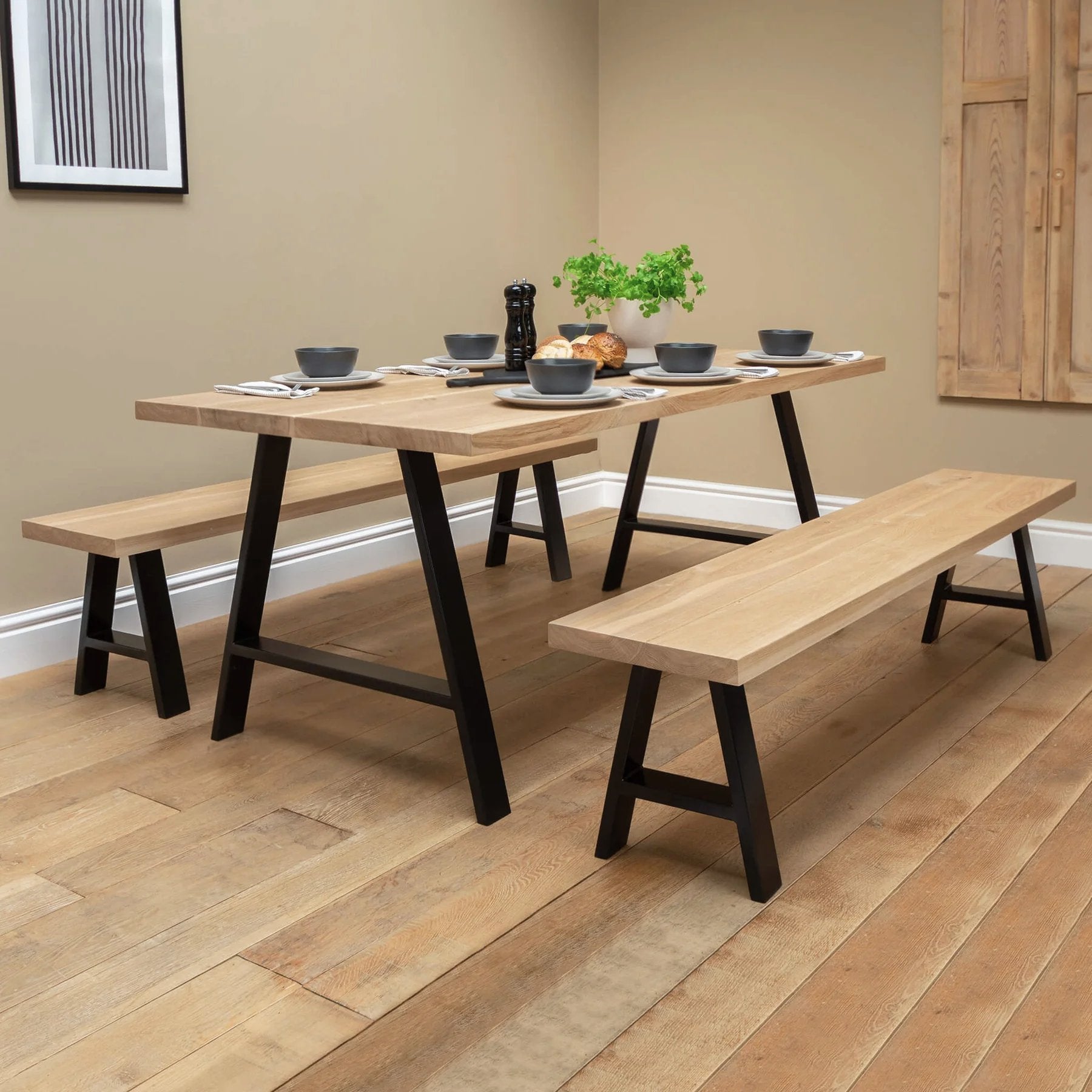
A farmhouse-style oak table suits this setting especially well. The natural grain brings character against painted cabinetry, while a solid top can take the knocks of daily use. Pair it with a bench on one side and individual dining chairs on the other for a relaxed, less formal look. This arrangement is practical where the table runs close to a wall, as the bench can slide underneath when the room needs to work harder.
The trade-off is the corners. In a busy route between an island and the garden doors, sharp corners can feel intrusive. Rounded corners or softly eased edges retain the useful rectangular shape while making movement gentler.
Round tables for sociable, compact spaces
Round tables are often among the top tables for open-plan kitchens where walkways are limited. With no corners to navigate, they are easy to move around and make conversation feel naturally inclusive. They work particularly well in square rooms or in the softer dining zone beside a kitchen island.
A round solid oak table offers a pleasing contrast to the straight lines of modern units. It can break up a room full of right angles and make a smaller dining area feel less crowded. Four people can dine comfortably at a table around 110cm to 120cm in diameter, while larger versions offer more generous seating.
Their limitation is capacity. A round table needs considerably more floor area as it grows, so it is less efficient than a rectangle if you regularly seat six or eight. For occasional large gatherings, an extending design may be worth considering, though a fixed solid top often has the simpler, more enduring character many homeowners prefer.
Oval tables for a softer family layout
An oval table gives some of the generous length of a rectangle with the easy circulation of a round table. It is an excellent middle ground in homes where children move constantly between kitchen, dining and living spaces. The curved ends take the edge off a central position and make the room feel more welcoming.
This shape is especially suited to an open-plan kitchen with a central island. When both island and dining table are rectangular, the room can start to feel overly linear. An oval dining table introduces a more relaxed silhouette while still seating a good number of people.
Why solid oak earns its place
In a room used from breakfast until bedtime, the material matters. Veneered or flat-pack tables can look appealing initially, but thin surfaces are harder to repair after deep scratches, chips or water damage. A well-made solid oak table can be sanded, refinished and enjoyed for decades. Small marks often become part of its story rather than a reason to replace it.
Oak also changes gracefully with use. Its grain, knots and tonal variations make each top individual, and its warmth prevents contemporary kitchens from feeling cold or overly fitted. This is particularly valuable where white, grey or dark cabinetry dominates the scheme.
A natural oiled finish is a practical choice for family homes because it gives the timber a tactile, low-sheen appearance and can be refreshed over time. A lacquered finish may offer a more sealed surface and a slightly more uniform look. Neither is automatically better: choose oil if you value a natural feel and the ability to maintain the finish locally; choose lacquer if you prefer lower day-to-day maintenance.
Pick a base that suits the way you sit
The table base affects far more than style. Traditional four-legged tables are familiar and sturdy, but the legs can limit where chairs fit, especially at the corners. A pedestal base gives greater freedom around the edge of a round or oval top, making it useful when seating numbers change from week to week.
For rectangular tables, metal industrial legs bring a crisp, architectural contrast to rustic oak. They can make a substantial top feel lighter and complement black handles, pendant lights or steel-framed doors. Position matters, though. Inset legs provide more room for chairs at the ends, while wider-set legs create a strong visual stance but can restrict seating.
A solid timber frame and legs offer a warmer, more traditional finish. They are a natural fit for country kitchens and period homes, particularly when paired with spindle-back chairs or upholstered seating. If your open-plan room blends old and new, oak with a simple black metal base often provides the balance - crafted and characterful, but not overly rustic.
Let the table connect the whole room
A successful open-plan kitchen needs a few repeating elements to make separate zones feel intentional. Your table can provide that connection. Echo the timber tone in a shelf, sideboard or picture frame, repeat the metal finish in lighting, or use dining chairs that pick up the colour of the sofa in the adjoining living area.
Avoid matching everything too closely. A home gains depth from a thoughtful mix of textures: a solid oak table, woven seat pads, painted cabinetry and linen curtains can sit together beautifully. The table should feel like a lasting foundation, while smaller pieces bring changeable colour and personality.
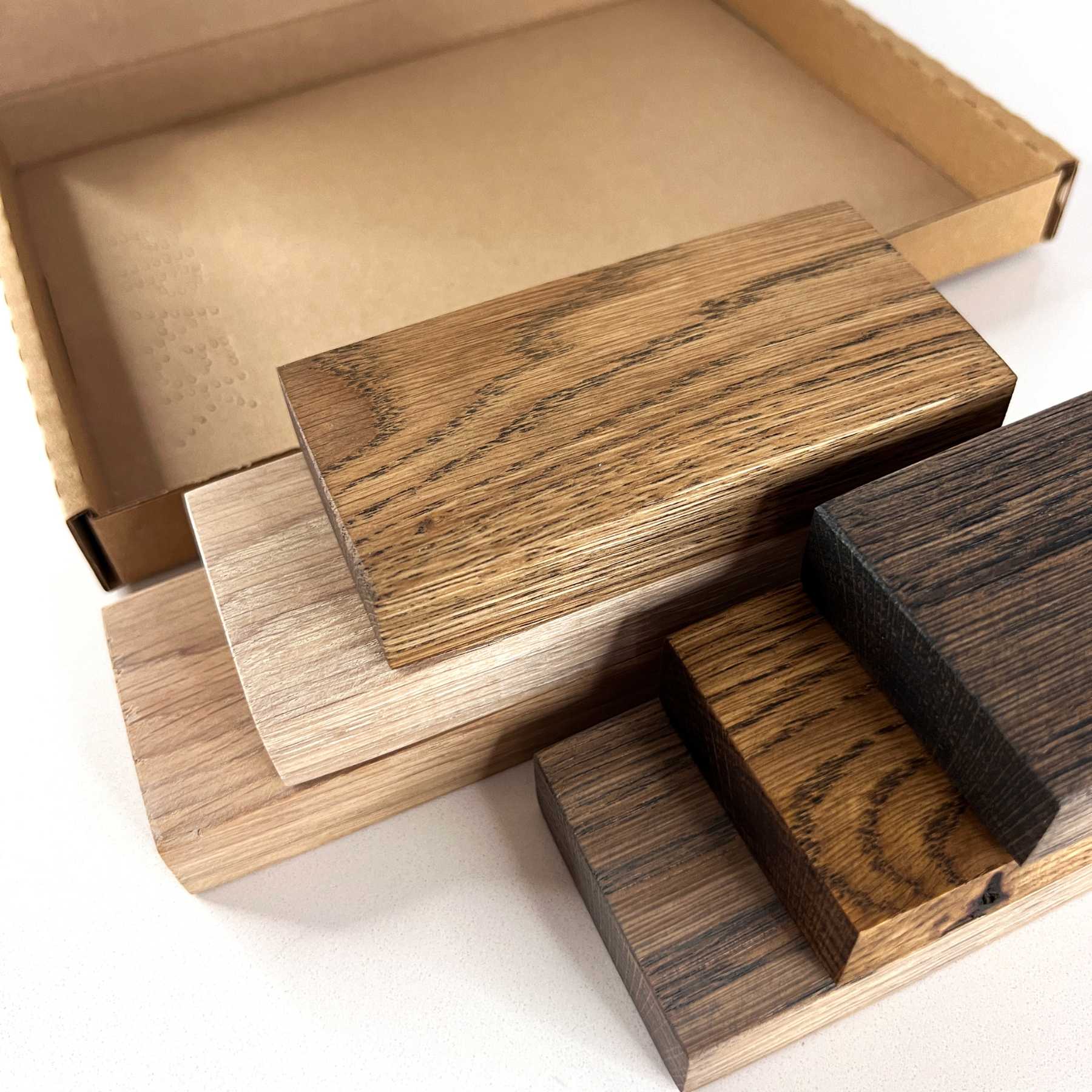
Before committing, ask for timber samples where available and look at them in your own kitchen at different times of day. Oak can appear honeyed in morning light, richer beside dark units and cooler against grey flooring. This small step helps you choose with confidence, particularly when the table will be the most substantial piece of furniture in the room.
The right dining table should make an open-plan kitchen easier to live in, not simply nicer to look at. Choose a shape that respects the room, dimensions that welcome real life and materials that reward years of use. A lovingly made solid wood table from a workshop such as Willen Rose can become the place where everyday meals, celebrations and quiet cups of tea all find their place.