



Why Choose Bespoke Oak Dining Tables?

A dining table rarely sits quietly in the background. It catches homework, Sunday roasts, last-minute laptop sessions, birthday candles and those everyday conversations that somehow become the ones you remember. That is why bespoke oak dining tables appeal to so many homeowners - they are not bought simply to fill a space, but to suit the way a home is actually lived in.
For many people, the problem with off-the-shelf furniture is not just appearance. It is scale, proportion and compromise. A table may be too long for the room, too narrow for comfortable place settings, too polished for a relaxed family kitchen or too flimsy to feel worth bringing into a long-term home. When a table is made to order in solid oak, those decisions become far more considered. The result is something that feels right from the beginning and still feels right years later.
What makes bespoke oak dining tables different?
The simplest answer is this: they are built around your room rather than expecting your room to work around them. That difference matters more than people often realise.
A mass-produced table is designed to suit the widest possible market. It must fit standard packaging, standard warehousing and standard delivery systems. That usually means fixed dimensions, limited finishes and construction methods chosen for speed. A bespoke piece takes the opposite route. Its length, width, height, leg position, top thickness and finish can be chosen with the home in mind.
That flexibility is especially useful in British homes, where rooms are rarely uniform. A Victorian terrace may have a narrow dining room that needs a table with enough presence but not too much bulk. A newer open-plan kitchen may need a larger statement piece that anchors the room without feeling heavy. In a farmhouse setting, customers often want warmth and texture. In a cleaner contemporary interior, they may prefer a more refined top and a simpler edge profile. Bespoke making allows those decisions to be shaped properly, not approximated.
Why oak remains such a trusted choice
Oak has earned its place through use, not fashion. It is strong, characterful and naturally suited to furniture that sees daily wear. The grain brings movement and warmth, while the timber itself has the density to stand up to family life.
That does not mean every oak table looks the same. Some customers love visible knots and rich tonal variation because it gives the piece a more rustic, grounded feel. Others prefer a cleaner selection of boards with a calmer finish. Neither is better - it depends on the character you want in the room.
There is also the question of ageing. Oak does not stay frozen in time. It develops gently with use, and many people see that as part of its appeal. Small marks, changes in tone and the softening that comes from years of meals and gatherings can add to the story of the piece rather than ruin it. That is a very different mindset from disposable furniture, where wear tends to expose weakness rather than character.
Getting the size right matters more than the style
Style draws people in, but proportion is what makes a dining table easy to live with. A beautifully made table will still feel awkward if it dominates the room or leaves guests squeezed together.
When choosing bespoke oak dining tables, size should begin with how the space needs to function. You need room not only for the table itself but for chairs to pull out comfortably and for people to move around without turning every meal into a shuffle. If the room also serves as a route to the garden, utility room or kitchen, that circulation becomes even more important.
Then there is everyday use versus occasional use. A couple may only need four places most of the week, but if they regularly host family, a larger table can still make sense. In other homes, a more compact table with generous width works better than simply stretching the length. Width is often overlooked, yet it can make all the difference between a table that feels cramped and one that feels relaxed.
Height deserves attention too. Most people assume standard height is always fine, but chair design, table thickness and overall build can affect comfort. A bespoke maker can usually advise on those details before the piece goes into production, which saves disappointment later.
The design details that change the feel of the table
This is where craftsmanship becomes tangible. Two oak tables with the same dimensions can feel completely different depending on the finer decisions.
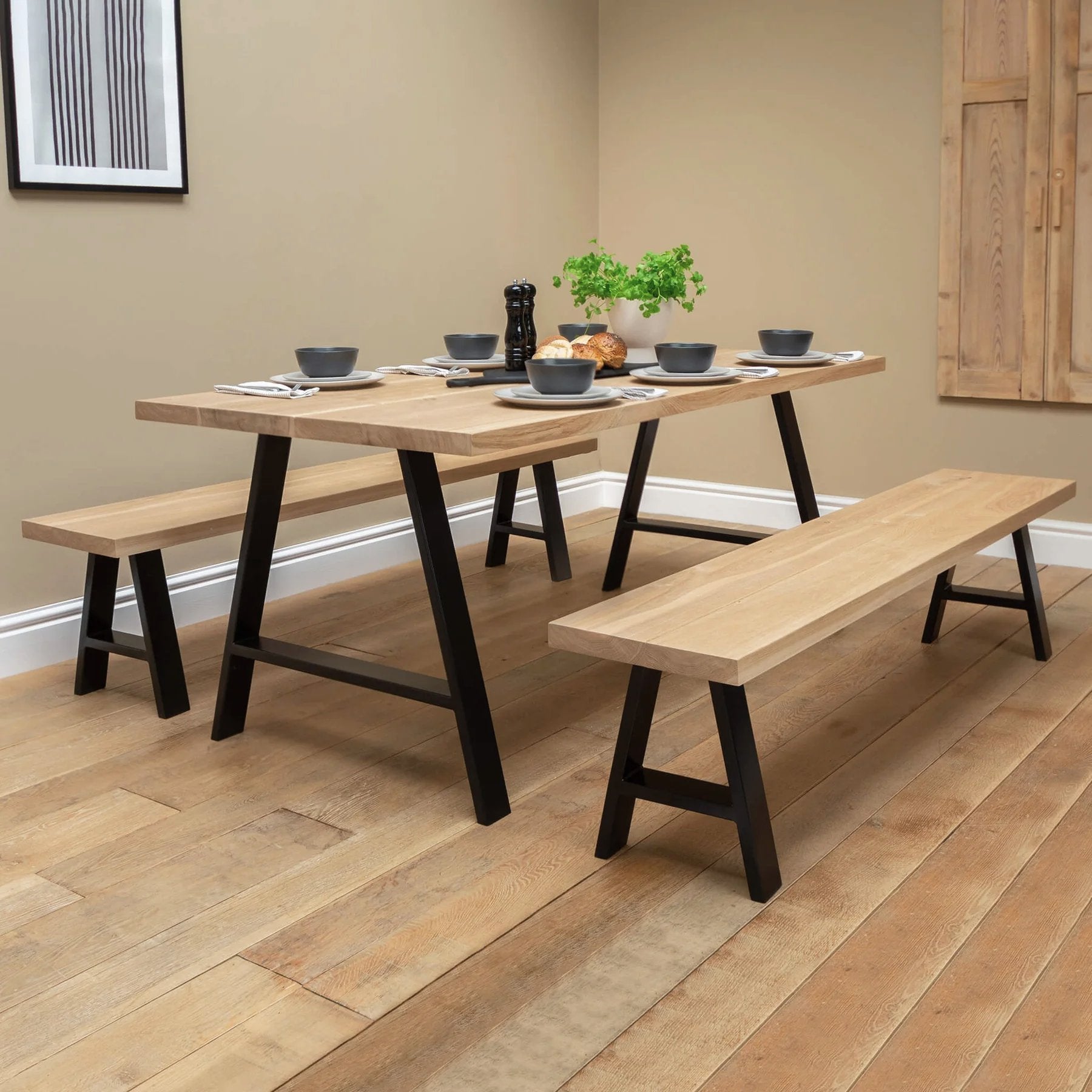
The tabletop is often the first of those choices. A thicker top gives a bolder, more substantial look and suits rustic or industrial interiors particularly well. A slimmer profile can feel lighter and more contemporary. Edges matter too. Straight, clean lines create a neater silhouette, while a more natural edge can bring out the individuality of the timber.
Leg design has a major effect on both appearance and practicality. Chunky square legs can give a table solidity and traditional presence. Metal frames introduce a stronger industrial note and can open up the base visually. Tapered timber legs often feel softer and more classic. The best option depends on the room, but also on how many people need to sit comfortably. Some bases offer better corner seating and fewer interruptions for knees.
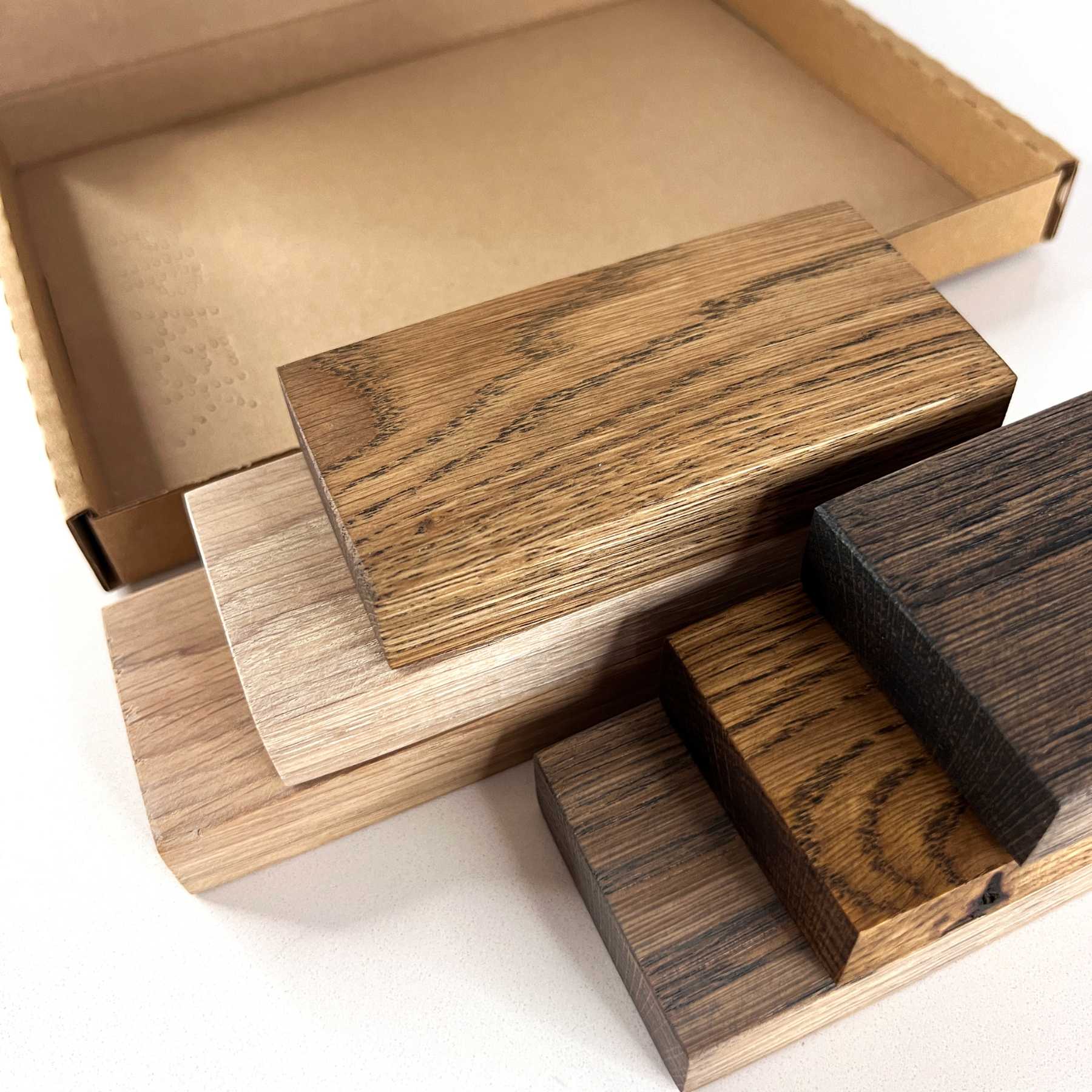
Finishing is another area where bespoke furniture earns its keep. The right finish should protect the timber while keeping its natural beauty visible. Some customers want a lighter, more natural tone that keeps the room airy. Others prefer a deeper warmth that highlights grain and adds richness. A good sample service is valuable here, because oak can look different under workshop lighting than it does in your own home.
Bespoke oak dining tables and family life
A dining table has to work hard. It is not a showroom piece. It takes hot plates, elbows, school bags, craft projects and the occasional spill that nobody manages to catch in time.
That is one reason solid wood matters. Properly made oak furniture has weight, stability and repairability. If the surface picks up signs of use, it can often be refreshed far more successfully than veneered or composite alternatives. That long view is part of the value. You are not buying something that needs replacing when real life starts to show on it.
Families also tend to appreciate furniture that feels settled and honest. A table with genuine timber character does not ask for perfection. It invites use. That can be particularly important in kitchens and dining rooms, where the best moments are often the least staged.
Is bespoke always the right choice?
Not automatically. If you need a table immediately, made-to-order furniture may not suit your timescale. Craft production takes longer than picking from warehouse stock, and that wait is part of the process. For many customers, that is a worthwhile trade-off because the result is tailored and built to last. For others, speed may matter more.
Budget is another consideration. Bespoke oak dining tables cost more than mass-market options because they involve solid materials, skilled labour and individual production. The question is less about the ticket price alone and more about value over time. A cheaper table can cost less now and more later if it needs replacing, wobbles within a few years or never quite suits the room to begin with.
There is also a personal element. Some people know exactly what they want. Others need guidance on dimensions, finishes and style. Working with an experienced workshop helps enormously here, because practical advice often matters as much as making skill.
Choosing a table that feels made for your home
The best bespoke pieces tend to come from clear thinking rather than rushed decisions. Start with the room and how you use it. Measure carefully, including the space needed around the table. Think about how many people sit there most often, not only at Christmas. Consider the surrounding materials too - floor tone, wall colour, chair style and the overall weight of the room.
From there, it becomes easier to refine the character of the piece. Do you want something rustic and full of texture, or cleaner and more understated? Would timber legs feel timeless in your space, or would a metal frame bring the right contrast? Are you looking for a centrepiece, or a quieter design that lets the room breathe?
This is where a British maker with hands-on workshop experience can make the process feel reassuring rather than daunting. At Willen Rose, that craft-led approach is part of what gives customers confidence: the sense that the table is being built by people who understand both the timber and the home it is going into.
A well-made oak dining table does more than look good on delivery day. It settles into family life, grows more familiar with use and becomes part of the rhythm of the house. If you choose carefully, it will not just fit the room - it will feel as though it always belonged there.