



Bespoke Furniture vs Flat Pack

A dining table that wobbles after a year, a chest of drawers that never quite survives one house move, shelves that bow under everyday use - most of us have lived with furniture that looked fine at first and disappointed later. That is really what sits at the heart of bespoke furniture vs flat pack. It is not simply a question of style or price. It is a question of how you want your home to feel, how long you expect your furniture to last, and whether the piece in front of you has been made for a life well lived or simply made quickly.
For some homes, flat pack has its place. It can be convenient, accessible and useful when you need a fast solution. But if you are furnishing a long-term home, especially rooms that carry the weight of family life, the difference between something assembled from standardised panels and something crafted from solid timber becomes much more noticeable over time.
Bespoke furniture vs flat pack - what is the real difference?
Flat-pack furniture is designed for speed, scale and storage efficiency. It is manufactured in volume, packed down for transport, and built to suit the broadest possible market. That usually means standard sizes, engineered boards, surface finishes designed to mimic natural materials, and fixings intended for straightforward home assembly.
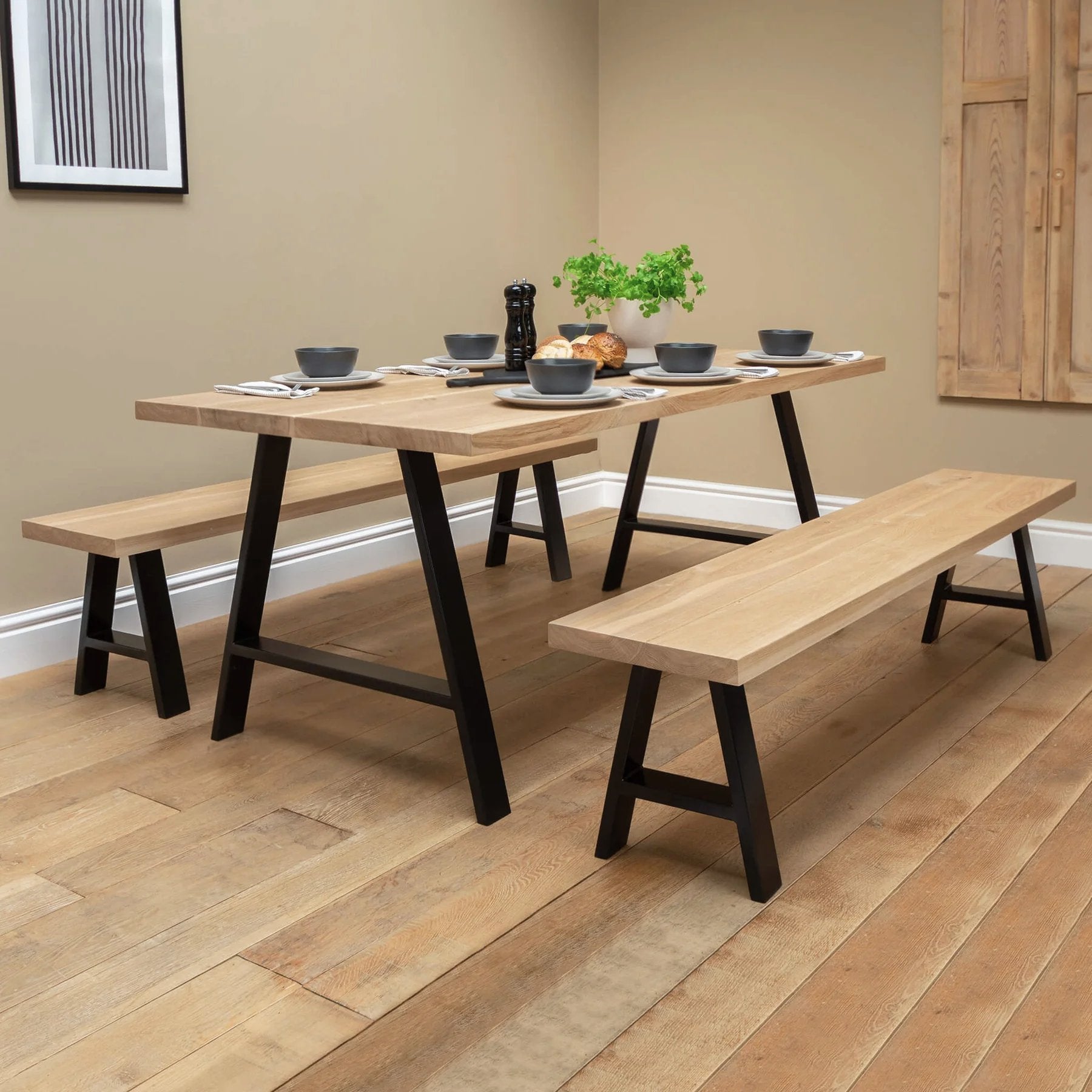
Bespoke furniture starts from an entirely different point. It is made to order, often by skilled makers, with the dimensions, timber, finish and detailing shaped around a particular room and a particular customer. Rather than asking you to adapt your home around a product, it adapts the product around your home.
That difference affects everything else - appearance, durability, comfort, function and even how the piece ages.
Why price only tells part of the story
It is tempting to make the comparison on ticket price alone. Flat pack is almost always cheaper upfront, and for many people that is the deciding factor. If you are furnishing a first flat, a spare room or a temporary space, spending less can make complete sense.
But in a permanent home, value is rarely just about the initial spend. A well-made oak table or solid wood bed frame may cost more on day one, yet if it serves your family for years, survives daily use and still looks better with age, the long-term value can be stronger. By contrast, replacing lower-cost furniture every few years often becomes more expensive than expected.
There is also the hidden cost of compromise. If a flat-pack sideboard is too shallow for what you need, if a dining table is slightly too narrow for comfortable seating, or if a bed frame creaks because it was never built for long-term wear, the cheaper option may stop feeling like a saving quite quickly.
Fit matters more than most people expect
One of the biggest advantages in bespoke furniture vs flat pack is fit. Not just whether a piece physically goes into a room, but whether it sits properly within the space and supports the way you live.
Period cottages, newer extensions, open-plan kitchen diners and loft bedrooms all come with awkward measurements, alcoves or proportions that standard furniture does not always respect. A made-to-order table can be built to suit the width of your room, the number of chairs you need, and the walking space around it. A bench can be designed to tuck neatly underneath. A coffee table can be made lower, narrower or longer to balance the room rather than dominate it.
That level of fit changes the feel of a home. Rooms become calmer and more considered. Furniture looks like it belongs there because, in a very real sense, it does.
When standard sizes work
There are times when standard sizing is perfectly adequate. A simple bookcase for a study, a temporary wardrobe, or occasional furniture in a guest room may not justify a custom build. The right choice depends on the role the piece plays in your home.
If the item is central to daily life, though, exact dimensions are rarely a luxury. They are often what make the room function properly.
Materials make the biggest difference over time
The material story is often where bespoke pieces quietly pull ahead. Much flat-pack furniture is made from MDF, particle board or chipboard with veneer or laminate finishes. None of these materials is automatically useless, but they do have limitations. They are more vulnerable to swelling, surface damage and joint fatigue, particularly in hardworking family spaces.
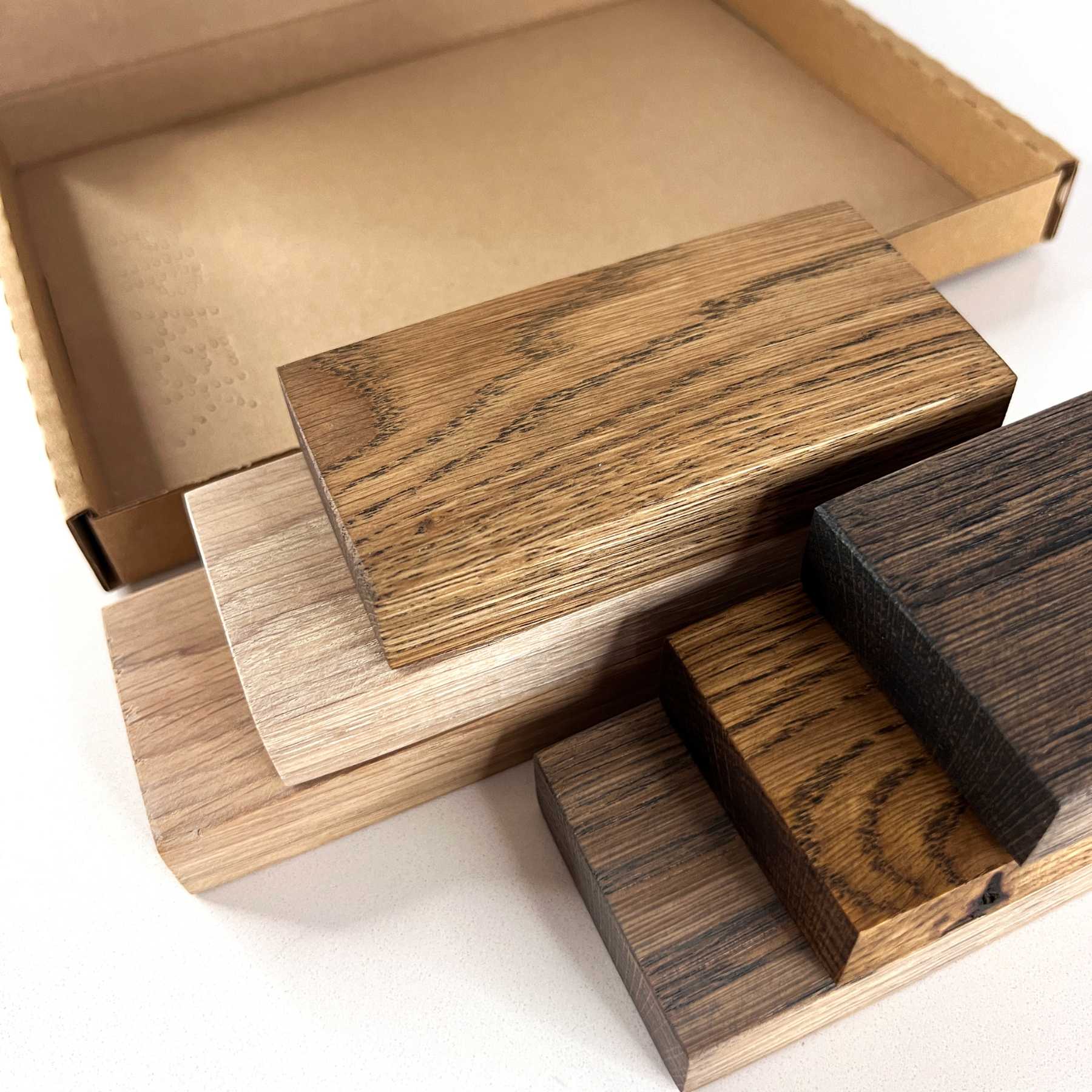
Solid wood behaves differently. It has weight, depth and character. It can be sanded, restored and maintained rather than simply replaced. Marks from everyday life tend to settle into it more gracefully, especially on natural finishes that are chosen to work with the timber rather than disguise it.
With handcrafted furniture, you can also understand what you are buying. You can ask about the wood, the finish, the joinery and the build. That transparency gives reassurance. It is easier to invest confidently when you know how a piece has been made and why it has been made that way.
Assembly versus craftsmanship
Flat-pack furniture asks something of the customer from the outset. You are usually responsible for bringing the piece into the home, unpacking it, assembling it, levelling it and hoping every fitting arrives intact. Even when the process goes smoothly, there is a clear limit to how strong the final structure can be when it depends on repeated cam locks, dowels and lightweight panels.
Bespoke furniture arrives as a finished piece or as a professionally handled installation. More importantly, its strength is built into the making rather than left to a set of instructions. Traditional joinery, careful construction and proper timber selection all contribute to stability that can be felt immediately.
That is particularly relevant for dining tables, beds and storage pieces that take daily strain. These are not occasional-use items. They are part of the rhythm of the home, and they need to cope with children leaning back on chairs, guests gathering around the table, drawers opening and closing countless times, and life generally not being delicate.
Style is not just about appearance
People often assume flat pack offers more choice because there are so many ranges available. In one sense that is true. There are plenty of finishes, colours and trends on the market. But choice is not the same as individuality.
Bespoke furniture gives you the chance to shape a piece around your taste without settling for whatever is closest on a showroom floor. If your home leans rustic, industrial, farmhouse or quietly contemporary, made-to-order furniture can be tailored to sit naturally within that scheme. The grain of the timber, the tone of the finish, the profile of the legs, the edge detail on the top - these are small decisions that make a piece feel personal.
That personal quality matters because furniture is not background. It sets the tone of everyday spaces. A dining table becomes where birthdays are celebrated, homework is spread out and Sunday lunch stretches longer than planned. A bed frame anchors the room you begin and end each day in. These are practical pieces, yes, but they are also part of the atmosphere of home.
Bespoke furniture vs flat pack for sustainability
There is no honest sustainability conversation without talking about longevity. A piece that lasts for many years, can be repaired, and does not need replacing at the first sign of wear is usually a more responsible choice than one built for short-term use.
Bespoke furniture often supports that longer view. It tends to use better materials, involve more careful production, and stay in use for longer because it was chosen thoughtfully in the first place. If it is made from sustainable timber and built in Britain by experienced makers, there is also a clearer chain between workshop and home.
Flat pack can reduce transport volume, which is not irrelevant, but sustainability becomes harder to argue when furniture is frequently discarded because it cannot be repaired or has simply worn out.
So which should you choose?
If you need a quick, affordable solution for a short-term room, flat pack may do the job well enough. There is no need to pretend every purchase must be a forever piece. Sometimes practical and immediate is exactly right.
But if you are furnishing the rooms that matter most, and you care about quality, fit, natural materials and furniture that grows with your home, bespoke is usually the stronger choice. It asks for more investment, but it gives something back in return: better proportions, better craftsmanship, better durability and a stronger sense of connection to the piece itself.
At Willen Rose, that is why so much of what we make begins with the customer rather than the stock list. Homes are individual. Family life is individual. The furniture at the centre of both should feel considered, solid and genuinely made to last.
The best furniture is rarely the piece that was easiest to box up. It is the piece you still rely on years later, when the room has changed around it and it still feels exactly right.