



Best Wood for Dining Tables Explained

A dining table has a harder life than almost any other piece of furniture in the home. It hosts rushed breakfasts, late suppers, homework, birthday cakes, elbows, spills and all the little knocks that come with everyday family life. That is why choosing the best wood for dining tables is not simply a matter of looks. The timber needs to feel right in your home, but it also needs to earn its place over many years of use.
When customers ask us which wood is best, the honest answer is that it depends on how you live, the style you love and how much character you want the table to show. Some timbers are prized for calm, even grain. Others are full of knots, movement and rustic charm. Some darken beautifully with age, while others keep a lighter, cleaner appearance. The right choice is usually the one that balances beauty with practicality.
What makes the best wood for dining tables?
A good dining table timber should be durable, stable and full of natural character. Durability matters because the surface will be used daily. Stability matters because wood is a living material, and even after it has been carefully seasoned and crafted, it still responds to changes in moisture and temperature. Character matters because a dining table is often the focal point of the room. It should feel warm, substantial and made for a real home.
Hardwoods are usually the natural choice. They are denser than softwoods and better suited to furniture that needs to last. Within that, there are still clear differences. One hardwood may be especially tough, another may offer a finer grain, and another may suit a more rustic interior. There is no single winner for every household.
Oak remains the classic choice
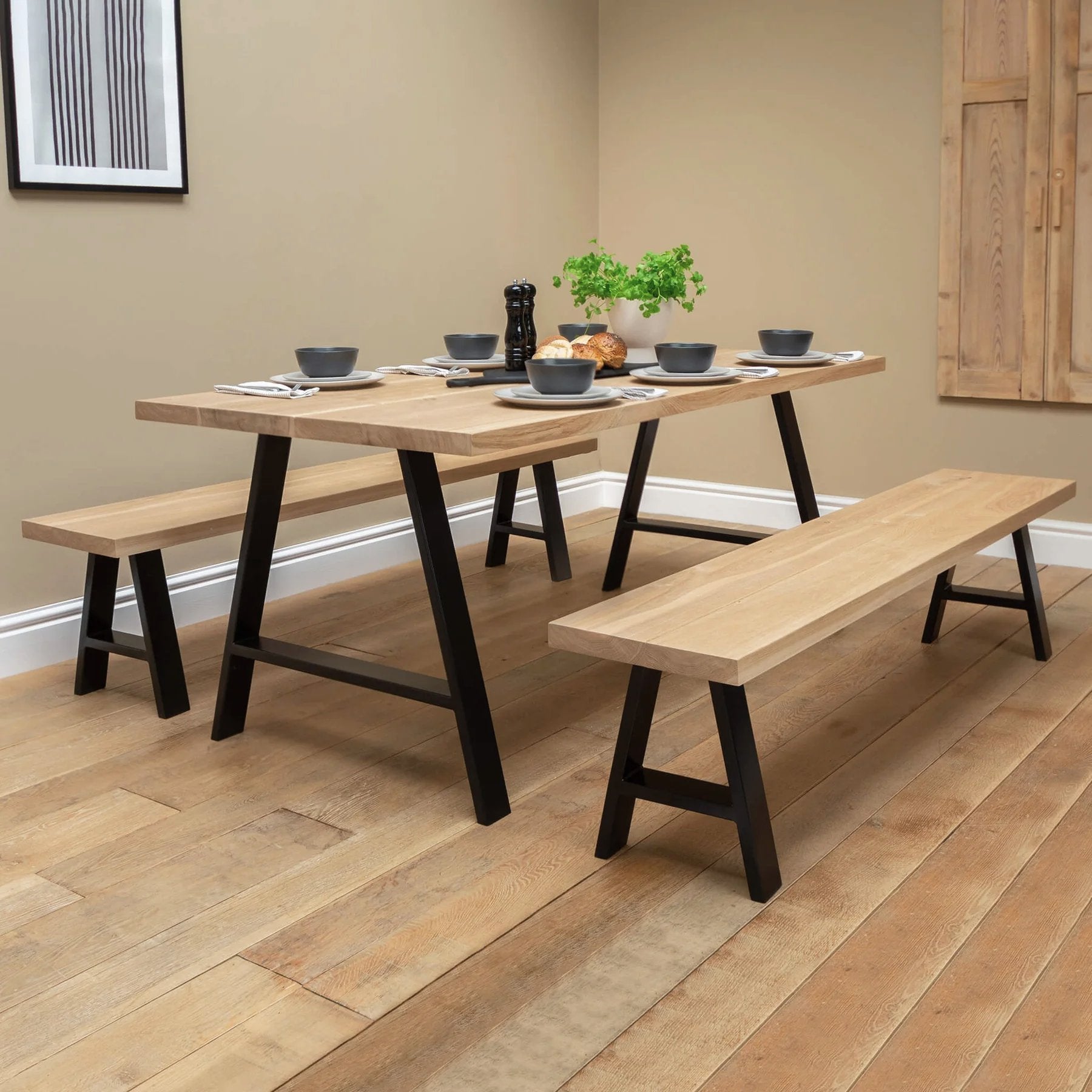
If you ask many British furniture makers about the best wood for dining tables, oak will sit near the top of the list every time. There is good reason for that. Oak is strong, dependable and beautifully expressive, with a grain that gives a table real presence without feeling overdone.
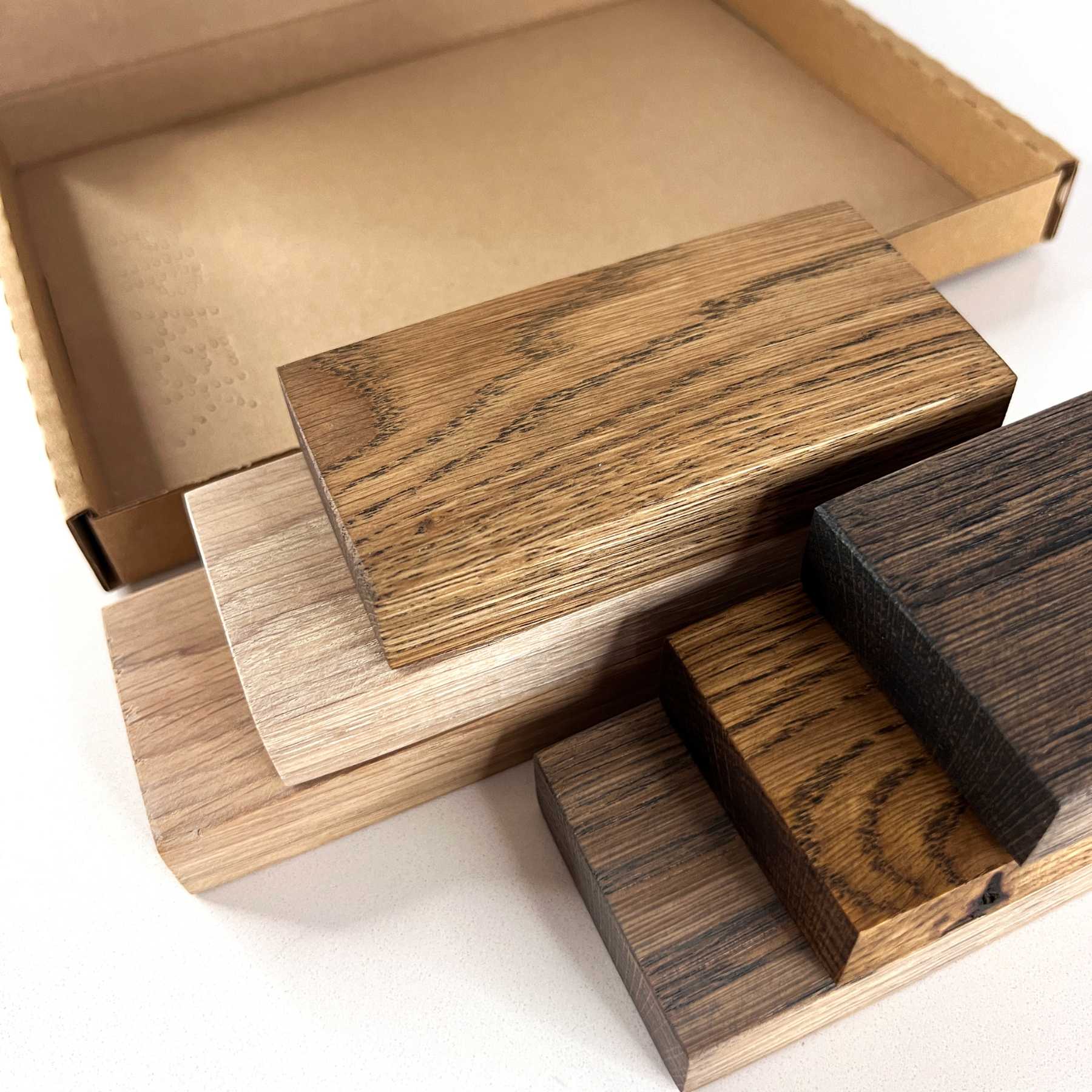
For family homes, oak has an especially sensible balance. It is hard-wearing enough for everyday use, but still warm and inviting rather than cold or formal. It suits farmhouse kitchens, pared-back contemporary spaces and industrial interiors equally well. It also takes different finishes beautifully, whether you prefer a pale natural tone, a richer smoked look or something more rustic with visible texture.
Oak does mark and mellow over time, but many people see that as part of its appeal. A solid oak table should not look untouched after ten years of family life. It should look lived with, and all the better for it.
Why oak works so well in British homes
Oak has a timelessness that makes it easy to live with. Interior fashions shift, wall colours change and chairs are replaced, but a well-made oak dining table tends to hold its ground. It feels rooted. In a permanent home, that matters.
It also works beautifully in bespoke furniture, because it can be made to a wide range of sizes and styles without losing strength or character. Whether you need a compact table for a cottage kitchen or a large statement piece for entertaining, oak adapts well.
Walnut offers richness and elegance
Walnut is often chosen when the aim is something more refined and dramatic. It is typically darker than oak, with deep chocolate tones and flowing grain that can look almost silky. In the right room, a walnut dining table is striking without being flashy.
The trade-off is that walnut can feel more formal, and it often comes at a higher price point. It also tends to show scratches more readily on darker finishes, especially in bright light. For homes with older children or more occasional dining use, that may not be a concern. For a busy kitchen-diner with daily wear, some buyers prefer the forgiving nature of oak.
Walnut is best for those who want warmth, depth and a more polished look. It suits mid-century inspired interiors, darker palettes and spaces where the table is intended to make a quiet statement.
Ash is lighter and more understated
Ash is a strong hardwood with a paler tone and a more subtle feel than oak. It has a clean, modern quality that suits Scandinavian-inspired interiors and lighter rooms where you want the furniture to brighten the space rather than anchor it.
In practical terms, ash is durable and resilient, which makes it a sensible option for everyday use. Its grain is usually straighter and less rugged than oak, so the overall effect is calmer. That can be exactly right if you want a dining table that feels handcrafted but not overtly rustic.
The main consideration with ash is aesthetic rather than structural. If you are drawn to the knots, texture and heritage feel of traditional farmhouse tables, ash may feel a little too neat. If you prefer simplicity and a fresher look, it can be an excellent choice.
Reclaimed wood brings depth and story
There is something special about reclaimed timber. It carries marks, variation and history that cannot be replicated in newly cut boards. For customers who want a dining table with real individuality, reclaimed wood can be one of the most characterful options available.
It works particularly well in rustic and industrial settings, where saw marks, weathering and tonal variation are part of the appeal. No two tops are exactly alike, and that sense of uniqueness often becomes a talking point at the table itself.
That said, reclaimed timber is not for everyone. If you want a very uniform surface, or if you are looking for a sleek modern finish, its natural irregularities may feel too busy. Good craftsmanship matters hugely here. Reclaimed wood needs careful preparation and expert construction to ensure the finished table is stable, practical and fit for modern life.
Pine and softwoods - attractive, but softer
Pine can be charming, especially in country-style interiors, but it sits lower on the list if you are asking strictly about the best wood for dining tables. It is a softwood, which means it dents and scratches more easily than oak, ash or walnut.
That does not make it a poor choice in every case. Some households love the relaxed, timeworn look that softwood develops. In a holiday cottage or a lightly used dining room, pine can feel full of warmth and informality. But for a main family table that will be used every day, most people are happier investing in a hardwood that can better withstand the pace of modern life.
Style matters as much as species
Timber choice should never be considered in isolation. The same wood can feel completely different depending on the design of the table, the finish applied and the setting around it. A chunky oak top with thick legs gives a very different impression from a slim oak top on a black metal frame.
That is why samples and honest advice are so useful when buying a made-to-order piece. Looking at wood in natural light, against your flooring and paint colours, tells you far more than a screen ever can. In our experience at Willen Rose, customers are often choosing between two good timbers rather than one good and one bad one. The decision becomes clearer when they picture how the table will actually live in their home.
The finish affects daily life too
The best timber can still disappoint if the finish is wrong for the way you use it. Dining tables need protection, but they also need to retain the tactile quality that makes solid wood so appealing.
A good hardwax oil finish is popular because it protects the wood while allowing the grain and texture to remain natural. It also tends to age gracefully and can often be refreshed more easily than heavy lacquered finishes. That matters if you want a table that can be maintained rather than replaced.
A lacquered finish may offer a different look and level of protection, but some people find it less natural to the touch. Again, it depends on priorities. The best table is rarely the one that looks perfect forever. It is the one that still feels right after years of use.
So, which wood should you choose?
For most homes, oak is the strongest all-round answer. It is durable, versatile, full of character and well suited to both classic and modern interiors. If you want richness and a darker, more elevated look, walnut is a beautiful alternative. If your taste runs lighter and cleaner, ash deserves attention. If you want a table with soul, variation and a more rustic edge, reclaimed timber can be hard to beat.
The real question is not just which wood is best on paper. It is which wood will still make sense when the chairs are scuffed, the Sunday roast is on the table and the room is full. Choose the timber that suits your home as it really is, and your table will feel more meaningful with every passing year.