



Choosing Dining Table Leg Styles

A dining table can have the most beautiful solid oak top in the room, but if the legs are wrong, you will feel it every day. Knees knock, chairs do not tuck in properly, the room looks heavier than it should, and the whole piece never quite settles into the space. That is why choosing dining table leg styles is not a small finishing detail - it shapes how the table looks, how it works, and how it lives with your family over time.
For many homes, the dining table is asked to do more than one job. It hosts Sunday roasts, homework, working from home, birthday cakes and late cups of tea once the children are in bed. The right leg style needs to support all of that. It should suit the size of the top, the number of seats you need, the feel of the room, and the way people move around it.
Choosing dining table leg styles starts with how you use the table
It is tempting to choose a base on looks alone, especially when a chunky farmhouse leg or sculptural metal frame catches your eye. But the better starting point is everyday use.
If you regularly seat six to eight people, leg placement matters just as much as style. Corner legs can work beautifully on a rectangular table, but they do reduce flexibility at the ends if the legs sit too far in. A pedestal or central base frees up seating and often makes the table feel easier to gather around, especially in narrower rooms. Trestle bases do something similar, giving generous support without placing a leg at each corner.
This is where bespoke furniture has a real advantage. The proportions of the base can be adjusted to suit the exact top size and overhang, rather than forcing a standard frame under every table. In practice, that means better knee room, more comfortable seating and a table that feels properly balanced.
The main dining table leg styles and what they change
Straight legs
Straight legs are timeless for a reason. They are simple, dependable and easy to place in almost any interior, from country kitchens to cleaner contemporary spaces. On an oak dining table, they let the beauty of the timber do the talking.
Their strength is clarity. They give structure without fuss and usually make it easy to understand where chairs will sit. They also work well if you want a design that will still feel right in ten or fifteen years. The trade-off is that they are less distinctive than some other styles. If you want the table to be the clear focal point, you may prefer a more characterful base.
Turned legs
Turned legs bring softness, rhythm and a stronger sense of craftsmanship. They suit traditional homes particularly well, but they can also be used to add warmth to a plainer room. On painted chairs or a rustic oak top, they create that welcoming, lived-in look many families want.
The thing to watch is scale. Fine, delicate turnings can feel elegant on a smaller table, while a larger family table needs enough weight in the base to avoid looking fussy. Done well, turned legs feel generous and grounded. Done badly, they can tip into over-decoration.
Tapered legs
Tapered legs are often chosen for a more understated contemporary feel. They lighten the visual weight of a solid wood table and help a dining room feel less crowded, particularly where space is tight. If your home leans towards Scandinavian, mid-century or simple modern country styling, tapered legs can be a strong fit.
They are usually best on smaller to medium tables where you want a clean silhouette. For very large tops, the design needs careful handling so the table still feels substantial enough for the room.
X-frame and trestle bases
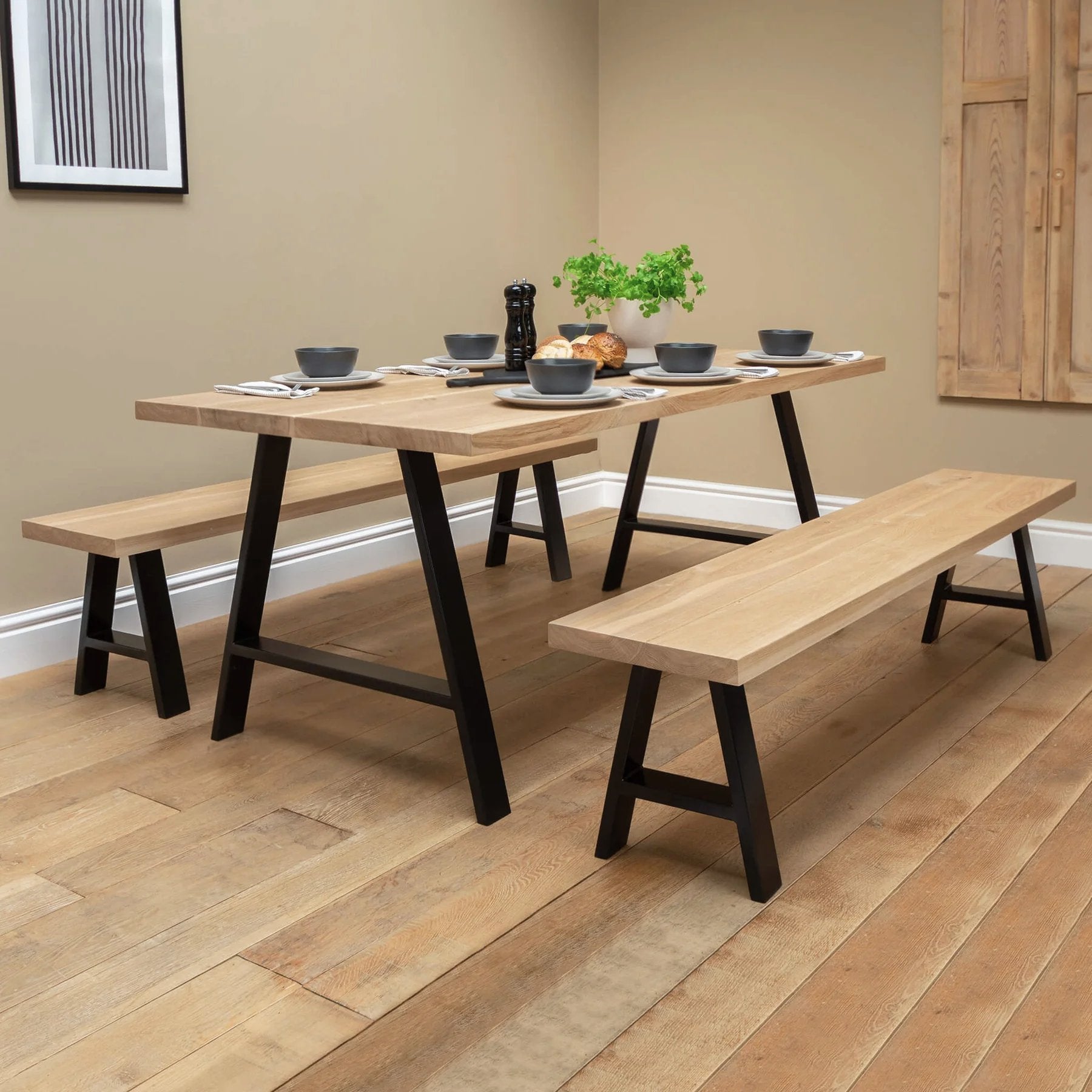
A trestle base or X-frame brings presence. It works especially well on long farmhouse tables and can be ideal for busy family life because it offers strong support through the centre of the piece. It also makes benches easier to use, which matters if you want a relaxed, sociable setup.
These styles suit rustic and industrial interiors naturally, particularly in oak, reclaimed timber or paired with metal details. They do, however, have more visual weight. In a small dining room, a heavy trestle can dominate unless the proportions are carefully judged.
Pedestal bases
Pedestal tables have one of the clearest practical benefits - fewer legs to navigate. That can make them excellent for round tables and for homes where flexibility matters. You are not trying to squeeze chairs awkwardly between corners, and the room often feels easier to move through.
The challenge is support. A pedestal must be properly built for the size and weight of the top. On a solid wood table, especially a generous oak top, that engineering matters. A well-made pedestal feels calm and steady. A poor one can wobble or look undersized.
Metal industrial frames
Metal legs bring contrast and a more architectural edge. Black steel paired with solid oak has become a modern classic because it balances warmth with structure. It suits open-plan homes, loft-style spaces and interiors that want a sharper, cleaner line.
This style is practical and durable, but it can feel visually colder than all-wood designs. That is not a fault - it simply depends on the atmosphere you want. In a family home, many people soften the look with upholstered dining chairs, warm lighting and natural textures elsewhere in the room.
Size and proportion matter more than people expect
A leg style that looks perfect in a photograph can feel entirely different in your home if the proportions are off. Thick legs on a modest four-seater can make the table feel clumsy. Very fine legs under a large plank top can look hesitant, as though the base and top belong to different pieces.
Good furniture has visual balance. The weight of the top should feel supported, and the base should suit the scale of the room. In smaller spaces, lighter profiles often work well because they allow the floor area to breathe. In larger kitchens and open-plan dining rooms, a more substantial base can help the table hold its own.
This is one of the reasons made-to-order furniture feels so different from mass-produced alternatives. The leg style is not chosen in isolation. It is considered alongside table length, width, timber thickness and the way the piece will sit in the room.
Think about chairs, benches and the people using them
A beautiful base can become frustrating if it fights against your seating plan. If you want chairs all the way round, check where the legs fall and how much clearance there is. If you prefer benches on the long sides, trestle and central bases can be especially practical because they reduce obstructions.
Family life changes the decision too. Households with younger children often want sturdy, forgiving shapes rather than delicate details. Homes that entertain frequently may prioritise flexible seating over statement design. Neither approach is more correct. It depends on whether the table is mainly for daily family meals, larger gatherings, or both.
Let the room guide the style
The best dining tables feel as though they belong to the house. In a period property, turned or classic straight legs may sit more naturally with the architecture. In a converted barn or farmhouse kitchen, a chunky trestle can feel right at home. In a newer extension with glazing and clean lines, tapered oak legs or a metal frame may create the balance you want.
Try to look at the wider picture rather than the table alone. Flooring, lighting, cabinetry and surrounding furniture all influence what will feel settled. If everything in the room is already strong and textural, a simpler leg style can give the eye somewhere to rest. If the room is quite plain, a more distinctive base can add character.
Craftsmanship shows most in the details you use every day
Dining table legs are not just decorative components. They carry weight, resist movement and affect the stability of the entire piece. That is why joinery, fixing methods and material quality matter so much. A solid wood table should feel reassuring when you lean on it, not hollow or uncertain.
At Willen Rose, that practical side of design is always part of the conversation. The right leg style should not only suit your taste. It should also be crafted to last, proportioned properly for the top, and made for the way your home actually works.
If you are weighing up options, trust the room, trust your routine, and pay attention to where people will sit. The best choice is usually the one that feels natural after the novelty has worn off - the table that welcomes everyone in, works hard without complaint, and quietly becomes part of family life.