



How to Measure for a Custom Dining Table
A dining table can look perfect on paper and still feel wrong the moment it arrives. Too wide, and the room feels pinched. Too long, and chairs scrape the wall every time someone sits down. If you are wondering how to measure for a custom dining table, the good news is that a few careful checks will tell you far more than a floorplan alone.
When a table is made to order, you are not forced to work around standard sizes. That is the real advantage. You can choose dimensions that suit the room, the way your household eats and entertains, and the look you want to live with for years. Measuring properly is what turns a beautiful piece into one that feels truly at home.
How to measure for a custom dining table in your room
Start with the room itself, not the table. Measure the full length and width of the available space in centimetres, and note anything that affects movement around it. Radiators, window sills, door swings, sideboards, fireplaces and deep skirting can all reduce usable space, even when the room seems generous at first glance.
From there, think about clearance. In most homes, you will want around 90cm between the table edge and the wall or nearest piece of furniture. That gives enough room for chairs to sit comfortably and for people to move around without feeling hemmed in. If the room is especially tight, you may be able to work with a little less on one side, but that usually depends on how often that route is used.
If the dining area sits in an open-plan kitchen or family room, be honest about traffic flow. People are rarely just sitting at the table. They are carrying plates, walking past with laundry, helping children with homework, or heading to the garden doors. A table that technically fits can still interrupt daily life if it blocks those natural paths.
A simple way to test this is to mark out your proposed table size on the floor with masking tape or sheets of newspaper. Then place dining chairs around it, or use dining chair measurements if yours are not to hand. Walk around it as you normally would. Open nearby doors. Stand where someone would pull a chair back. This practical check often reveals more than a tape measure.
Decide how many people the table needs to seat
The next question is not just how many people you can seat, but how many you need to seat comfortably most of the time. A custom dining table should suit everyday life first. If you are a family of four who host Christmas once a year, it may make more sense to choose a well-proportioned table for daily use and consider extending options, rather than living with an oversized piece all year.
As a guide, allow around 60cm of table edge per person for comfortable dining. Some people prefer 70cm, especially if they like broader chairs, generous place settings or a less crowded feel. For the ends of rectangular tables, it depends on the leg position and apron design. A beautifully made solid wood table can still lose a seat in practical terms if the base gets in the way of knees or chair placement.
Round tables work differently. They can be wonderfully sociable and soften a room, but they need enough diameter for place settings and serving space. In smaller rooms, they are often easier to move around than sharp corners, though they can seat fewer people efficiently than a rectangular design in the same footprint.
This is where bespoke sizing matters. You are not only choosing length and width. You are shaping how the table will be used, who gathers around it, and whether it feels intimate on a Tuesday evening as well as welcoming when friends come round.
Width, length and height - what matters most
Length usually gets the most attention, but width deserves equal care. A table that is too narrow can feel mean and impractical, especially if you like serving dishes in the centre. Too wide, and conversation across the table becomes less natural, particularly in a family kitchen where the table does double duty for meals, work and everyday catch-ups.
For many homes, a dining table width of 90cm to 100cm strikes a good balance. It gives enough room for plates, glasses and shared dishes without overwhelming the space. Narrower tables can work well in compact rooms, while broader tables often suit larger dining rooms where you want more visual presence.
Height matters too, though this is one area where standard proportions usually exist for good reason. Most dining tables sit around 75cm high, which pairs comfortably with standard dining chairs. If you already have chairs you plan to keep, measure them carefully. Check the seat height and allow enough space between the chair seat and the underside of the table so people can sit comfortably. Around 25cm to 30cm is a useful guide, though chair style can affect this.
Do not forget the table base. Thick tops, chunky frames and central pedestals all change how a table feels in use. A statement base may look striking, but if you need to maximise legroom or fit more chairs along the sides, that detail becomes practical as well as aesthetic.
How to measure for a custom dining table with chairs
Chairs are often the missing part of the measuring process. People measure the tabletop, then realise too late that the chairs need more room than expected. If you already own dining chairs, measure their width, depth and overall height. Include any arms if they tuck under the table.
Then think about pull-back space. A chair may only be 50cm deep, but once someone sits down, it needs more room behind it. That is why the 90cm clearance rule is so useful. It accounts for both the chair and the person using it.
If you are buying new chairs with the table, decide early whether you want a tighter, neater arrangement or a more generous one. Upholstered chairs tend to need a little more room than slim timber or metal-framed styles. Carvers at the ends of the table also take up more space, and not all of them slide neatly beneath the top.
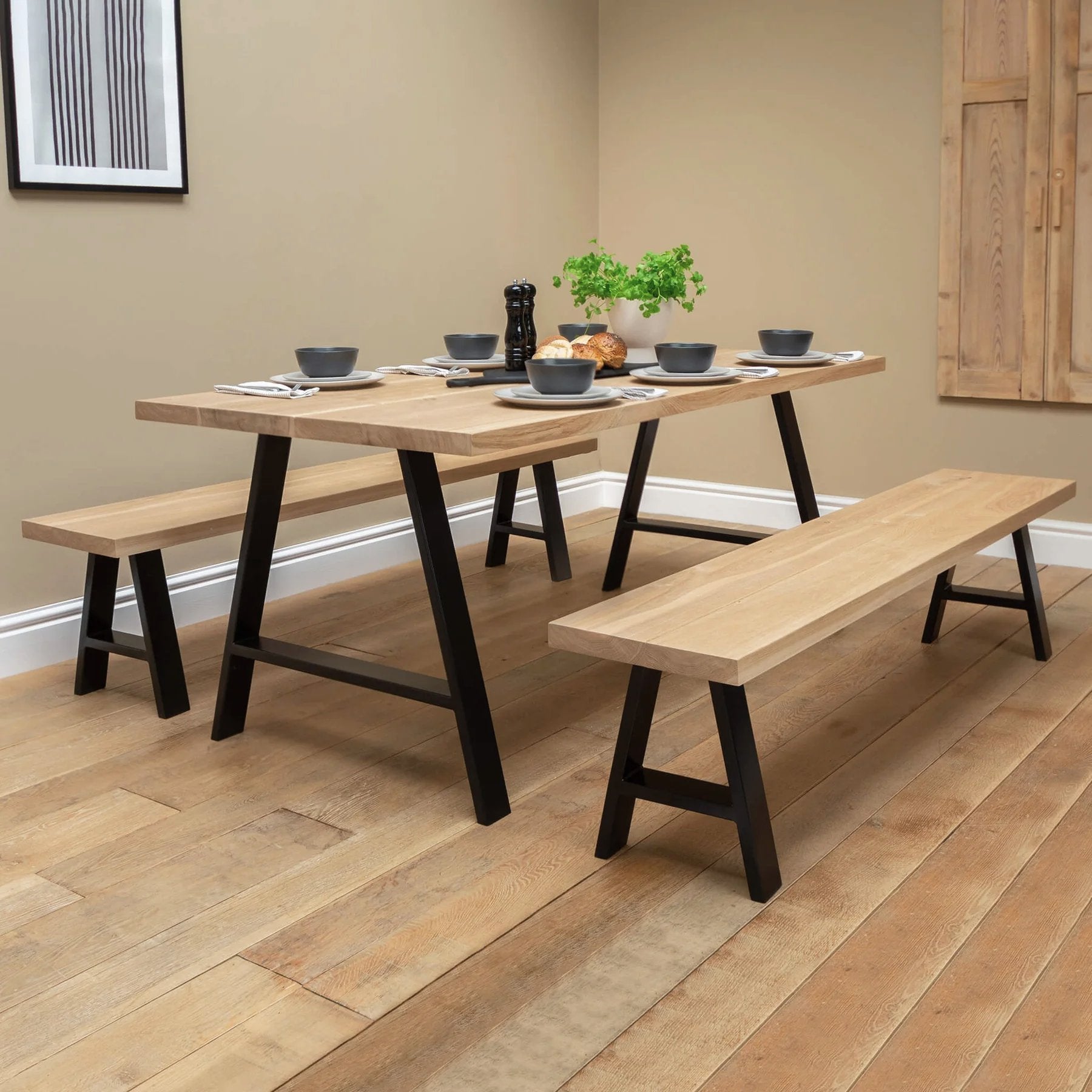
Benches change the calculation again. They can save space visually and create a relaxed, family feel, but they still need enough room to slide in and out. In some layouts, a bench on the wall side is a practical answer. In others, individual chairs are simply easier for daily use.
Don’t forget the room’s shape and features
Not every dining room is a plain rectangle, and that is often where made-to-order furniture comes into its own. Alcoves, bay windows, uneven walls and open-plan zones all affect what size and shape will sit best.
A long rectangular table often suits a classic dining room, but a square room may feel better with a round or square design. In narrower spaces, a slightly slimmer table can preserve comfort without sacrificing style. If the room has strong architectural features, such as exposed beams or a chimney breast, the right table size should work with them rather than compete for space.
It is also worth measuring access into the house. A custom table may be built to the perfect dimensions for the room, but it still needs to get through the front door, along the hallway and up any awkward stairwells if required. Makers experienced in solid wood furniture will guide you through this, but having those access measurements ready is always wise.
Think beyond the numbers
Good measurements are not just about avoiding mistakes. They help you choose a table that looks settled in the room. Proportion matters. A beautifully handcrafted oak table should feel anchored and inviting, not squeezed in as an afterthought or floating awkwardly in too much empty space.
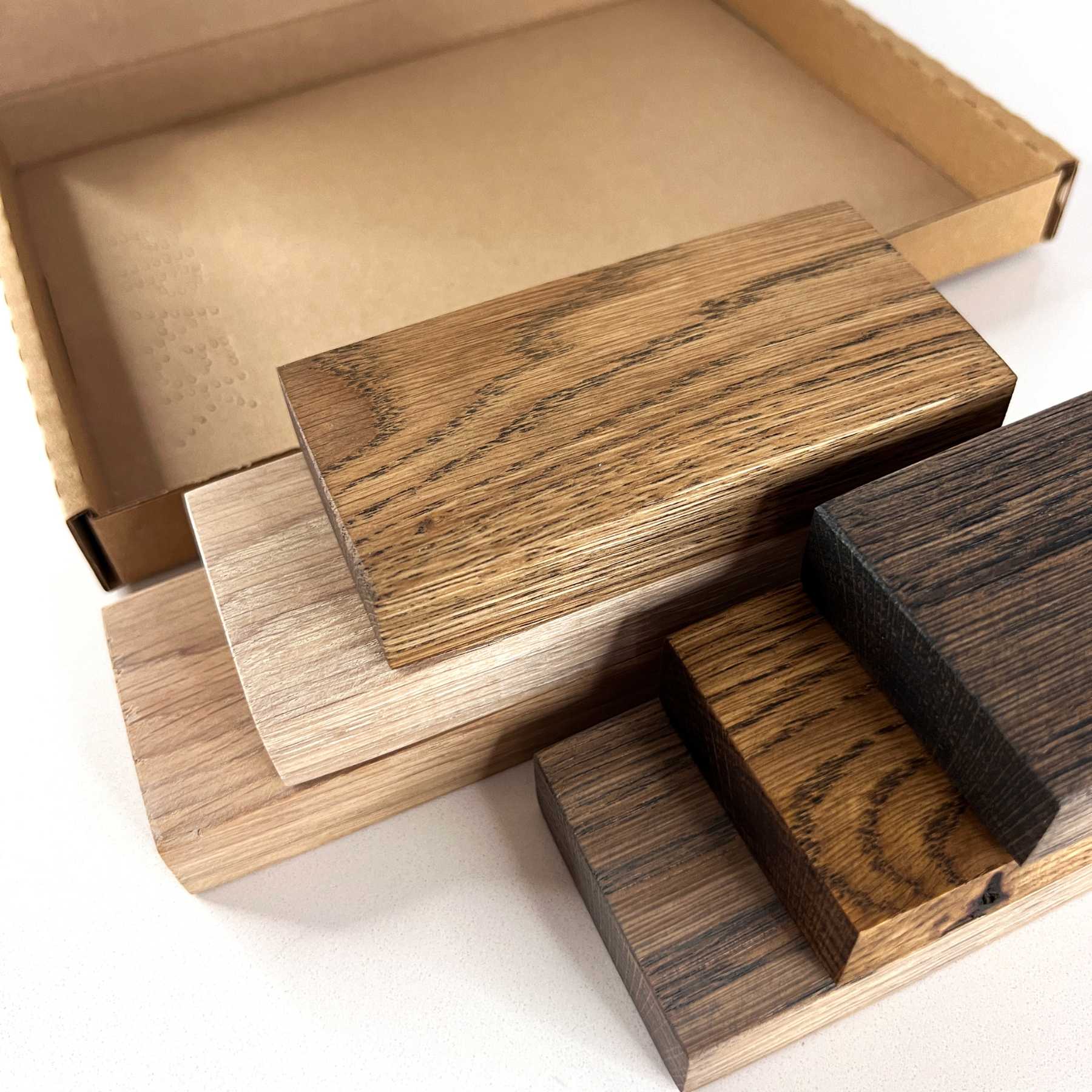
That is where samples, sketches and experienced advice can be so valuable. Timber tone, leg style and top thickness all affect how large a table feels visually. A heavy rustic design may suit a spacious room with ease, while a lighter industrial-style frame can keep the look open in a more compact setting. Neither is better in every case. It depends on the home, the light and how you want the room to feel.
If you are ordering a bespoke piece, give your maker more than raw measurements. Share photos, note where windows and doors sit, mention how many people use the table each day, and be clear about whether this is a busy family hub or a more occasional dining space. The more complete the picture, the better the result.
A custom dining table should never feel like a gamble. With careful measuring and a bit of thought about how you live, it becomes something far better - a piece crafted to last, made for real meals, real conversations and all the moments that gather around it.