



Made to Order Furniture Guide for Your Home
A dining table that is 20cm too short can make every meal feel like a squeeze. A bed that sits awkwardly beneath a sloping ceiling can turn a beautiful room into a daily compromise. That is where a made to order furniture guide becomes useful: it starts with the way you live, then shapes the furniture around it.
Made-to-order furniture is not simply a chance to choose a different stain or swap one set of legs for another. Done properly, it is a considered process of choosing the right proportions, timber, finish and practical details for a piece that will become part of family life for years to come.
Why choose made-to-order furniture?
Mass-produced furniture is designed to suit as many homes as possible. It may be convenient, but standard dimensions can leave little room for the particular character of your house - a narrow Victorian dining room, an open-plan kitchen, a cottage with uneven walls or a new-build room that needs warmth and texture.
Furniture made to order gives you a better answer to those limitations. A table can be built to seat the people you usually gather around it, rather than an arbitrary number. A bench can tuck neatly beneath it. A console table can fit the exact stretch of hallway that has been difficult to furnish. With a wooden bed, the headboard height, frame style and overall footprint can be chosen with the room in mind.
There is also the question of longevity. Solid wood has a depth and strength that veneer and particleboard cannot imitate. Oak, for example, develops character with use. Small marks from busy family life are not necessarily flaws; often, they become part of the piece's story. A well-made solid wood table can be maintained, refinished and enjoyed through changing interiors, house moves and growing families.
The trade-off is time and investment. Handcrafted furniture is not pulled from warehouse shelving, and quality materials deserve a considered budget. In return, you are buying a piece made for your home rather than one you are expected to adapt your home around.
Made to order furniture guide: start with the space
Before thinking about finishes or styles, measure the room properly. Take measurements at floor level and at the height of the furniture, particularly in older homes where walls may not be perfectly straight. Note radiators, alcoves, door swings, skirting boards, sockets and windowsills. If access is tight, measure the hallway, stairs and any sharp turns too.
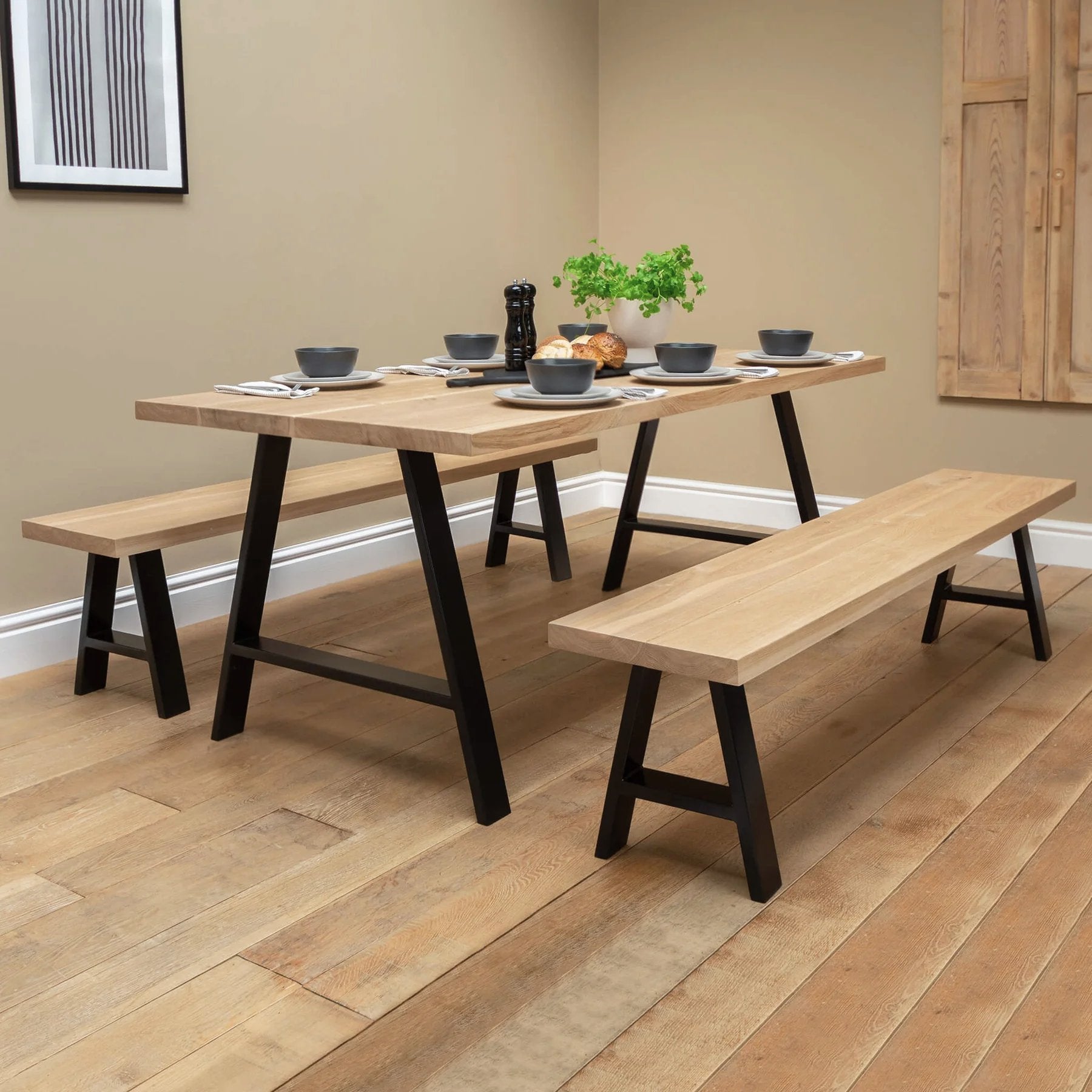
For dining tables, leave enough room to pull chairs out comfortably and for people to move around those who are seated. As a useful starting point, aim for around 90cm between the table edge and a wall or other furniture. A tighter room may call for benches on one side, since they can slide beneath the table when not in use.
Do not judge size by a bare room alone. Mark out the proposed footprint with masking tape or newspaper, then live with it for a few days. Walk around it with the kitchen doors open. Imagine serving Sunday lunch, children doing homework, or guests moving through with a glass in hand. This simple exercise often reveals whether a grander table will feel welcoming or simply too large.
Think about seating, not just table length
The number of people a table seats depends on its shape, leg position and how you like to dine. A long rectangular table is excellent for larger gatherings, while a round table softens a compact room and makes conversation easy. Pedestal bases can offer more flexibility for chairs, whereas industrial metal frames bring a strong, grounded look and can work particularly well with benches.
Allow roughly 60cm of table edge per person for everyday comfort. If you entertain often, consider whether you need space for serving dishes in the middle, or whether an extending design would suit better. The right answer depends on whether the table is mainly for four people on a Tuesday evening or ten people at Christmas.
Choose timber for both character and everyday life
The wood you choose sets the tone. Oak is naturally strong, richly grained and wonderfully adaptable. It can sit comfortably in a farmhouse kitchen, a period dining room or a cleaner contemporary scheme. Reclaimed timber brings extra texture, variation and a sense of history, while carefully selected solid wood offers a more consistent appearance with its own individual grain.
No two boards are identical, and that is part of the appeal. Knots, grain direction and subtle changes in colour are signs of a natural material, not defects to be designed away. A maker should be open about this from the start, particularly if you prefer a quieter, more uniform look or are drawn to bolder rustic character.
The finish matters just as much as the timber. An oiled finish allows the feel of the wood to come through and can be refreshed over time. A lacquered finish may offer greater day-to-day protection, which can be reassuring in homes with young children or frequent dinner parties. Neither is universally better. Consider how much maintenance you are happy to do, how much sunlight the room receives and whether the piece will face regular spills and heat.
Ask for samples before committing
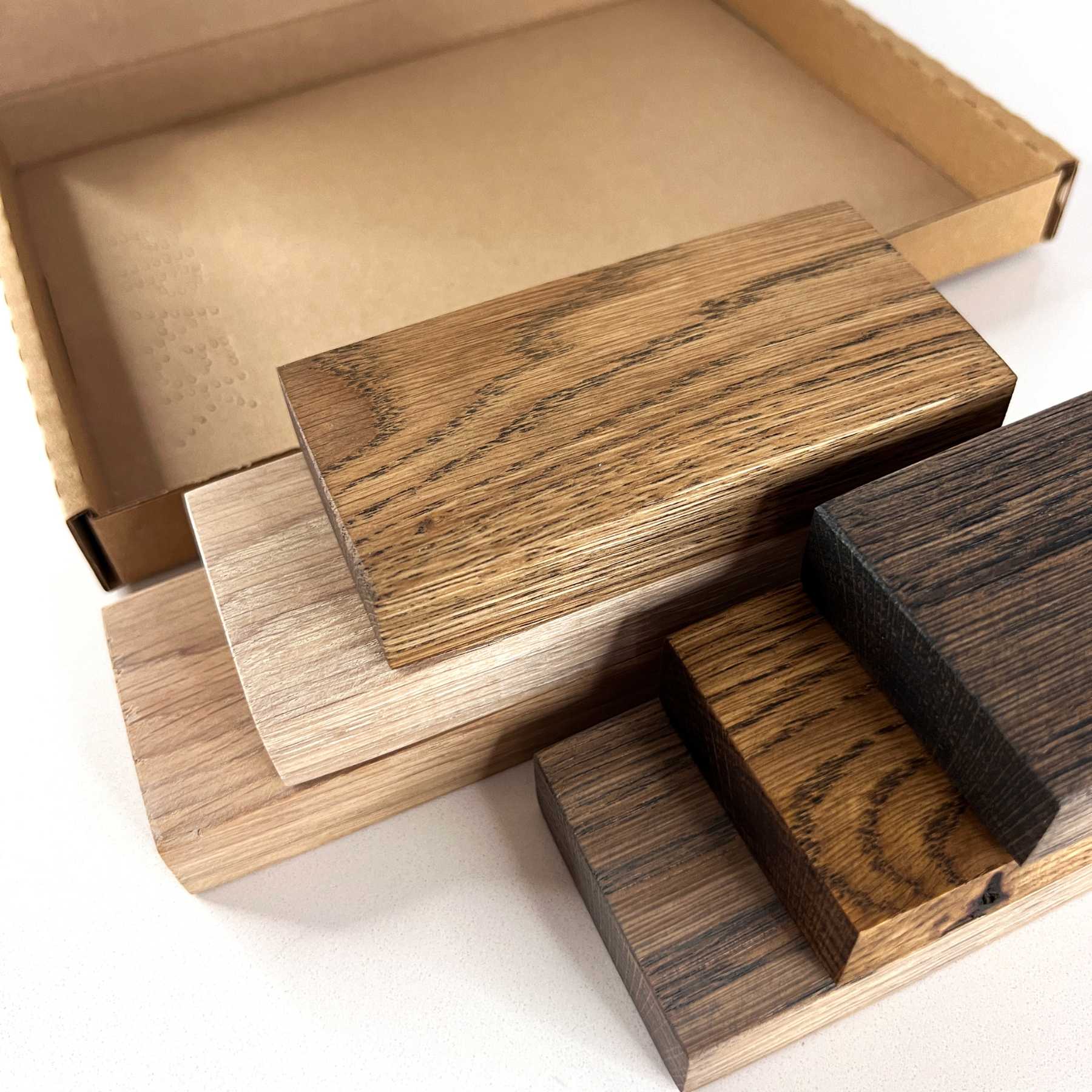
A timber sample is one of the most useful parts of the buying process. Colours on a screen change between devices, and natural wood changes in different light. Place samples beside your flooring, kitchen cabinetry, paint colours and existing furniture. Look at them in morning light, late afternoon and under your usual lamps.
It is worth remembering that wood will mellow over time. A finish that appears slightly pale when new may deepen beautifully as the years pass. Choosing with the actual room in front of you is far more reliable than choosing from a photograph alone.
Get the details right
The finest furniture often feels easy to live with because the details have been thought through. For a dining table, that could mean a top thickness that feels substantial without overwhelming the room, a leg position that does not clash with chairs, or softened edges that are kinder around children. For storage, it may be the internal layout, shelf height or the way a cupboard opens in a narrow passage.
Style should be practical too. A chunky rustic oak top paired with black metal legs gives an industrial table real presence, but it needs enough breathing room around it. In a smaller dining area, a lighter base or slimmer profile may keep the room feeling open. Likewise, an upholstered sofa can bring softness to a timber-rich living room, while a solid wood coffee table gives the space a useful, durable centre.
Share photographs of the room, a simple sketch and your measurements when discussing a commission. Mention what you already own and what you dislike about your current furniture. Good makers ask questions because they want the finished piece to work in real life, not only look good in a workshop.
Understand the lead time and delivery plan
A made-to-order piece takes time because timber must be selected, prepared, crafted, finished and checked before it leaves the workshop. That lead time is part of the value, but it should be clear before you place an order. Plan around renovations, flooring work and moving dates where possible, rather than leaving your statement piece until the final week.
Delivery deserves the same attention as design. Confirm whether the furniture will arrive assembled, whether it needs to go upstairs and whether there are access concerns. A solid oak table is built for strength, which also means it can be heavy. Clearing the route, protecting new floors and having the room ready makes delivery day far calmer.
For homeowners who want direct guidance from people who understand the making process, Willen Rose brings that workshop conversation into each order, with handcrafted pieces lovingly made in Derbyshire.
Care for the piece you have chosen
Solid wood is reassuringly forgiving, but it benefits from simple care. Wipe spills promptly, use mats for very hot dishes and avoid harsh chemical cleaners. Keep furniture away from sustained direct heat where you can, and expect the timber to respond gently to the seasons as humidity changes.
A few signs of use are often inevitable in a well-loved home. The aim is not to preserve furniture as if nobody lives around it. It is to choose a piece with enough quality, thickness and honest material character to handle ordinary life with grace.
The best made-to-order furniture is not the piece that draws attention only on delivery day. It is the table around which birthdays are celebrated, the bed that makes a room feel settled, or the bench that gathers muddy boots and school bags without complaint. Choose carefully, ask the practical questions, and let the finished piece earn its place in your home.