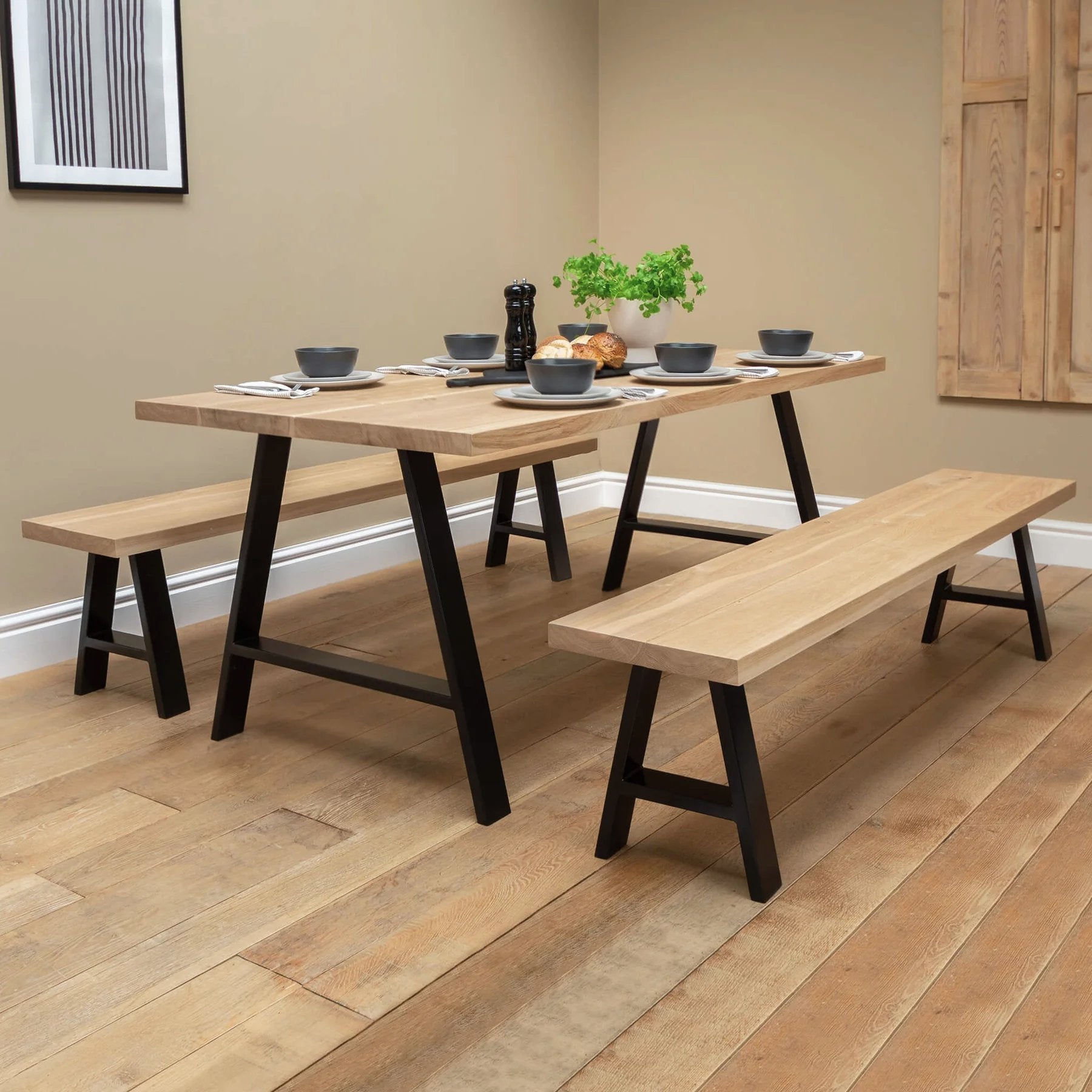




Oak Table Finishes: Choosing the Right One
A solid oak dining table earns its character slowly: a faint mark from a child’s first colouring session, the softened sheen where hands rest during Sunday lunch, the grain becoming more familiar with every season. Choosing between oak table finishes is not simply about colour. It determines how the timber feels, how it copes with everyday life, and how easily it can be refreshed years from now.
Oak is naturally handsome, but unfinished timber is porous. Water, wine, oil and even repeated wiping can leave their mark. The right finish protects the surface while allowing the honest texture, warmth and variation of solid oak to remain part of the table’s story.
What a finish does to solid oak
Every oak board has its own grain pattern, knots and tonal shifts. A finish brings these details forward, but it can also change the colour considerably. Some leave the oak pale and close to its freshly sanded appearance. Others add warmth and depth, creating the golden, gently aged look many people associate with traditional oak furniture.
Protection matters just as much. A dining table is a working piece of furniture. It meets warm plates, cups of tea, birthday candles, homework, elbows and the occasional hurried wipe-down. No finish makes timber indestructible, and a little care will always be worthwhile. However, some finishes are better suited to a busy family kitchen than others.
The best choice depends on the look you love, the way you use the table and your appetite for maintenance. A quieter household may happily choose a finish with a beautifully natural feel. A home with young children, dogs and daily meals at the table may favour greater resistance to spills and staining.
Oak table finishes and how they compare
Natural oils: tactile and easy to revive
Oil is a favourite for people who want oak to look and feel like wood rather than a sealed surface. It penetrates the grain, enriching the timber without creating a thick coating on top. The result is a low-sheen finish with a warm, tactile quality that suits rustic, farmhouse and relaxed contemporary interiors particularly well.
Oiled oak is forgiving in one important respect: local wear, small scratches and dry patches can often be dealt with by lightly preparing the affected area and applying more oil. You do not usually need to strip the whole table to restore it. That makes oil a sensible long-term choice for a table intended to be lived with rather than preserved behind closed doors.
The trade-off is ongoing care. Oil needs replenishing when the surface begins to look dry or loses its water resistance. How often varies with use, but a well-used dining table will appreciate regular attention. Spills should also be wiped promptly, especially coloured liquids such as red wine or curry, as oil offers less of a barrier than a fully sealed finish.
Hardwax oil: natural character with extra resilience
Hardwax oil combines penetrating oils with waxes to give solid oak a natural, softly sheened appearance while improving resistance to everyday moisture and dirt. It is often an excellent middle ground for a family dining table: less plasticky in appearance than some film-forming finishes, but generally more durable than a traditional oil alone.
It brings out the oak’s grain and tends to add a gentle warmth, although clear and pale formulations can limit yellowing. A matt hardwax oil is especially appealing if you want the table to feel understated and honest, with no glossy layer separating you from the timber.
Like oil, hardwax oil can usually be maintained and repaired in smaller areas. It still benefits from care, though. Standing water should not be left on the surface, and harsh cleaning sprays can gradually dull or weaken the protection. For many homes, that modest maintenance is a fair exchange for a finish that retains the character of real wood.
Lacquered oak: a stronger surface barrier
Lacquer forms a protective layer over the timber. It can be matt, satin or more reflective, depending on the chosen specification, and offers reliable day-to-day protection against spills, grease and wiping. For a table that sees constant use, lacquer can be reassuringly practical.
A good-quality matt lacquer need not look overly shiny or artificial. It can preserve a clean, contemporary appearance while making the surface easier to live with. This makes it a strong option for open-plan homes, family kitchens and dining spaces where the table works hard from breakfast through to evening meals.
Its compromise lies in repair. Deep scratches or chips in a lacquered surface may be more noticeable, and refinishing can require greater skill than simply re-oiling a worn patch. The coating can also feel slightly less immediate than an oiled table, particularly to those who love the open grain and hand-finished feel of oak.
Coloured and smoked finishes: setting the mood
Not every finish needs to make oak look golden. Pale, limed and white-toned finishes can keep the timber light, helping a dining room feel airy while still showing its grain. They work beautifully alongside soft neutrals, painted cabinetry and Scandinavian-inspired interiors.
At the other end of the scale, smoked, fumed or darker stained oak creates depth and drama. These finishes complement black metal table legs, rich textiles and industrial-style rooms, while making the grain appear more pronounced. Darker finishes can be practical for disguising minor everyday marks, but scratches that reveal lighter oak beneath may stand out. A sample is invaluable here, as the same colour can look quite different in a bright south-facing room and a softly lit dining space.
Choosing the right colour for your home
The oak itself will influence the final result. Natural boards vary from pale straw shades to deeper honey tones, with knots and medullary rays adding further movement. This is a strength of solid timber, not a flaw to be erased. A finish should work with that variation rather than trying to make every inch identical.
If your room receives plenty of daylight, a natural or pale finish can keep the scheme fresh without feeling cold. In north-facing rooms, a warm oil or medium oak tone can bring welcome richness. Dark finishes create a strong focal point, but can feel heavy in a compact dining area unless balanced by lighter walls, flooring or upholstery.
It is also worth considering the furniture already in the room. Matching every wood tone exactly is rarely necessary and can make a space feel flat. Aim instead for harmony. A warm oak table can sit comfortably with painted chairs, black steel bases, woven lighting and other timbers when the overall undertones feel considered.
Everyday care makes the biggest difference
Even the most suitable finish deserves sensible treatment. Use mats or trivets beneath hot dishes, coasters for drinks and felt pads beneath decorative items that stay in one place. Wipe spills quickly with a soft, slightly damp cloth, then dry the surface rather than leaving moisture to sit.
Avoid silicone polishes, abrasive pads and multipurpose cleaners designed for plastic, glass or high-gloss kitchen surfaces. They can leave residue, alter the sheen or damage the protective layer over time. A mild cleaner approved for the specific finish is always the safer route.
Sunlight is another consideration. Oak changes gently with age, often deepening or mellowing as it is exposed to light. This natural maturation is part of the appeal, but moving runners, centrepieces and placemats occasionally helps the surface age more evenly.
Why samples are worth having before you decide
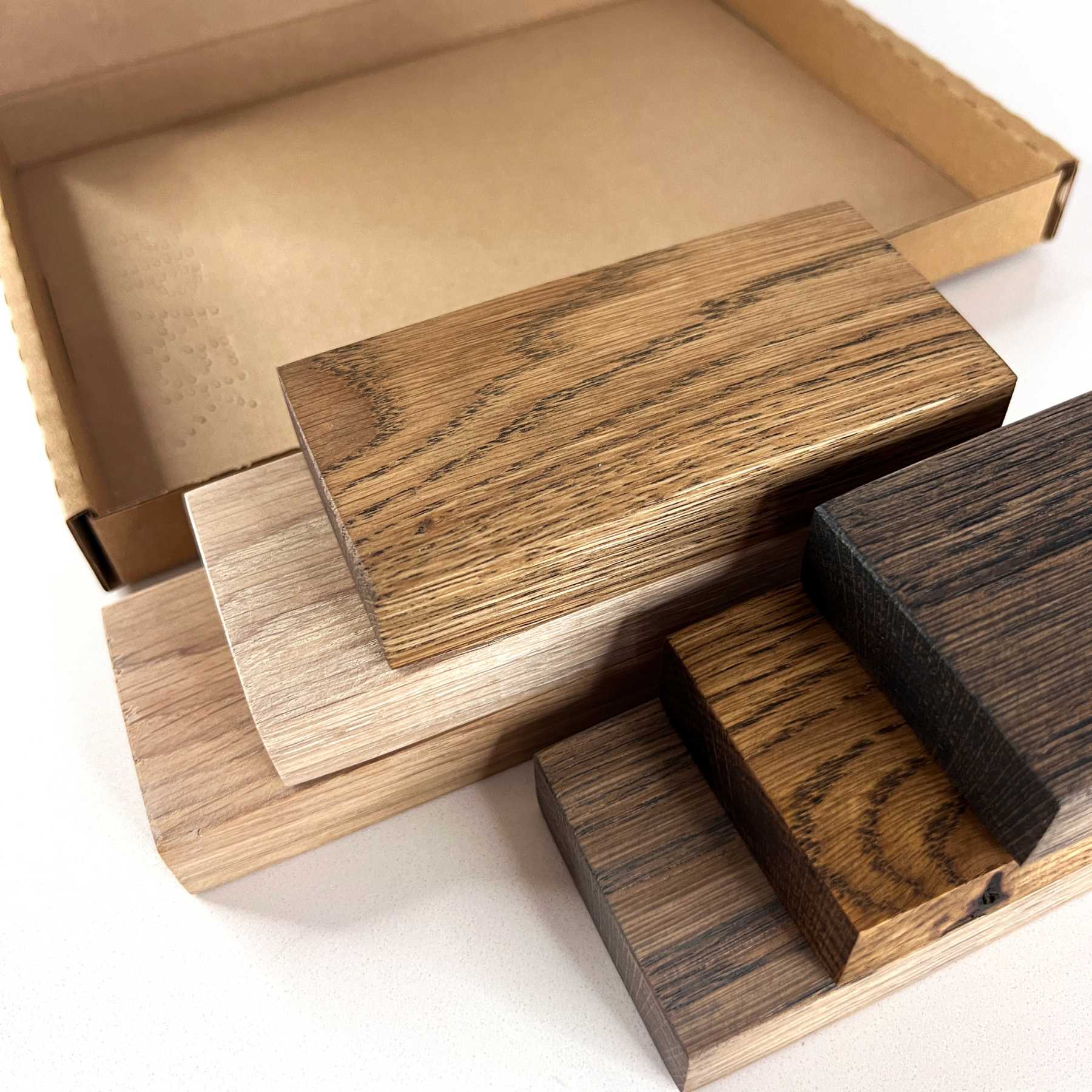
Photographs are useful, but they cannot show the true depth of grain, the softness of a matt finish or the way a colour changes through the day. A sample lets you place oak beside your flooring, paint, curtains and chairs. It also gives you a chance to see whether you prefer a silky sealed feel or the more open, tactile surface of an oil finish.
For a made-to-order table, this small step brings real confidence. At Willen Rose, every table is lovingly made in Derbyshire for the home it is going into, not pulled from a warehouse to suit a generic room. Choosing the finish carefully helps ensure the finished piece belongs there from day one.
A table will never remain exactly as it was on delivery, and that is rather the point. Choose a finish that suits your household, care for it with a light hand, and let the oak grow more familiar with every meal, celebration and ordinary Tuesday gathered around it.