



Best Solid Wood Tables for a Lasting Home
A dining table is where weekday suppers run late, children spread out homework and friends stay for one more cup of tea. That is why the best solid wood tables are not chosen purely for a photograph or a passing trend. They need to feel right in the room, work hard every day and still look better for the life lived around them.
Solid timber has a character that manufactured boards cannot imitate. Its grain, knots and gentle shifts in tone make each table individual. More importantly, a properly made table can be maintained, repaired and handed on, rather than replaced when the surface begins to show its age.
What makes a solid wood table worth choosing?
The phrase “solid wood” is used widely, so it pays to look beyond the headline. A genuine solid wood table has a top and structural elements made from natural timber, rather than a thin timber veneer fixed to chipboard or MDF. It has weight, substance and the ability to be sanded and refreshed in years to come.
Oak remains a favourite for good reason. It is hardwearing enough for busy family homes, with a prominent grain that brings warmth without needing excessive decoration. Rustic oak celebrates natural knots, small splits and variation, creating an honest, relaxed finish. A cleaner grade of oak can suit more contemporary interiors, where the timber’s colour and grain are allowed to do the work.
Reclaimed timber brings another kind of appeal. Its marks and weathered texture carry a sense of history, while keeping useful material in circulation. The trade-off is that it will never be uniform. If you want every board to match precisely, newly milled oak may be the better choice. If you value character and individuality, reclaimed wood can make a remarkable centrepiece.
A well-made table should also account for the way wood moves. Timber expands and contracts subtly with changes in temperature and humidity. Skilled joinery allows for this natural movement, helping the top remain sound through changing seasons rather than forcing it into a rigid structure.
The best solid wood tables start with the right size
The most beautiful table will frustrate you if chairs cannot be pulled out comfortably or if people have to squeeze past it. Start with the room, not a standard table size.
As a practical rule, allow around 90cm between the edge of the table and a wall or fixed furniture where possible. This gives room for a chair and for someone to walk behind it. In tighter spaces, you may be able to reduce that clearance, but consider how the room is actually used at breakfast, on busy evenings and when guests visit.
For place settings, around 60cm of table length per person is a comfortable guide. A 180cm table will generally seat six with ease, while 220cm often suits eight. These are starting points rather than fixed rules. Dining chairs with arms need more width, and a generous table setting for Sunday lunch needs more space than a quick midweek meal.
Table width matters just as much. A width of 90cm to 100cm offers room for serving dishes and candlelight while keeping conversation easy across the table. Narrower tables can be a sensible answer in a galley-shaped dining room, especially when made to the exact width your space allows. For larger rooms, a broader top makes the piece feel settled rather than lost.
Bespoke dimensions are particularly valuable in period properties, extensions and open-plan kitchens, where an off-the-shelf size can feel almost right but not quite. A table crafted to your measurements removes that compromise. Before ordering, mark out the footprint with masking tape or newspaper and live with it for a few days. It is a simple step that can prevent an expensive misjudgement.
Consider the shape as well as the measurement
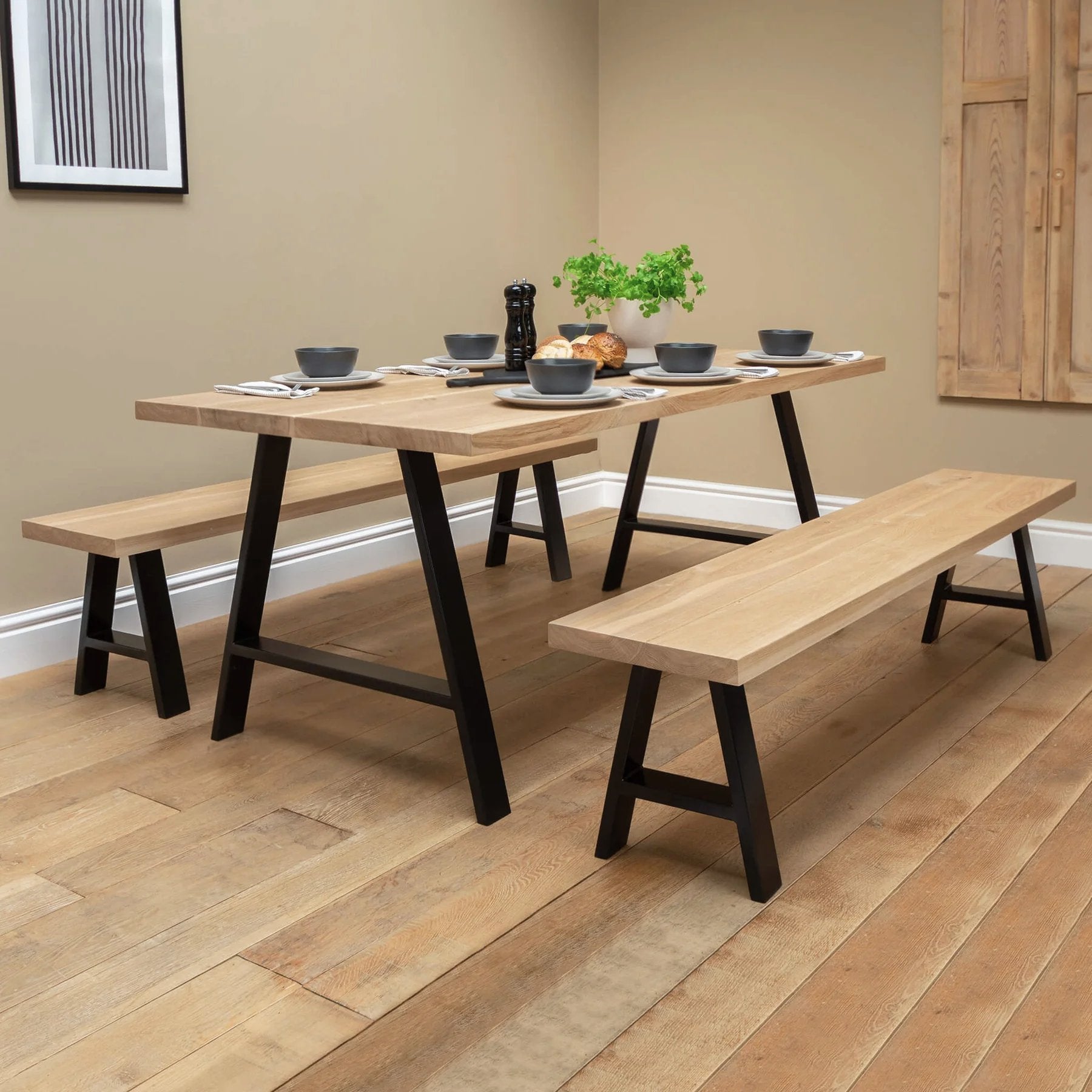
A rectangular table is the natural choice for many homes. It sits neatly with the architecture of most dining rooms and offers the greatest number of seats for its footprint. It also works beautifully with a bench along one side, which can make a family kitchen feel more relaxed and keep the visual line of the room open.
Round tables are wonderfully sociable and can soften a square room, but they need more surrounding space than their diameter suggests. They are often best for smaller gatherings or rooms where there is clear circulation all around. A square table can feel intimate for four, though it becomes less practical as the guest list grows.
Choose a base that suits how you live
The base changes more than the look of a table. It determines where people can sit, how easy it is to tuck in a bench and whether the table feels light or grounded in the room.
Traditional four-legged tables are familiar, dependable and often the easiest to position. They suit homes that favour farmhouse or classic country styling, especially when paired with a thick oak top. Do check leg placement, however. A very large table with legs close to each corner may limit seating at the ends.
A central pedestal base offers generous leg room and can be particularly useful with a round top. It creates a softer silhouette, though the base needs sufficient weight and width to support a substantial solid timber surface securely.
For an industrial-inspired home, steel legs or a metal frame give oak a crisp contrast. Black metal can make a thick rustic top feel contemporary without losing its warmth. The best examples use substantial steelwork with clean welding and a durable finish, rather than lightweight legs that look impressive online but lack presence in the room.
Trestle and A-frame bases offer a more architectural feel. They suit long tables well and can be excellent with benches, although their position needs considering if you regularly seat people at the ends. There is no universally best base - it depends on your seating plan, your style and how often the table needs to host a crowd.
Thickness, finish and the beauty of everyday use
A thick oak top has undeniable presence. It can anchor a large kitchen-diner and feels especially at home with industrial legs or a reclaimed finish. Yet thicker is not automatically better. In a compact room, a very deep edge can make the table appear heavy. A slimmer profile can give a more refined, contemporary result while retaining the strength and integrity of solid timber.
The finish deserves careful thought, as it affects both appearance and maintenance. Oils nourish the wood and give a natural, tactile feel. They are forgiving because a small worn area can often be refreshed locally, but they may need periodic re-oiling in a hard-used household. Lacquered or sealed finishes tend to offer stronger resistance to spills and everyday marks, though repairs can require more care if the surface is damaged.
Neither approach makes a table invincible. Use mats beneath very hot dishes, wipe spills promptly and avoid leaving water sitting on the surface. A few marks will happen, particularly in a home with young children. On solid oak, those signs need not spoil the piece. They can become part of the story, and a skilled maker can often restore the surface when the time comes.
Questions to ask before you order
A table made for your home should come with clear answers, not guesswork. Ask where the timber comes from, what the top thickness is and how the wood has been dried and prepared. Find out how the base is attached to allow for seasonal movement, and what finish is being applied.
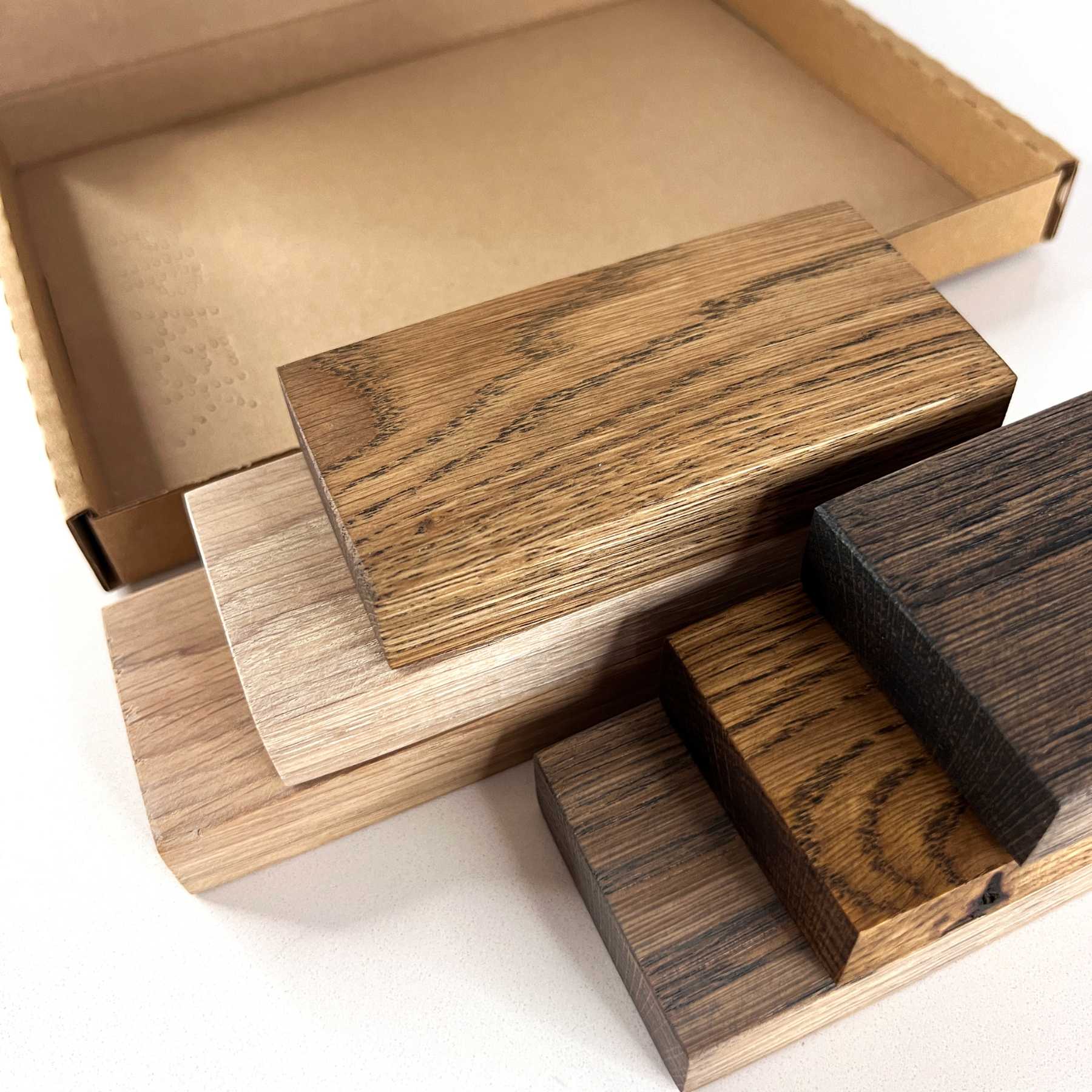
It is also worth asking for timber samples. Oak can look markedly different in your own light than it does on a screen, particularly beside existing flooring, kitchen cabinetry or painted walls. A sample lets you see the grain, colour and finish at different times of day before committing.
For made-to-order furniture, confirm the overall dimensions, leg positions, access for delivery and whether the table will need to pass through a narrow hallway, stairwell or doorway. A table built to last deserves a smooth arrival. Thoughtful makers will be happy to discuss these practical details before work begins.
At Willen Rose, every table is lovingly made in Derbyshire with this kind of real-life use in mind: not just how it will look when it arrives, but how it will serve the household for years afterwards.
A table to grow old with
The right table should make a room more useful before it makes it more impressive. Choose timber you enjoy touching, dimensions that let people sit comfortably and a base that suits the way your family gathers. Then allow the wood to do what solid wood does best: settle into your home, gather its own character and quietly hold the memories made around it.