



Dining Bench vs Dining Chairs: Which Suits You?
A dining table is where weekday suppers turn into long conversations, where children spread out homework, and where extra places are somehow always needed at Christmas. The choice of dining bench vs dining chairs shapes how that space feels and functions every day. There is no single right answer, but there is a seating arrangement that will suit your room, your table and the way your household gathers.
For many homes, a bench brings a relaxed, sociable feel and makes the most of a narrow dining area. Chairs offer individual comfort, easy access and a more formal rhythm around the table. The best decision comes from looking beyond appearances to the practical details: legroom, available space, the people who will use it and the table itself.
Dining bench vs dining chairs: the everyday difference
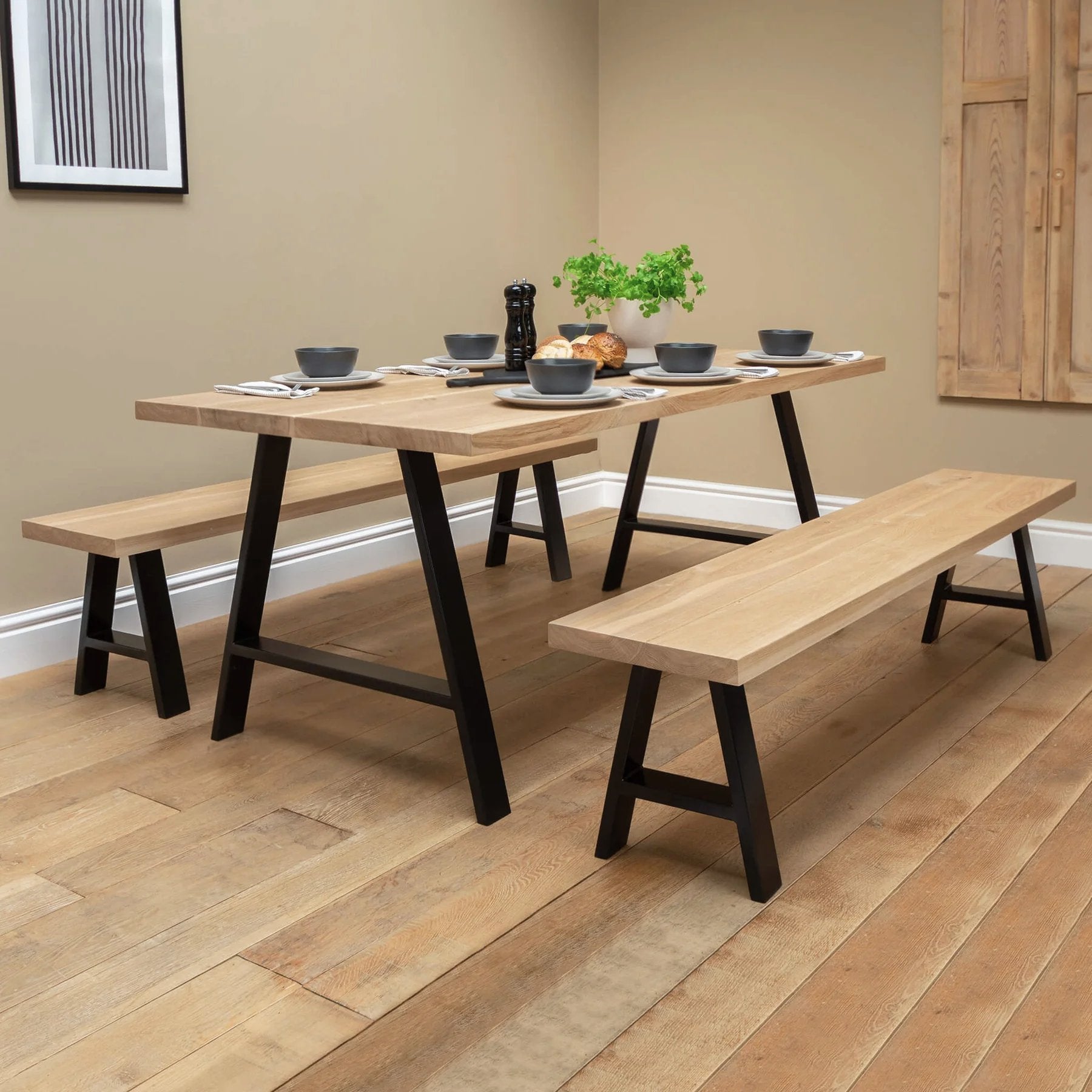
A dining bench is wonderfully uncomplicated. It can tuck neatly beneath the table when not in use, leaving a clearer walkway around the room. At a long farmhouse or industrial-style oak table, it creates a generous, communal look that feels made for family meals and shared plates in the middle.
It is also flexible. Three children can sit comfortably along a bench where three individual chairs might feel crowded, and an extra small person can often squeeze in when visitors arrive. That flexibility is particularly useful for growing families, where the number of diners can change from one year to the next.
Dining chairs, by contrast, give every person their own defined seat. They are easier to pull out and sit down on, especially for older relatives or anyone who prefers a supportive backrest. A chair lets guests shift position without affecting the person beside them, which matters during a leisurely Sunday lunch or an evening spent lingering over coffee.
Neither option has to be an all-or-nothing choice. One of the most pleasing arrangements is a bench along one side of a rectangular table, with chairs opposite and at each end. It keeps the room feeling open while retaining the comfort and visual structure that chairs provide.
When a dining bench makes the most sense
A bench is often the sensible choice when floor space is precious. Unlike chairs, which need room to be pulled backwards and left in position, a backless bench can slide fully beneath the table. In a kitchen-diner or an open-plan room where people regularly walk behind the dining area, that can make a noticeable difference.
It also works beautifully with substantial timber tables. A solid oak bench echoes the grain, depth and honest construction of the table above it, allowing the materials to do the talking. Rather than filling a room with separate shapes, the bench creates a calm, grounded line. This is especially effective in rustic, country and industrial interiors, where natural timber and black metal details bring warmth without fuss.
There is an emotional appeal, too. Benches encourage people to sit close, pass dishes and make room. They feel informal in the best sense: less like a showroom set and more like furniture made for a busy home.
That said, a bench is not automatically the most comfortable choice for every meal. Without a back, it is better suited to people who are happy to sit upright or to shorter gatherings. A loose seat pad can soften the surface and introduce colour or texture, although it will need tying in place or storing away when the table is in use for other tasks.
Allow enough room to sit comfortably
The biggest mistake with a dining bench is choosing one that is too tall, too short or too long for the table. As a useful guide, allow around 25 to 30cm between the top of the bench seat and the underside of the table. This gives diners enough knee room without making them feel low in relation to the tabletop.
Length matters just as much. A bench should generally sit between the table legs rather than extending beyond them, unless the design is specifically made to do otherwise. This prevents knocked knees and makes it easier to move the bench in and out. Allow roughly 55 to 60cm of bench width per adult, with a little more if you want elbows to remain comfortably clear during a full meal.
For a made-to-order table, this is where bespoke craftsmanship is invaluable. A bench can be designed to match the table base, apron height and exact available footprint, rather than being treated as an afterthought.
Why dining chairs remain a classic choice
Chairs are the natural choice for households that value long-lasting seated comfort. A supportive back encourages people to settle in, whether they are enjoying a three-course meal, helping with schoolwork or using the table as an occasional home-working spot. Upholstered chairs offer another layer of comfort, while wooden chairs bring a lighter, more traditional feel.
They are also easier for a mixed-age household. A toddler can be positioned in a highchair beside a chair, an older child can move their own seat independently, and grandparents do not need to shuffle along a bench to reach their place. If you regularly entertain friends, chairs give everyone a little more personal space and make serving around the table simpler.
From a design point of view, chairs offer more opportunity to introduce contrast. Oak chairs can create a harmonious, traditional set, while dark metal-framed or upholstered styles can add a more contemporary edge to a solid wood table. Choosing chairs with open backs or slim frames can prevent the room from looking heavy, even around a generous table.
The trade-off is footprint. Each chair needs space to be pulled out, usually around 75 to 90cm from the table edge to a wall or another piece of furniture. If that clearance is not available, the dining area can quickly feel cramped. Measure with chairs in their pulled-out position, not just tucked neatly under the table.
The mixed seating arrangement: practical and welcoming
For many permanent homes, mixing benches and chairs provides the best balance. A bench on the wall side saves space and gives children a shared place to sit, while chairs on the outer side offer easy access and back support. End chairs can make a long rectangular table feel complete, adding a little ceremony without making everyday meals feel formal.
This approach is also forgiving when the household changes. You may begin with a bench for young children, then add chairs as they grow and want their own seats. Or you may use the bench day to day and bring out additional chairs when family visits. A well-made oak table is built for decades of use, so it is worth choosing seating that can evolve around it.
Be thoughtful about visual balance. If the table has a bold industrial base, a bench with a matching metal frame creates a considered pair. If the table is softer and more traditional, a simple solid wood bench with gently shaped chairs can feel warmer. Matching everything exactly is not essential, but the timber tone, seat height and overall scale should work together.
Questions to ask before you decide
Start with the room rather than the photograph. Measure the dining area, including space for people to walk behind seated diners. Then consider who uses the table most often. A family with young children may value the flexibility of a bench, while a couple who host long dinner parties may prioritise the comfort of chairs.
Think honestly about how you eat. If your table is mainly used for quick breakfasts and bustling family suppers, a bench can be ideal. If it regularly becomes the setting for relaxed evening meals, board games or hours of conversation, chairs may earn their place. A combination can give you both.
Finally, consider the longevity of the piece. A solid wood bench develops character over time, taking on the gentle marks of everyday family life just as a good table does. Chairs may involve more individual pieces to care for, but they can be rearranged, reupholstered or refreshed as your interior changes.
At Willen Rose, we see dining furniture as part of the home’s working life, not simply a finishing touch. Choose the seating that lets people gather comfortably around a table you love. The right arrangement will not just fill the room - it will make more space for the moments that happen there.