



Does Solid Wood Warp? What Homeowners Should Know
A solid oak dining table can feel wonderfully substantial, but it is never entirely still. Does solid wood warp? It can, particularly when one part of a piece dries or absorbs moisture faster than another. Yet that does not mean solid wood furniture is unreliable. Properly selected timber, patient drying, thoughtful joinery and sensible care make all the difference.
Wood is a natural material, and that is part of its appeal. Its grain, character and gentle changes through the years make a handmade table or bed feel at home from the day it arrives. Understanding how timber behaves helps you choose it with confidence - and look after it for generations of family life.
Does solid wood warp over time?
Solid wood can warp, cup, twist or bow when its moisture content changes unevenly. In plain terms, the timber takes in and releases moisture from the air. If one face of a board changes more quickly than the other, the wood is put under stress and may move out of shape.
This is most likely to happen when furniture is exposed to extremes. A table stored in a damp garage and then brought into a centrally heated dining room, for example, is being asked to adjust quickly. The same applies to a bed frame positioned close to a radiator, or a coffee table sitting in strong sunshine beneath a window.
There is an important distinction between movement and failure. Small seasonal movement is normal in real timber. A solid wood top may expand very slightly in a humid summer and contract during a dry winter. This is not warping, nor is it a flaw. It is simply the material responding as nature intended.
Warping is more noticeable: a tabletop may curve across its width, a board may twist so its corners no longer sit flat, or a drawer may become tighter than usual. Good furniture design allows for natural movement, rather than trying to force timber to behave like an artificial sheet material.
Why some solid wood furniture warps
The quality of the timber and the way it is made have a direct bearing on how stable a finished piece will be. Furniture made from timber that has not been dried correctly carries a greater risk. As it continues to dry in your home, uneven shrinkage can cause movement.
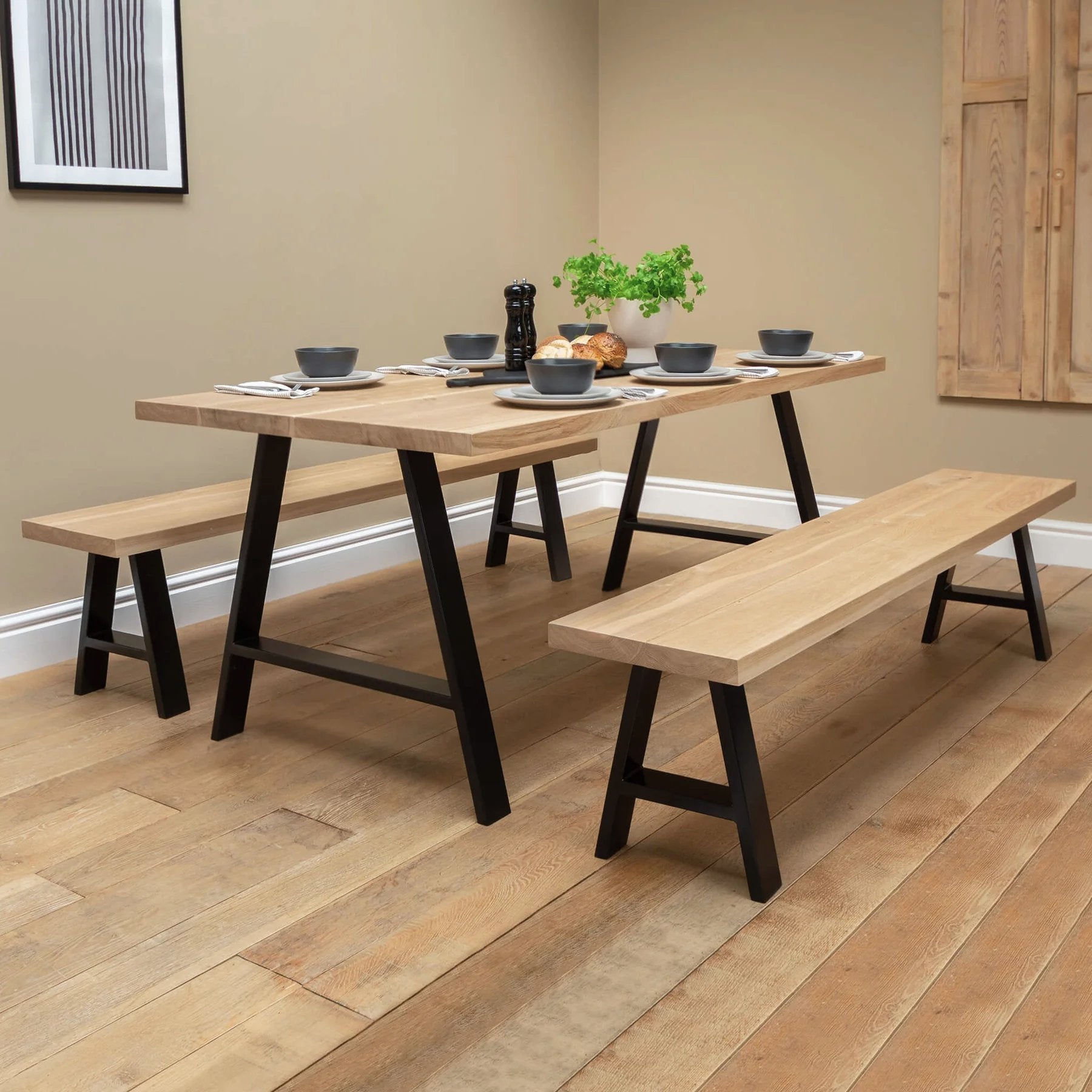
At Willen Rose, the character of each piece begins with carefully chosen timber. Properly prepared oak is given time to settle before it becomes a dining table, bench or bed. That patience matters. It gives the maker a far more stable material to work with and ensures the grain, colour and natural features are allowed to shine.
Grain direction also plays a part. Wood moves far more across the grain than along its length. A wide oak tabletop therefore needs construction that accounts for this, with fixings that hold it securely while allowing it room to expand and contract. Rigidly fixing a solid top to a frame can create pressure where there should be flexibility.
Board selection matters too. A skilled maker considers the way boards are arranged, their grain pattern and their natural character before they are joined. This helps create a balanced top rather than one likely to pull strongly in a single direction. No honest craftsperson can promise that natural timber will never move at all, but careful joinery greatly reduces the chance of troublesome warping.
The difference between warping, cupping and bowing
These words are often used interchangeably, but they describe slightly different shapes. Knowing what you are seeing can help determine whether a piece needs attention or is simply showing normal seasonal movement.
Cupping
Cupping occurs across the width of a board. The edges rise while the middle dips, or the middle rises while the edges dip. It is commonly caused by one face being exposed to more moisture or warmth than the other. A table with a damp cloth repeatedly left in one area, for instance, may develop localised movement over time.
Bowing
A bowed board curves along its length. On a long bench seat or shelf, this can look like a gentle upward or downward arc. The cause may be moisture change, insufficient support across a long span, or timber that was already carrying tension before it was made into furniture.
Twisting
Twist is when corners no longer sit in the same plane. It can be especially frustrating in a door, drawer front or narrow leg, although well-made frames and sturdy joinery help prevent it. Severe twist is less common in properly dried, well-constructed furniture kept in a stable home environment.
How to prevent solid wood from warping at home
The aim is not to create laboratory conditions. Homes are lived in, children spill drinks, windows open and close, and heating comes on when the weather turns. The best approach is simply to avoid sudden or prolonged extremes.
Keep solid wood furniture away from direct, intense heat where possible. A radiator immediately beneath a tabletop or beside a bed can dry one area much faster than the rest. Underfloor heating is usually perfectly manageable, but it is wise to maintain a moderate, consistent room temperature and avoid placing furniture over a particularly hot spot.
Try not to position an oak table in constant, fierce sunlight. Daylight is part of a welcoming home, but strong sun can dry and fade timber unevenly. Curtains, blinds or a small adjustment to the furniture’s position can protect the finish without taking away the light you enjoy.
Wipe spills promptly, particularly around joins and edges, then dry the surface rather than leaving moisture to sit. Use mats for hot serving dishes and coasters for drinks. This is less about treating furniture as precious and more about giving it the everyday care a natural surface deserves.
Avoid covering a solid wood surface with impermeable plastic for long periods, especially in a cool or damp room. Timber benefits from air circulating around it. If you are decorating or moving house, do not leave a table or bench in an unheated shed, conservatory or garage unless conditions are dry and stable.
What to do if your wood furniture has moved
First, take a breath. A small gap, a slightly tighter drawer or a subtle change in a tabletop does not necessarily call for a repair. If the change has appeared as the seasons shift, allow the furniture time to acclimatise in a steady indoor environment. In many cases, timber settles as humidity returns to a more even level.
Check the basics before assuming the wood itself is warped. Uneven flooring can make a perfectly sound table appear to rock. Adjustable feet, a discreet floor protector or repositioning the piece may solve the issue immediately. For a tabletop, use a straight edge to assess whether there is genuine cupping or bowing rather than relying on the eye alone.
If movement is pronounced, worsening or affecting the use of the furniture, seek advice before attempting a home fix. Adding screws, soaking timber, clamping it aggressively or sanding one area can make the problem worse. A maker or experienced furniture restorer can assess the cause, the construction and whether a careful adjustment is appropriate.
Is engineered wood less likely to warp?
Engineered boards are generally more dimensionally stable because their layers or particles are arranged to reduce movement. That can make them practical for certain uses, particularly large fitted surfaces or painted cabinetry. However, stability is not the only measure of quality.
Solid wood can be repaired, refinished and enjoyed for decades. It brings depth, warmth and individuality that manufactured boards cannot quite replicate. A scratch can be softened, a surface can be refreshed, and a well-made oak table can gather the marks of birthday suppers, homework and long Sunday lunches without losing its purpose.
The trade-off is that solid timber asks for understanding. It will respond to its surroundings, and every piece has its own grain and character. For many homes, that is not a compromise at all. It is the pleasure of owning something real.
Choose furniture made with the natural movement of timber in mind, give it a settled place in your home, and let it become part of the everyday moments around it. The best solid wood pieces are not made to look untouched forever - they are crafted to live beautifully with you.