



A Practical Guide to Industrial Furniture
A dining table should not feel like a prop borrowed from an old factory. The best industrial furniture brings that honest, hardworking character into a real home: one with family suppers, muddy shoes, birthday cakes and the everyday moments that happen around well-made pieces. This guide to industrial furniture will help you recognise quality, balance materials and choose furniture that feels right for your space for years to come.
What industrial furniture really means
Industrial style takes its cues from workshops, mills and railway buildings, where materials were chosen for strength and purpose. Think solid timber, blackened steel, visible joinery and straightforward forms. In a home, those elements create a look with substance rather than fuss.
It is easy to mistake industrial furniture for anything made with dark metal legs. Good design goes further. The timber should have warmth and presence, the metal should be properly made and finished, and the proportions should be considered. A thick oak top on a flimsy frame will never feel convincing, while a finely made steel base beneath a modestly proportioned top can look quietly assured.
The appeal lies in contrast. Wood softens metal. Steel gives rustic grain a crisp outline. Together, they work in period cottages, converted mills, modern extensions and family kitchens alike. The style is adaptable, but it does need a little restraint.
Start with the piece your home needs most
Before choosing a finish or a frame, decide what the furniture must do every day. A dining table may need room for six during the week and ten at Christmas. A coffee table may need to sit comfortably beneath a sofa without blocking the walkway. A storage bench may need to hide the practical clutter of a busy hallway while still offering a place to perch.
This is where made-to-order furniture has a real advantage. Standard sizes can leave a room feeling cramped or oddly empty. Measuring your space carefully allows you to choose a piece with enough breathing room around it, rather than forcing your life around a catalogue dimension.
For a dining table, allow roughly 90cm between the table edge and a wall or substantial furniture where possible, so chairs can be pulled out comfortably. In tighter rooms, this may need to reduce, but it is worth checking the space with chairs in position rather than measuring the table alone. Consider the width, too. A broad table feels generous for sharing dishes, but a narrower design can suit a kitchen-diner where circulation matters.
Dining tables: the centre of the industrial look
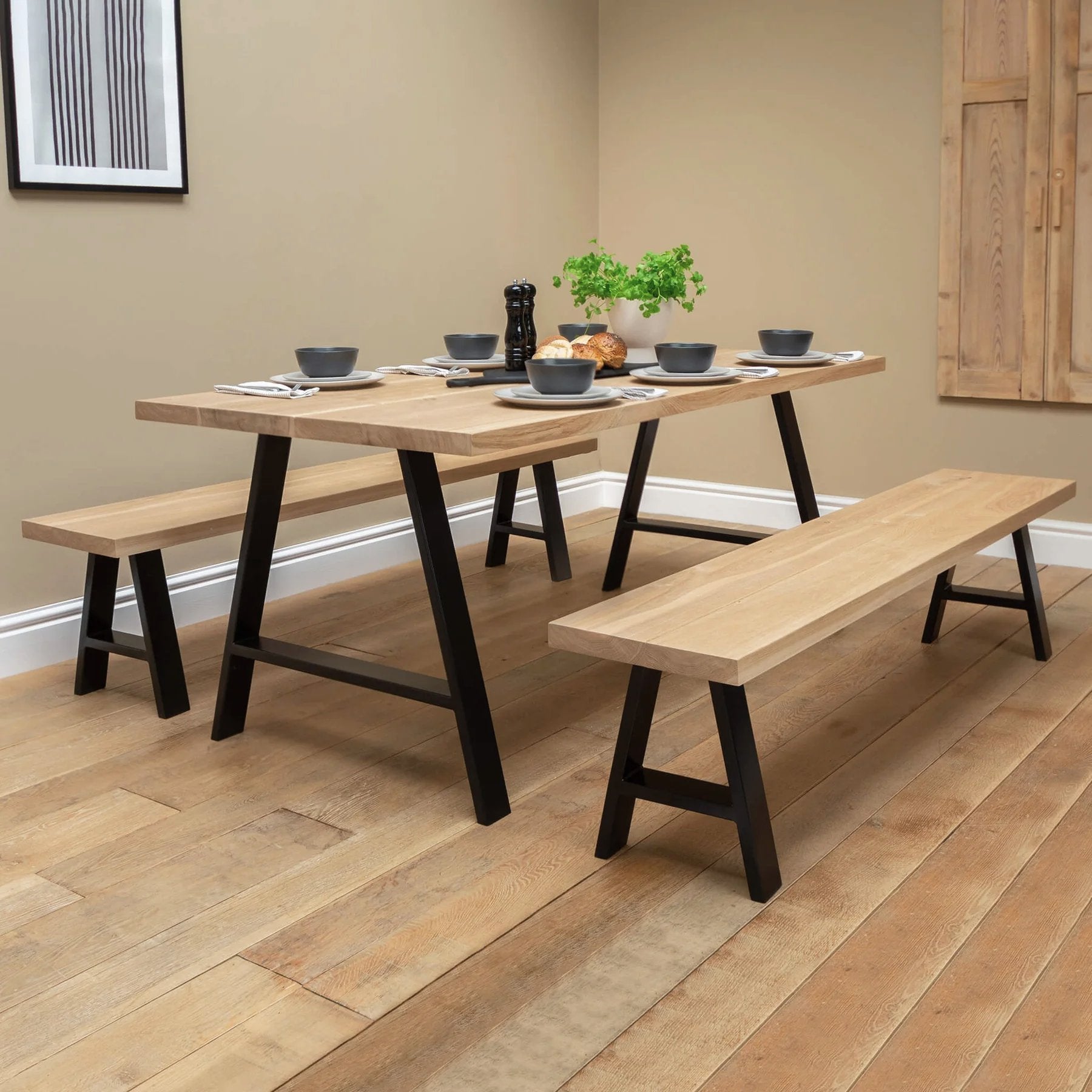
An industrial dining table is often the anchor of a room. Solid oak paired with steel legs has a presence that works particularly well in open-plan kitchens and dining rooms, but the leg design makes a meaningful difference.
A central pedestal or X-frame can make it easier to seat extra guests at the ends. U-shaped legs provide a clean, contemporary outline and generous chair clearance along the sides. Chunkier, more architectural frames make a stronger statement, though they can feel heavy in a small room. There is no single best option. It depends on the chairs you love, the number of people you seat and how formal or relaxed you want the room to feel.
Benches are a natural partner for industrial tables. They tuck neatly underneath when not in use and bring a sociable, unfussy feel to family meals. For long, lingering dinners, however, backed dining chairs usually offer greater comfort. Many homes benefit from a mix: a bench on one side, chairs on the other.
Choose materials with genuine character
Industrial furniture should earn its character through its materials, not artificial distressing. Solid wood develops naturally over time, gathering small signs of a life well lived. That is very different from a thin veneer designed to imitate age.
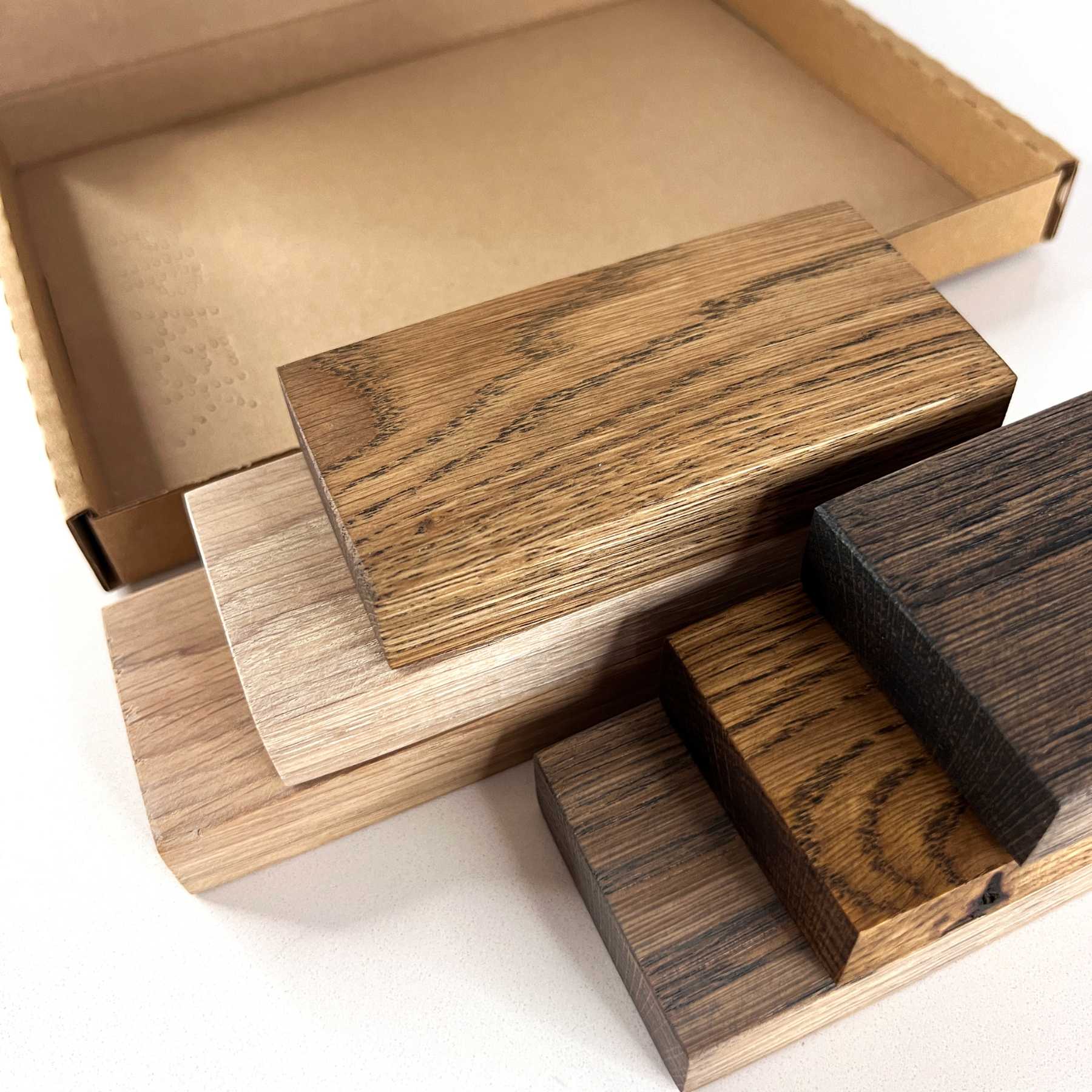
Oak is a favourite for good reason. It is strong, richly grained and suited to daily use. Its colour can range from pale honey to deeper, warmer tones depending on the board and finish, so a sample is especially useful when matching existing flooring, cabinetry or other wooden furniture. Every solid wood top will vary, and that variation is part of its charm.
Reclaimed timber offers a more weathered appearance, often with knots, old fixing marks, saw lines and colour changes. It can bring wonderful texture to a large room or a farmhouse setting. In a compact, light-filled contemporary space, cleaner oak may be the calmer choice. Neither is better - the right timber is the one that suits the atmosphere you want to create.
For the metalwork, look for properly welded steel rather than lightweight, bolt-together frames intended for short-term use. A powder-coated black finish is practical and versatile, while a clear-coated raw steel finish offers more visible workshop character. The latter can show tonal variation and weld marks, which is exactly what some people value. If you prefer a more refined finish, choose black powder coating and let the timber provide the texture.
Getting the proportions right
Industrial furniture has a naturally weighty visual language. The challenge is to introduce it without making a room feel dark or crowded. Large rooms can carry thick tops, bold steel frames and substantial storage pieces with ease. Smaller spaces usually benefit from lighter oak tones, open leg designs and furniture that lets daylight travel around it.
Pay attention to visual weight as well as actual size. A table with open U-shaped legs may occupy the same footprint as a boxed-in base, but it will feel less imposing. A coffee table with a slim steel frame and lower shelf can offer useful storage without becoming a solid block in the middle of the lounge.
Ceiling height matters too. In rooms with low beams or sloping ceilings, a lower-profile table and simpler frame can keep the space settled. In a high-ceilinged kitchen extension, a more substantial table can provide the grounding the room needs.
How to soften industrial style at home
A successful industrial room is not wall-to-wall metal and reclaimed wood. Too much of either can feel cold, staged or unnecessarily severe. The most welcoming schemes pair structured furniture with softer elements: upholstered dining chairs, woven rugs, linen curtains, ceramics and warm pools of lighting.
Colour also changes the mood. Black steel works beautifully against soft whites, clay tones, olive greens and deep blues. Oak adds warmth to cooler palettes, while darker reclaimed timber suits rooms with plenty of natural light or pale walls. If your kitchen already has black handles, pendant lights or window frames, a steel-legged table can tie those details together without repeating them too literally.
You do not need every piece to be industrial. In fact, a traditional painted dresser, a comfortable fabric sofa or an antique mirror can make the look feel more collected and personal. The goal is a home with character, not a showroom built around one idea.
A guide to industrial furniture finishes and care
A well-made table is intended to be used, but a little care protects its finish and allows the timber to age handsomely. Wipe spills promptly with a soft, damp cloth and dry the surface afterwards. Avoid harsh sprays, abrasive pads and silicone polishes, which can build up or damage the protective finish.
Use mats for hot serving dishes and coasters for drinks, particularly on a dining table that sees daily use. Solid timber responds to its surroundings, expanding and contracting subtly as humidity changes through the seasons. This is natural. Keeping furniture away from direct heat sources and avoiding dramatic swings in room temperature will help it settle well.
Small marks are often less alarming than they first appear. A good wood finish can usually be refreshed, and solid timber has the great advantage of being repairable. That is one of the quiet pleasures of choosing furniture made from honest materials: it is built for a long life, not a flawless first month.
Questions worth asking before you buy
Ask what the top is made from, how thick it is and whether it is solid wood throughout. Check how the steel frame is made and finished, and whether the dimensions can be tailored to your room. It is also sensible to ask about access for delivery, especially with a large one-piece dining table heading through a narrow hallway or up a stairwell.
Samples can take much of the uncertainty out of the decision. Seeing oak and finish options in your own light is more revealing than viewing a photograph on a screen. A family-run workshop such as Willen Rose can also talk through practical details, from leg placement to the seating space needed for your chosen chairs, before the timber is cut.
Industrial furniture is at its best when it feels settled into the life of the house: a strong oak table ready for Sunday lunch, a bench that gathers everyone close, and a coffee table that wears each new chapter with grace.