



Inspecting Wood Sample Packs Before You Choose
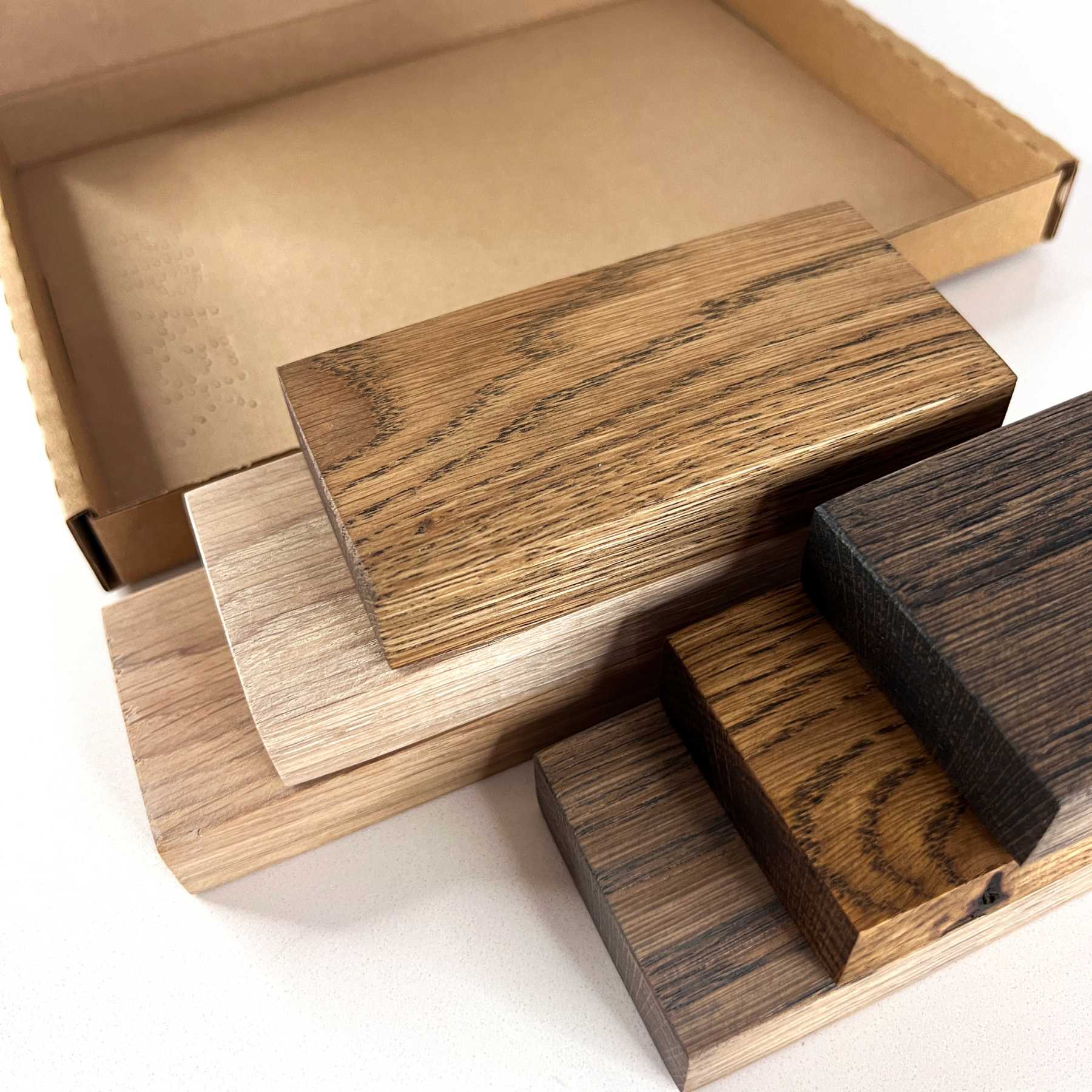
A timber sample may be small enough to hold in one hand, but it can answer some very big questions. Inspecting wood sample packs in your own home lets you see how a table, bed or bench will belong with the colours, light and everyday life already in the room. It is the closest thing to bringing a little piece of the workshop home before your furniture is made.
For a made-to-order piece, this matters. Solid wood is never printed to a uniform pattern. Its grain, knots and gentle shifts in tone are part of what give an oak dining table or reclaimed timber coffee table its character. A sample helps you choose with open eyes, and with confidence in the timber rather than an image on a screen.
Why wood samples look different at home
Photography is useful for showing a design, but it cannot fully show the warmth of real wood. Your home has its own light. A north-facing dining room can make oak appear cooler and more muted, while late afternoon sunshine may draw out honeyed or golden notes. Kitchen spotlights, a nearby painted wall and even the colour of your flooring will alter what your eye sees.
Place each sample where the finished furniture will live. Look at it in the morning, after dark and on an ordinary overcast day. Hold it beside your flooring, paint swatches, curtains and existing furniture. A timber that initially seems pale on a white worktop may feel rich and grounding beside a deep green wall or stone floor.
Try not to make a decision from one glance. Leave the samples out for a few days, moving them around the room as the light changes. The right choice usually becomes clearer when it has had time to feel familiar.
Inspecting wood sample packs properly
Start by looking beyond the overall shade. Run your hand across the face and edges of the sample. You are looking at the timber itself, as well as the finish that protects it. Solid oak should feel substantial and natural, with texture that reflects the individual board rather than a repeated printed design.
Study the grain. Some pieces have calm, straighter lines; others show bolder figuring, cathedral patterns or visible medullary rays - the fine silvery streaks that can appear in oak. None is better in isolation. It depends on whether you want a quieter backdrop for a busy room or a statement surface that becomes the heart of it.
Knots deserve the same considered view. In rustic and reclaimed timber, knots, filled splits and colour variation are often deliberately celebrated. They lend a table the feeling that it has a story, rather than having come from a production line. If you prefer a more refined, even appearance, a cleaner oak grade and a softer finish may suit your room better.
Look at the edges too. The end grain can appear darker or more textured than the face of the board, especially where a finish has been applied. This is helpful when choosing furniture with exposed ends, thick tops or bench seats. A small sample will not show every feature of a full table, but it gives an honest indication of the material and its finish.
Judge colour, but expect natural variation
Wood samples are a guide, not a promise that every board in a finished piece will be identical. That variation is a defining quality of solid timber. A dining table is made from several boards, each with its own grain direction and tone. A skilled maker selects and arranges them carefully, but should not attempt to erase the natural differences that make wood real.
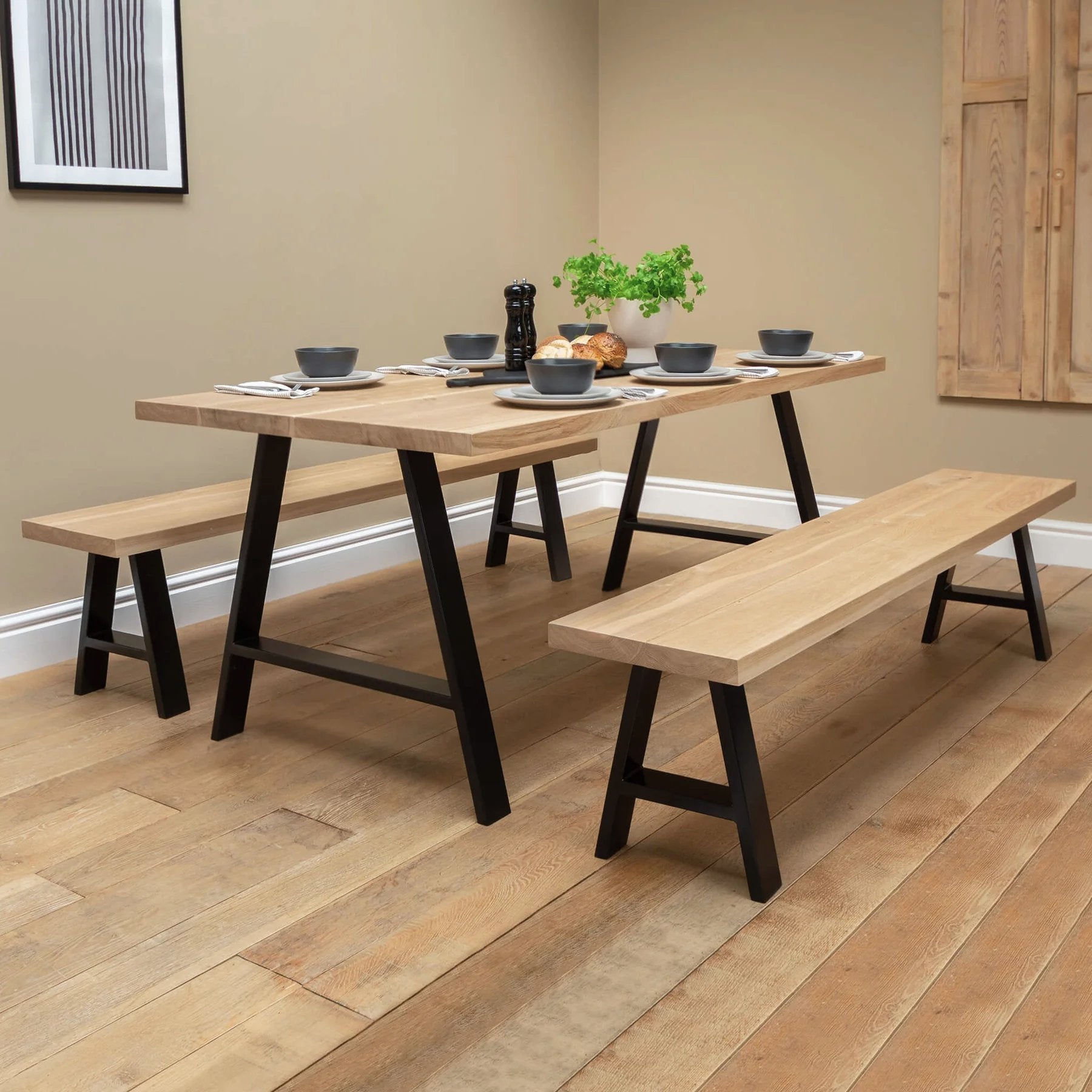
This is particularly worth remembering when comparing oak with reclaimed timber. Oak often offers a warm, enduring look that works beautifully across farmhouse, classic and contemporary homes. Reclaimed timber is likely to be more expressive, with deeper variation, old markings and a weathered feel. It can be a wonderful choice for a room that needs texture and presence, but it will not have the evenness of a factory-made surface.
Finishes also affect perceived colour. A clear protective finish may retain a more natural appearance, while an oiled, smoked or darker option can add depth and contrast. The timber may continue to mellow as it is exposed to daylight over the years. This gentle ageing is normal and is part of the pleasure of living with solid wood furniture.
Put the sample to practical use
A sample pack is not only for choosing a look. It is an opportunity to consider how the furniture will work in a busy household. Set the sample on the dining table or worktop at the times your family uses the space most. Does the finish complement the handles, pendant lights and chairs you already own? Does the character of the grain feel relaxed enough for everyday meals, homework and weekend gatherings?
If you are choosing a dining table, place the sample beside the chair fabric and tableware you plan to use. Pale ceramics can make a darker finish feel striking, while warm linen and natural woven textures often sit easily with a lighter oak. For a wooden bed, compare it with the carpet, headboard wall and bedding rather than judging it in isolation. Bedrooms usually benefit from a timber tone that feels restful in softer evening light.
It is also sensible to consider maintenance without becoming overcautious. Wood is a hardworking natural material, not a fragile ornament. A quality finish helps protect it from the spills and scuffs of family life, but coasters, placemats and prompt cleaning will help keep it looking its best. If a lively home is likely to leave the occasional mark, a more characterful timber can be especially forgiving: it tends to gain a lived-in patina rather than looking worn out.
Compare samples with your room, not a trend
Interior trends move quickly; a well-made solid wood table should stay with you for decades. When comparing finishes, ask which sample still feels right when you picture the room without its current cushions, artwork or paint colour. Oak has that rare ability to adapt as a home changes around it, which is one reason it remains a favourite for permanent family homes.
A lighter finish can keep a compact room open and airy, particularly alongside pale walls and natural fabrics. A deeper finish may bring welcome definition to a large open-plan room, or balance a space with plenty of white cabinetry and metal details. For industrial-style furniture, consider the relationship between the timber and the frame. Warm oak against black steel creates contrast; weathered reclaimed timber gives a more relaxed, established feel.
There is no universal right answer. The sample that looks best in a bright showroom-style photograph may not be the one that makes your own home feel settled. Choose the timber that works with your light, your layout and the way you want the room to feel when everyone is gathered around it.
Questions worth asking before ordering
Once you have chosen a preferred sample, use it as a starting point for a more useful conversation about your furniture. Confirm whether the sample reflects the top material and finish for your chosen design, and discuss how much natural variation to expect across the finished piece. If a particular feature matters to you - cleaner boards, prominent knots, a rustic edge or a warmer tone - say so early in the process.
It is equally helpful to share a photograph of the room and your key dimensions when discussing a bespoke order. A finish is only one part of the decision. Table length, top thickness, leg position and seating space all shape how the piece will live in your home. The best furniture feels considered from every angle, not simply well matched in colour.
At Willen Rose, each piece is lovingly made in Derbyshire from real timber with its own character. The sample is there to make the decision easier, while the finished furniture is made to become part of the family life around it.
Keep your chosen sample nearby until you are ready to order. Each time you pass it, picture birthday breakfasts, long suppers and quiet cups of tea around the finished piece. If it still feels right after the practical comparisons and the changing light, you have found more than a colour - you have found the beginning of furniture made to last.