



Oak Dining Table Review: What Matters Most

A dining table earns its keep. It hosts quick breakfasts before school, late suppers with friends, homework, birthday candles and the everyday clutter of family life. That is why an oak dining table review should never stop at first impressions. Good looks matter, of course, but the real test is how a table is built, how it feels to live with, and whether it will still look right in your home years from now.
Oak remains one of the most dependable choices for a dining table, particularly for homeowners who want something solid, warm and honest. It carries character without feeling fussy, and it sits comfortably in country kitchens, period homes and cleaner contemporary spaces alike. Still, not every oak table deserves the same praise. Some are genuinely crafted to last. Others simply borrow the language of craftsmanship while cutting corners where it counts.
Oak dining table review - first look at the material
The strength of an oak dining table begins with the timber itself. Solid oak has a reassuring weight and density that engineered alternatives rarely match. You can feel it in the stability of the top, in the way the legs meet the floor, and in the quiet confidence of a piece that does not wobble every time someone leans on it.
What makes oak especially appealing is its natural grain. No two boards are exactly the same, so even a simple rectangular table has movement and individuality. Knots, medullary rays and tonal shifts are not flaws to be hidden. In the right piece, they are part of the charm. That said, there is a difference between natural character and poor timber selection. A well-made table uses boards thoughtfully, balancing visual interest with consistency so the whole piece feels considered rather than random.
It is also worth asking whether the table is truly solid oak or a veneer over a cheaper core. Veneers have their place, but they do not offer the same longevity, repairability or substance. For buyers furnishing a permanent home, solid timber is usually the better investment.
Build quality tells the real story
If you are reading any oak dining table review with value in mind, construction should come before styling. A handsome top can distract from weak joinery, thin sections or poorly fitted bases. These are the details that reveal themselves later, often once the table has settled into the rhythm of daily use.
A strong oak table should feel planted and balanced. The legs need proper proportion to the top, not just visually but structurally. If the base is too slight, a larger table may flex or feel unsettled. If it is too bulky, it can crowd legroom and dominate the room. Well-judged proportions are a mark of experience.
Joinery matters just as much. Traditional methods still earn their place because they work. A table made with care should hold firm under changing temperatures, central heating and years of use. You are not simply buying timber. You are buying the knowledge behind how that timber has been cut, seasoned, joined and finished.
Mass-produced tables often rely on standardised sizes and quick assembly methods. There is nothing wrong with efficiency, but it can lead to compromises. In a handcrafted piece, the difference is usually obvious in the weight, the finish and the way every element seems made to belong together.
Style and practicality need to work together
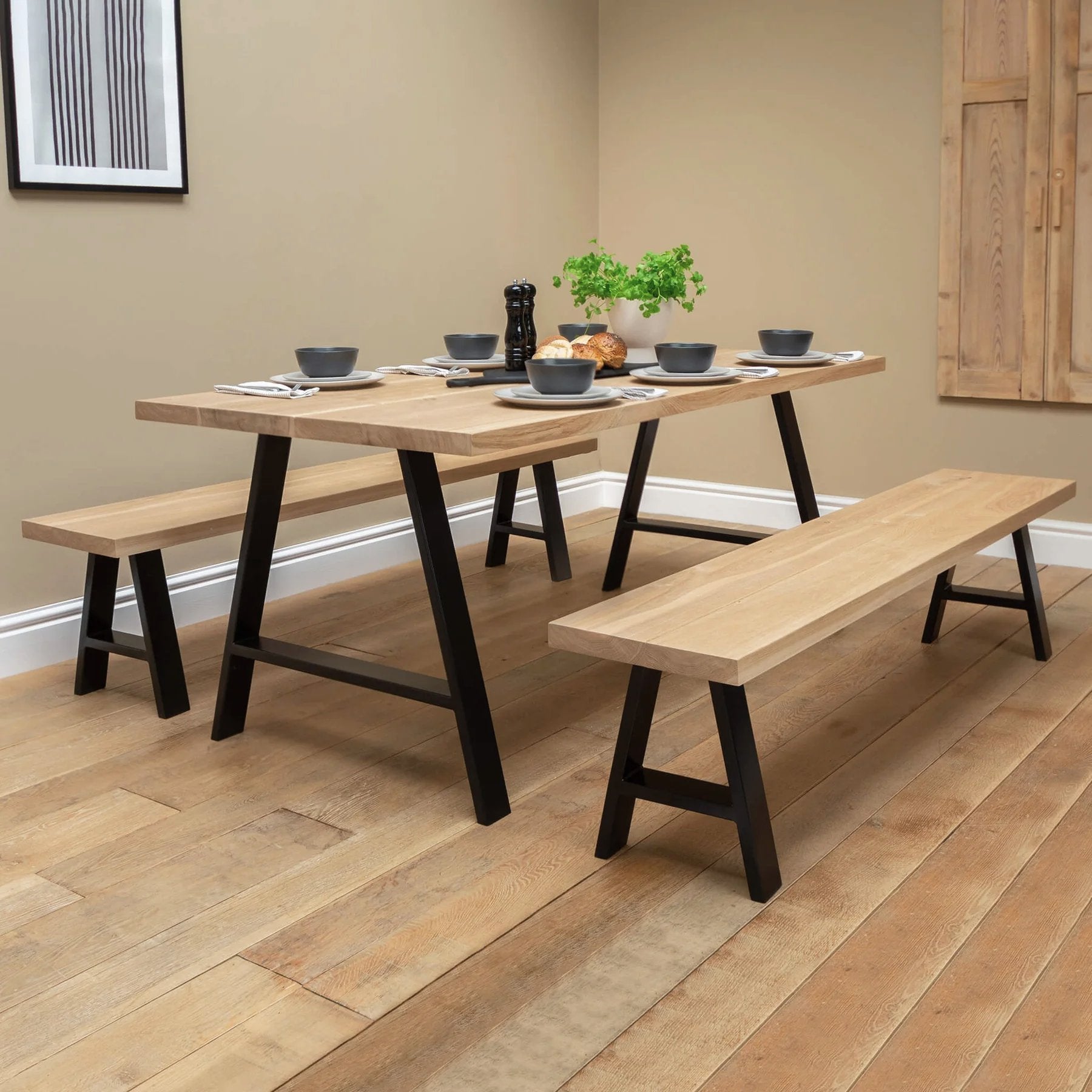
Oak is wonderfully versatile, but style should still be chosen with your room and your habits in mind. Rustic oak tables bring warmth and a lived-in feel, often with more visible knots, saw marks or gently distressed edges. These can be beautiful in farmhouse kitchens and older properties where texture matters. Cleaner contemporary designs tend to use straighter lines and a calmer finish, which suits modern extensions and open-plan homes.
Neither approach is better in itself. It depends on whether you want the table to make a statement or sit quietly within the wider scheme. The best tables do both - enough character to feel special, enough restraint to age well.
Practicality enters the picture quickly. A thick top can look impressive, but if paired with an apron that sits too low it may limit chair choice or knee space. Pedestal and trestle bases can be more sociable in some layouts because they allow flexible seating, while four-corner leg designs often feel familiar and timeless. Families with younger children may prefer softer edges and a finish that is forgiving of the occasional knock.
Finish, maintenance and everyday living
One of the most important parts of any oak dining table review is the finish, because this is what stands between the timber and daily life. Oak is durable, but it still needs protection from spills, heat and general wear.
An oiled finish tends to preserve the natural look and touch of the wood. It gives oak a softer, more organic appearance and can usually be refreshed over time, which is useful if you value furniture that develops gracefully rather than staying pristine. The trade-off is that it may ask a little more of you in terms of care, especially in a busy family kitchen.
A lacquered finish provides stronger surface protection and can be easier to wipe clean. For households where the table is in constant use, that convenience matters. The downside is that some lacquers can look a little more sealed or less tactile, particularly if heavily applied. The best finishes protect the timber while still allowing its grain and warmth to come through.
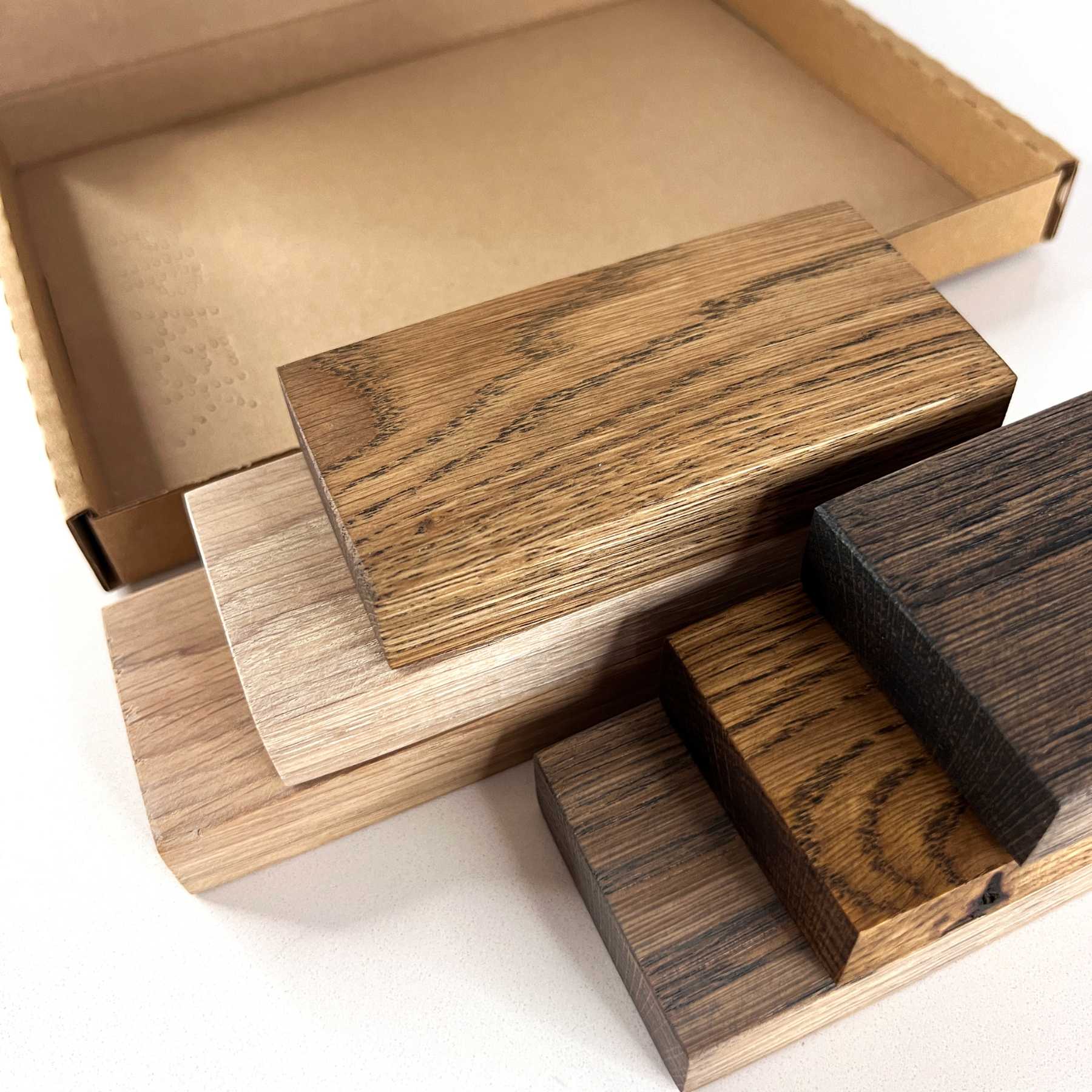
This is where samples can be especially helpful. A finish that looks perfect on a screen can feel quite different in natural light at home. Seeing colour and texture in your own room often makes the decision far clearer.
Size is not a small detail
Many disappointing furniture purchases come down to scale rather than quality. A lovely table can still be wrong if it overwhelms the room or leaves everyone squeezing past. In that sense, an honest oak dining table review must include sizing, because a dining table is only as successful as the space around it.
Measure the room carefully, but also think about how the room is used. Do you need to walk around the table daily? Will chairs be tucked in neatly, or constantly pulled back? Is the table mainly for four, with occasional guests, or are you hosting larger family gatherings several times a year?
Bespoke sizing is often the difference between a table that merely fits and one that truly belongs. Standard dimensions suit some homes, but many British dining rooms, especially in older properties, have awkward proportions. A made-to-order piece can solve that neatly, whether you need a narrower top, extra length or a specific height to pair with existing seating.
Value is more than the ticket price
At first glance, a premium oak dining table can seem costly next to flat-pack alternatives. But value looks different when you consider lifespan. A table that lasts ten or twenty years, can be maintained, and still feels right as your home evolves is a very different purchase from one that needs replacing after a few seasons of hard use.
There is also the matter of service. Buying a substantial piece of furniture should feel reassuring. Clear communication, workshop knowledge, sample options and practical delivery guidance all count towards value because they reduce uncertainty. A family-run maker with direct knowledge of the product can usually answer questions in a way a generic retailer cannot.
That personal element matters more than many people expect. An oak dining table often becomes the centre of the home. It is worth buying from people who understand that it is not just another parcel on a lorry.
Oak dining table review - who should buy one?
For most homeowners, an oak dining table is a sound choice if you want durability, natural beauty and a piece that improves with age. It suits households that use their dining space properly rather than keeping it for special occasions. It also makes sense for buyers who are tired of furniture that looks good online but disappoints once assembled.
It may be less suitable if your priorities are very short term, if you move frequently, or if you want a lighter, more disposable look. Oak has presence. Even in a refined design, it feels grounded and substantial. That is usually a strength, but it helps to be sure that is what you want.
For buyers seeking craftsmanship, flexibility and lasting quality, this is where makers such as Willen Rose stand apart. A handcrafted solid oak table, built with care and made to your space, offers something mass-market furniture rarely can - a sense that it was created for real life, not just for a showroom photograph.
The best oak dining table is not the one with the loudest styling or the lowest price. It is the one that suits your room, your routines and the years ahead. Choose with that in mind, and the table will do far more than fill a space - it will quietly become part of home.