



Your Oak Table Project, Made for Real Life
A well-planned oak table project begins with the life that will happen around it. Sunday roasts, homework spread across the surface, birthday cakes, a quick cup of tea before work - a dining table is rarely just a piece of furniture. It is the place where a home gathers. That is why the best table is not simply one that looks right in a photograph. It needs to suit your room, your routines and the people who will use it for years to come.
Solid oak is particularly well suited to that role. It has warmth, strength and an honest character that improves rather than fades with everyday use. Knots, grain movement and gentle tonal variation mean no two tops are identical. The key is deciding how you would like that natural material to work within your home.
Start Your Oak Table Project With the Room
Before choosing a style, take time to measure properly. A table can look generous in a large showroom image, yet feel awkward once chairs are pulled out and someone needs to pass behind them. Leave around 90cm between the table edge and a wall, radiator or sideboard where possible. In a tighter room, 75cm can work, but it will feel more compact when the table is in use.
Think about the number of people you seat most often, rather than only the largest gathering of the year. As a useful guide, allow 60cm of table width per diner for comfortable everyday seating. A 160cm table will usually seat six, while 200cm often gives six people plenty of space or accommodates eight when needed. If family celebrations are a regular feature, an extending design may be worth considering. If not, a beautifully proportioned fixed table can give a dining room a calmer, less crowded feel.
Width matters just as much as length. A table around 90cm to 100cm wide usually leaves enough room for serving dishes while allowing guests to talk comfortably across it. Narrower tables suit smaller spaces and kitchens, though a little less room in the middle is the trade-off. For a busy family dining space, the extra width is often appreciated.
Consider the shape, not only the measurements
Rectangular oak tables are a natural choice for long rooms and larger families. They make good use of available length and work especially well beneath pendant lighting. A round table can soften a square room, improve movement around it and make conversation feel more inclusive. An oval top offers a similar sense of flow while retaining generous seating.
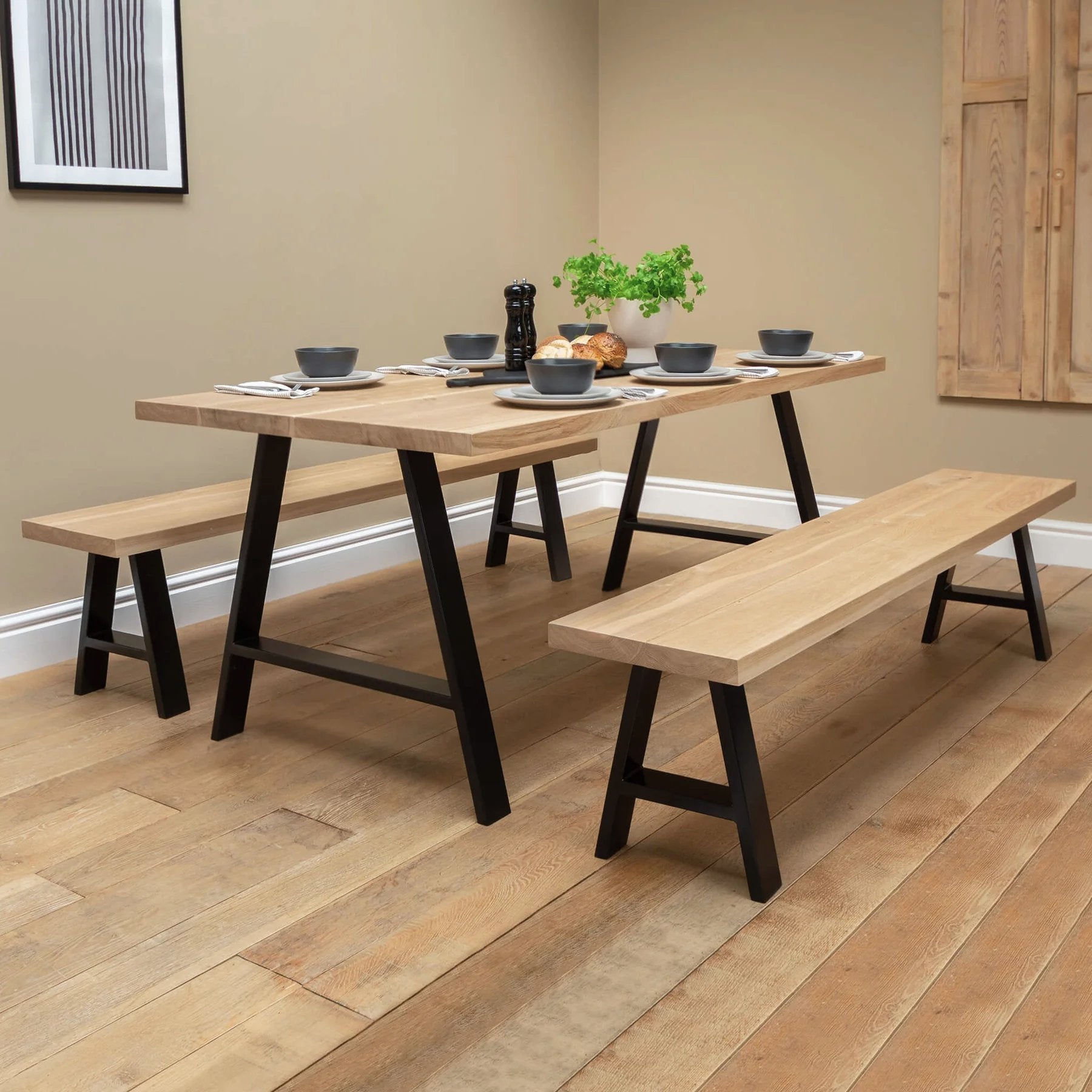
The shape of the base changes how the table feels to use. Traditional legs at the corners are timeless, but they can limit where people sit. A central pedestal is useful when flexible seating matters. Metal X-frames, U-frames and trapezium bases offer an industrial edge and keep the table feeling open beneath the top, although their placement should be considered alongside chairs and knees. A good table design is as comfortable underneath as it is attractive above.
Choose Oak for Character, Not Perfection
Oak is a living material, even after it has been carefully dried and crafted into furniture. Its grain may be straight and quiet in one board, then bold and swirling in the next. Small knots, filled splits and natural colour variation are not faults to hide. They are part of what gives solid timber its depth and makes a handcrafted table feel unlike anything made from printed board or veneer.
There is no single correct level of character. Some homes suit a cleaner, more refined selection of oak with a softly sanded top and discreet grain. Others are made for rustic boards with bolder knots, saw marks and a more tactile finish. A farmhouse kitchen may welcome a thick top with a substantial profile, while a contemporary dining room may suit a slimmer top paired with a clean black metal base.
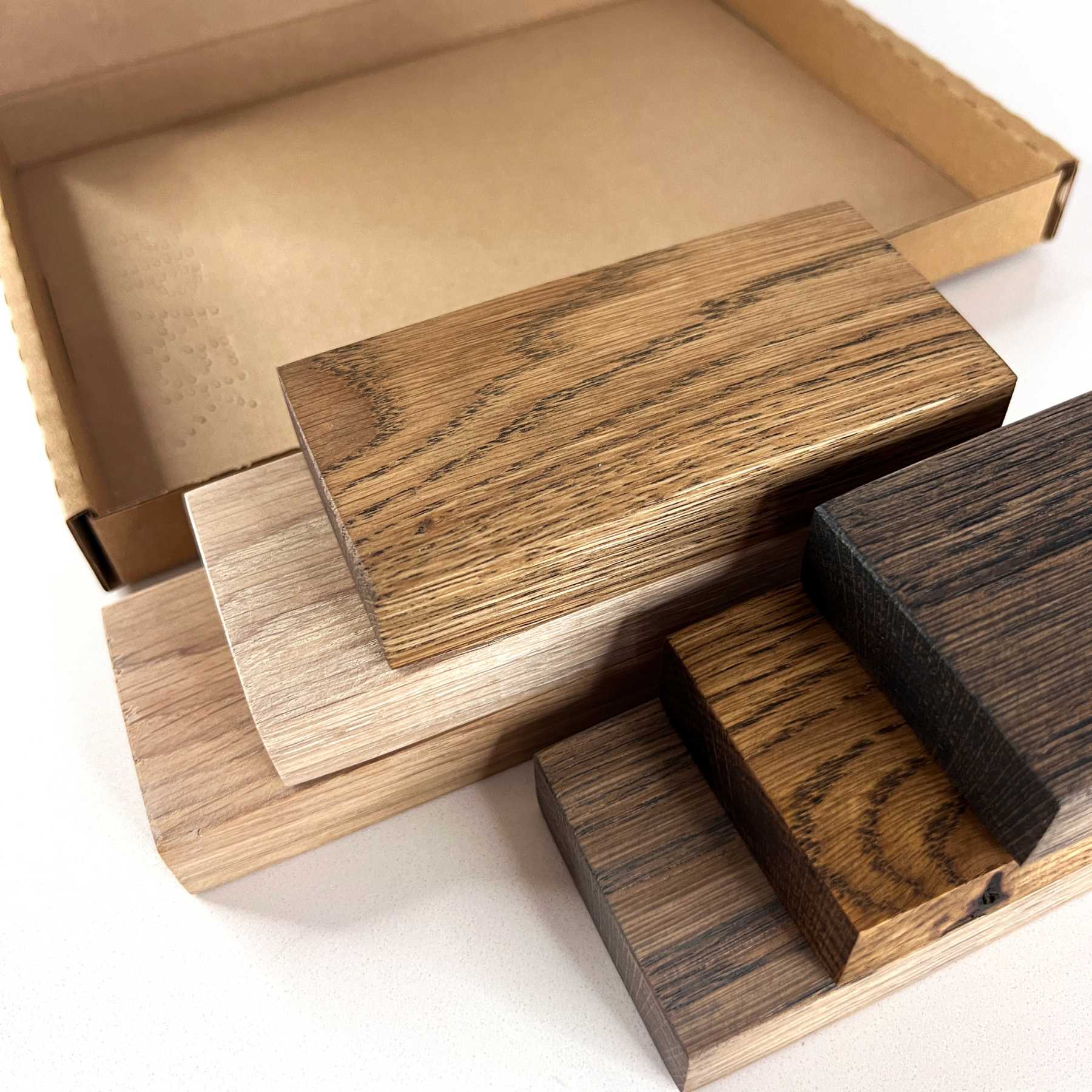
Ask to see timber and finish samples before making final decisions. Oak can appear quite different depending on the light in your home. North-facing rooms often benefit from a warmer finish, while bright south-facing spaces can carry a lighter, more natural tone. Samples allow you to see the colour beside your flooring, paintwork and existing furniture rather than relying on a screen.
Select a Finish That Suits Family Life
The finish protects the oak, but it also determines much of its appearance and ongoing care. A natural oil finish keeps the timber feeling close to the surface, enhancing the grain without creating a heavy coating. It is a lovely choice for homes that want an authentic, tactile look. Oiled oak can usually be refreshed locally if it becomes marked over time, although it benefits from simple, regular care.
Lacquered finishes provide a more sealed layer of protection and can be helpful for particularly busy households. They are often easier to wipe clean, though deep damage may require more specialist attention than an oiled surface. Neither option is automatically better. The right choice depends on whether you value easy local repair, a particular appearance or the reassurance of a tougher surface coating.
Whatever finish you choose, use placemats for hot dishes, wipe spills promptly and avoid harsh chemical sprays. Oak is made to be used, not preserved behind a rope, but sensible care will keep it looking its best. Gentle marks accumulated over a long family life can become part of the table's story. Water rings and heat damage, on the other hand, are easier to prevent than remove.
Make the Design Feel Part of Your Home
An oak dining table is often the largest visual piece in the room, so its details deserve attention. The edge profile can alter the whole character. A straight edge feels crisp and modern; a softly rounded edge is more relaxed and family-friendly; a live edge celebrates the irregular outline of the tree and brings a more rustic presence.
Pairing the top with the right base is equally important. Oak legs create a cohesive, traditional look with enduring appeal. Dark metal bases bring definition and contrast, particularly against pale walls or stone floors. For homes that sit between country and contemporary, this blend of natural oak and industrial metal can feel settled rather than overly styled.
Do not forget the chairs. A table should leave enough visual and physical breathing room for them. Upholstered chairs can add softness to an oak-and-metal design, while wooden benches create flexible seating and a relaxed, communal feel. Benches are especially useful when children are likely to squeeze in for supper, though chairs tend to offer more back support for long, leisurely meals.
Why Made-to-Order Matters
Standard dimensions are convenient, but they rarely account for the particular shape of your room, the position of a bay window or the gap needed beside a kitchen island. A made-to-order table gives you the chance to adjust length, width, height, timber character, finish and base placement so the finished piece belongs in its setting.
That flexibility also brings responsibility: good choices come from accurate measurements and open conversations about how you use the room. It is worth checking access too. Measure doorways, stairwells and tight turns before ordering a substantial solid oak top. A table built to last should arrive with a clear plan for getting it safely into place.
At Willen Rose, each table is lovingly made in Derbyshire with these practical details in mind. The aim is not to force your home around a standard product, but to create a lasting centrepiece that suits the way your household lives.
Give the Table Time to Earn Its Place
The most satisfying oak tables do not remain pristine in the way a display piece does. They become familiar. The grain catches late afternoon light, the surface hosts everyday meals and the chairs are pulled close for conversations that run longer than planned. With thoughtful proportions, honest materials and a finish suited to your household, your table can be ready for all of it - from the ordinary evenings to the occasions you will remember most.