



Oak Versus Walnut: Which Wood Suits Your Home?
A dining table is rarely just a surface for plates. It is where children do homework, friends stay for one more drink and family stories gather over years. When choosing oak versus walnut, the question is not simply which timber looks best in a sample. It is which wood will feel right in your room, work with the way you live and become part of the home you are building.
Both are exceptional hardwoods with a deserved place in well-made furniture. Yet they bring very different character. Oak is bright, reassuring and wonderfully adaptable; walnut is darker, richer and naturally more dramatic. The right choice depends on the light in your home, the look you love and whether you want your furniture to quietly settle into the room or make a confident statement.
Oak versus walnut: the character of each timber
Oak has been used in British homes for centuries, and for good reason. Its grain is distinctive without being fussy, often showing warm golden tones, pale honey shades and occasional darker figuring. Every board is individual, but oak has an honest, familiar quality that makes a room feel settled. It suits farmhouse kitchens, country homes, period properties and clean contemporary spaces equally well.
The grain is generally more pronounced than walnut, particularly in rustic or character-grade oak. Knots, medullary rays and small natural markings give a solid oak table a sense of movement and life. For many households, those details are part of the appeal: proof that the piece has been made from real timber rather than a printed imitation.
Walnut has a more luxurious, composed presence. Its colour ranges from pale brown through warm chocolate to deep purplish-brown, sometimes within the same board. The grain tends to be finer and more flowing than oak, with beautiful ripples, curls and irregular figuring that reward a closer look. A walnut dining table can feel almost sculptural, especially when paired with slim edges or a simple, contemporary base.
Where oak often brings a room warmth and familiarity, walnut brings depth and contrast. It works beautifully against pale walls, soft neutrals, brass details and upholstered seating. In a bright, larger room, its darker tone can create a welcome focal point. In a small or poorly lit dining room, however, a large walnut piece may feel heavier than oak.
Colour, light and the room around it
Timber changes as it lives in your home. This is one of the pleasures of solid wood furniture, not a flaw to be hidden. Oak commonly deepens and warms over time, moving towards a richer golden tone as it is exposed to daylight. A clear natural finish allows that gradual maturity to show through.
Walnut behaves differently. Fresh walnut can have striking variation, including lighter sapwood near the edge of a board and darker heartwood through the centre. Over time, sunlight may mellow the contrast and gently lighten some of the deeper tones. This gives walnut a softer, more even appearance with age, although a well-made piece will always retain its richness.
Think about your existing flooring before making a decision. Oak furniture on an oak floor can look wonderfully cohesive, but it needs enough contrast in tone or finish to avoid appearing too matched. A lighter tabletop against a medium oak floor, for example, creates a more layered result. Walnut can bring contrast to pale engineered boards, stone floors and neutral carpets, but may feel overly dark beside very dark flooring.
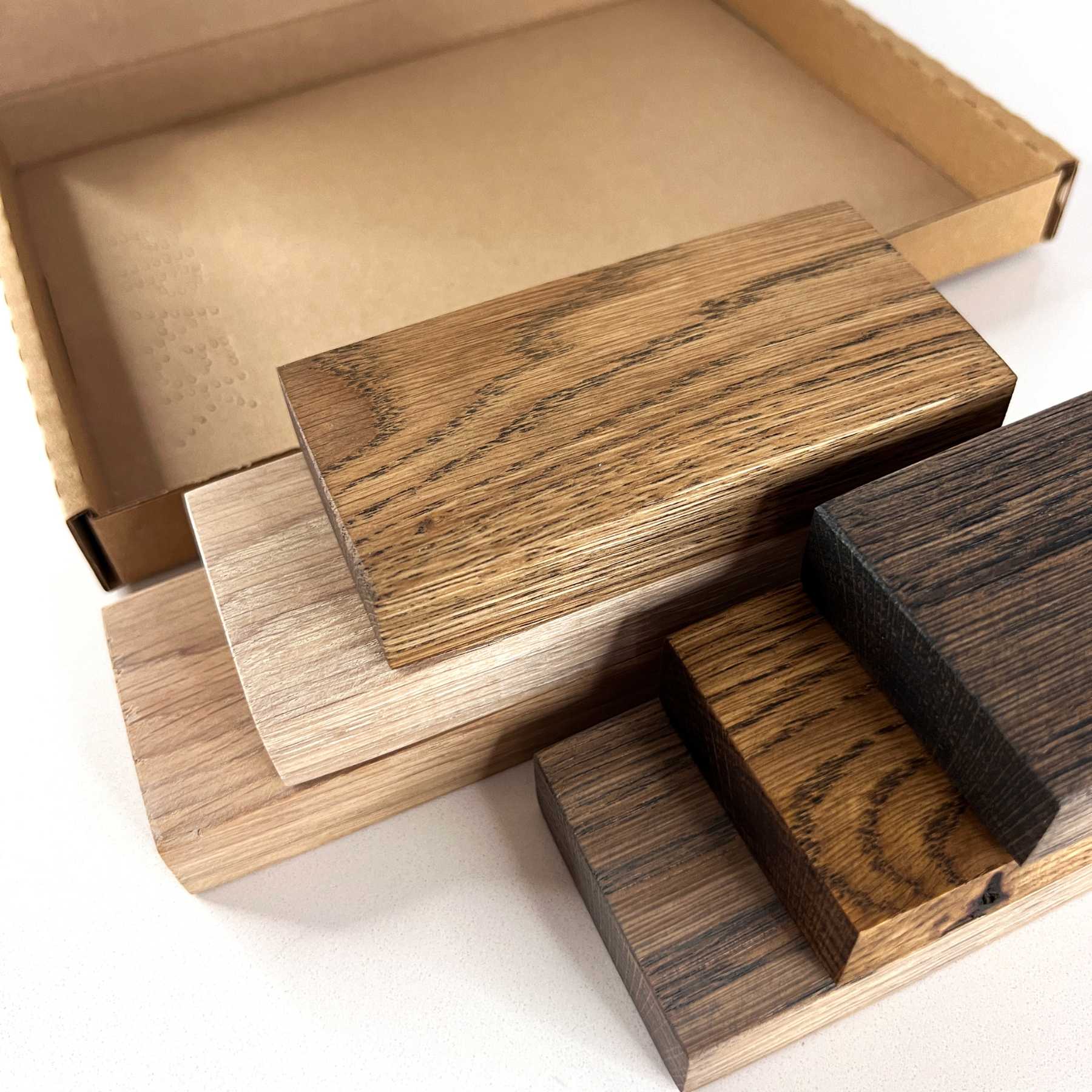
Samples are invaluable here. A timber sample viewed under showroom lights tells only part of the story. Place it in the intended room, look at it in morning light, evening light and on a grey Derbyshire afternoon. Hold it near your floor, kitchen units and fabric choices. The timber that feels right at home is usually the one you will be happiest living with.
Strength for everyday family life
Both oak and walnut are hardwoods suitable for furniture made to serve a household for decades. Neither should be confused with a thin veneer or a lightweight board product. When a table is properly constructed from solid timber, with careful joinery and an appropriate finish, it can take the rhythm of real life remarkably well.
Oak is generally the more forgiving choice for busy family use. It is hard, dense and naturally resilient, which is why it has long been trusted for dining tables, beams, floors and hardworking furniture. It will still mark if dragged, dent if struck hard enough or stain if spills are left unattended, but its lively grain often disguises minor knocks well. A small mark tends to read as part of the table's story rather than an obvious blemish.
Walnut is also durable, but it is usually a little softer than oak. Its smoother, darker surface can make pale scratches or dents more noticeable, depending on the finish and the direction of the light. This does not make it unsuitable for family homes. It simply asks for a little more care. Felt pads beneath accessories, mats for hot dishes and a quick wipe after spills will help preserve either timber beautifully.
The construction matters as much as the species. Wide solid boards need room to respond to seasonal changes in humidity. A well-crafted table is built with this natural movement in mind, rather than forcing timber into a rigid position where it may split or distort. At Willen Rose, that understanding of the material sits at the heart of furniture lovingly made in Derbyshire.
Style: rustic texture or refined drama?
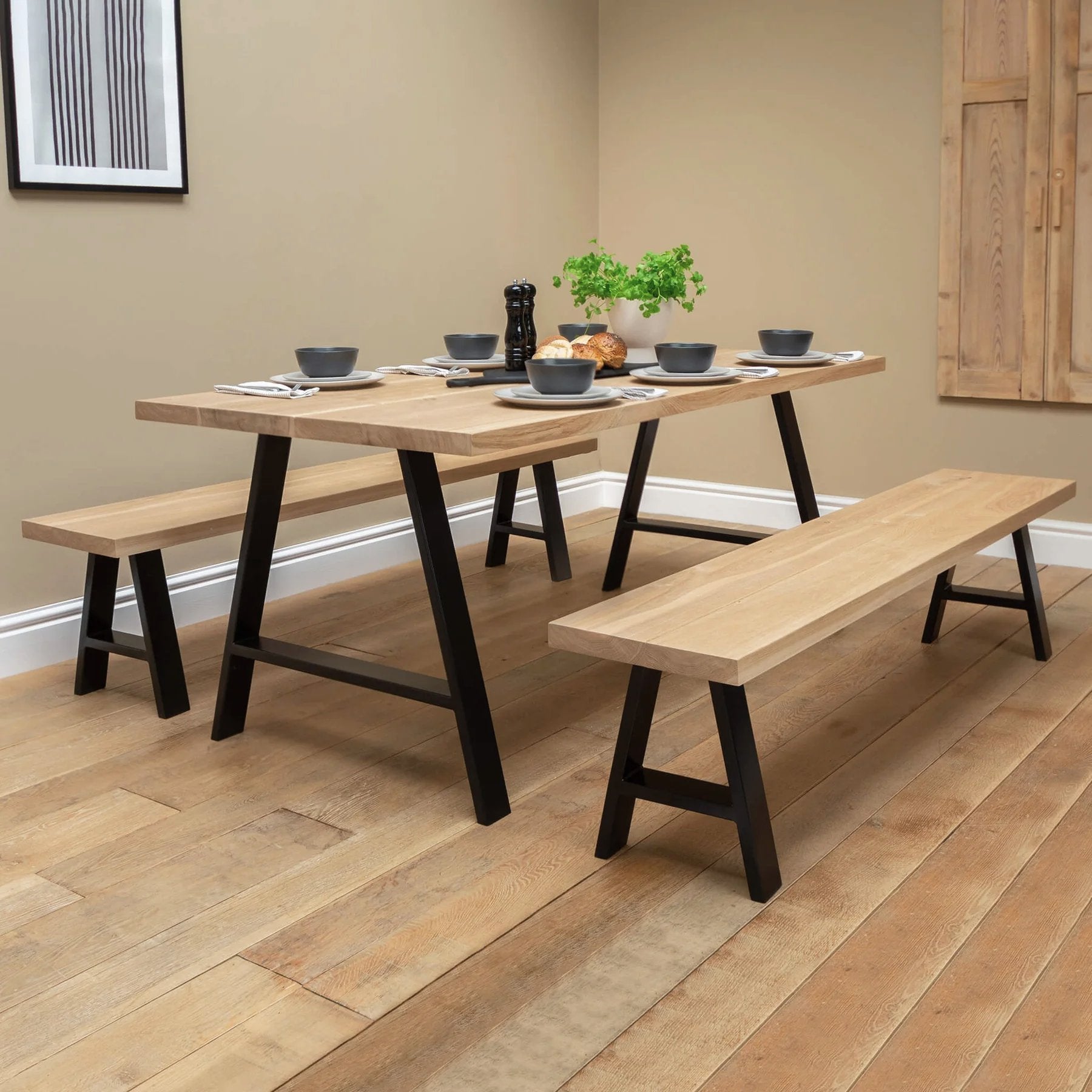
Oak offers more flexibility if your style may evolve. A substantial oak table with a simple silhouette can sit beneath a traditional pendant light today and look just as at home with modern chairs later on. It pairs naturally with black metal bases for an industrial feel, painted cabinetry for a softer country look, or linen and leather for relaxed warmth.
Walnut is often chosen for a more deliberate interior scheme. It looks particularly handsome with mid-century-inspired forms, refined modern joinery and darker accents. A walnut tabletop above a black metal frame can be striking, but because both materials carry visual weight, the surrounding room benefits from breathing space. Pale upholstery, lighter walls and uncluttered styling allow the timber to do its work.
There is also a useful middle ground. A lighter oak top can be paired with dark metal legs for definition, while walnut can be balanced by a lighter base or upholstered dining chairs. The wood does not need to dictate every other choice in the room. It should give you a starting point for a home that feels personal rather than overly coordinated.
Cost, availability and long-term value
Walnut is usually more expensive than oak. It is less widely available in furniture-sized boards, and its beautiful colour and figuring make it a sought-after timber. The additional cost can be worthwhile when walnut is the material that truly suits your space, particularly for a statement dining table, desk or occasional piece.
Oak is often the more practical route to a large bespoke table. It offers excellent strength, generous character and long-term value, especially when you need a family-sized surface or made-to-measure dimensions. Choosing oak does not mean compromising on quality or presence. A thoughtfully selected oak top has enough natural variation to feel entirely individual.
It is worth considering where you want to spend your budget. A large dining table is a daily-use piece and a natural place to invest in solid timber and dependable construction. If your preference is walnut but the room needs a very large table, you might choose a simpler base, a straightforward edge profile or a smaller walnut statement piece elsewhere in the home. Bespoke furniture allows those choices to be made around your priorities, not a standard catalogue size.
Caring for oak and walnut furniture
The best care routine is uncomplicated. Dust with a soft, dry or lightly damp cloth, wipe spills promptly and avoid harsh household sprays. Strong chemicals, abrasive pads and excessive water can damage the protective finish and dull the timber over time.
Use placemats or trivets for very hot dishes, particularly on a dining table, and do not leave wet glasses directly on the surface for long periods. Keep solid wood furniture away from persistent direct heat, such as a radiator, and try to maintain a reasonably steady indoor environment through the year. Timber is a natural material, so a little seasonal movement is normal.
For an oiled finish, occasional re-oiling may be recommended to nourish and refresh the surface. A lacquered finish generally needs less ongoing treatment but still benefits from gentle cleaning. The right approach depends on the finish used, so always follow the care guidance supplied with your furniture rather than applying a one-size-fits-all product.
Which should you choose?
Choose oak if you want a lighter, versatile timber with visible grain, everyday resilience and a welcoming sense of permanence. It is especially well suited to generous dining tables, family kitchens and homes where furniture needs to cope gracefully with daily use.
Choose walnut if you are drawn to deep colour, refined grain and a more dramatic focal point. It can turn a simple room into something memorable, particularly when the space has enough natural light to show its layers of tone.
The finest choice is not the one that wins on a specification sheet. It is the timber you can picture gathering around for years to come, becoming more familiar with every meal, celebration and ordinary weekday evening.