



Solid Oak Dining Table Guide for Real Homes
A dining table earns its keep. It hosts rushed breakfasts, homework, Sunday roasts, birthday candles and the kind of late-evening conversations that outlast the washing up. That is why a solid oak dining table guide should start with one simple point: this is not just about filling a space. It is about choosing a piece that will live at the centre of family life for years.
Solid oak has long been valued for good reason. It is strong, characterful and naturally beautiful, with grain patterns and warm tones that bring depth to a room without trying too hard. When a table is properly made from solid timber, rather than oak veneer over cheaper board, you can feel the difference straight away. It has weight, honesty and a sense of permanence that flat-pack furniture rarely manages.
What makes a solid oak dining table worth buying?
Oak suits dining furniture because it balances practicality with presence. It is hard-wearing enough for daily use, yet refined enough to anchor a carefully designed room. Small knocks, changing light and everyday wear tend to add to its story rather than spoil it, provided the table has been finished and cared for properly.
That said, not every oak table is equal. The phrase solid oak is sometimes used loosely, so it helps to ask what is actually solid timber and what may be veneered, laminated or engineered. A true solid oak top and base will usually show natural variation in the grain, some movement in the timber over time, and proper joinery that allows the wood to breathe and respond to the seasons.
This is one of the main trade-offs to understand. Solid wood is alive in a way manufactured boards are not. It can expand and contract slightly with heat and moisture in the home. That is normal, and a sign of genuine material rather than a flaw. Good furniture makers build with that in mind.
Solid oak dining table guide: start with the right size
The most beautiful table in the workshop will disappoint if it is the wrong size for the room. Start with the space, not the styling. Measure the room carefully and think about how you actually move through it on an ordinary day, not just how it looks when empty.
As a rule, you want enough room to pull chairs out comfortably and walk around the table without squeezing sideways. In many homes, leaving around 90cm between the table edge and the nearest wall or piece of furniture works well. If your room is compact, you may manage with a little less in places, but anything too tight will soon feel awkward.
Then consider seating. A table for six can vary quite a bit in width and length depending on the chair style and the shape of the base. A chunky oak pedestal or bold X-frame can give a striking look, but it may reduce leg room compared with a simple four-leg design. This is where bespoke sizing often makes the difference between a table that merely fits and one that feels made for the room.
Round tables suit square rooms and help conversation flow, while rectangular tables remain the most practical choice for larger families and longer spaces. If you enjoy hosting but do not need a large footprint every day, an extending design can be sensible, though some buyers still prefer the simplicity and visual strength of a fixed-top table.
Choosing a style that suits your home
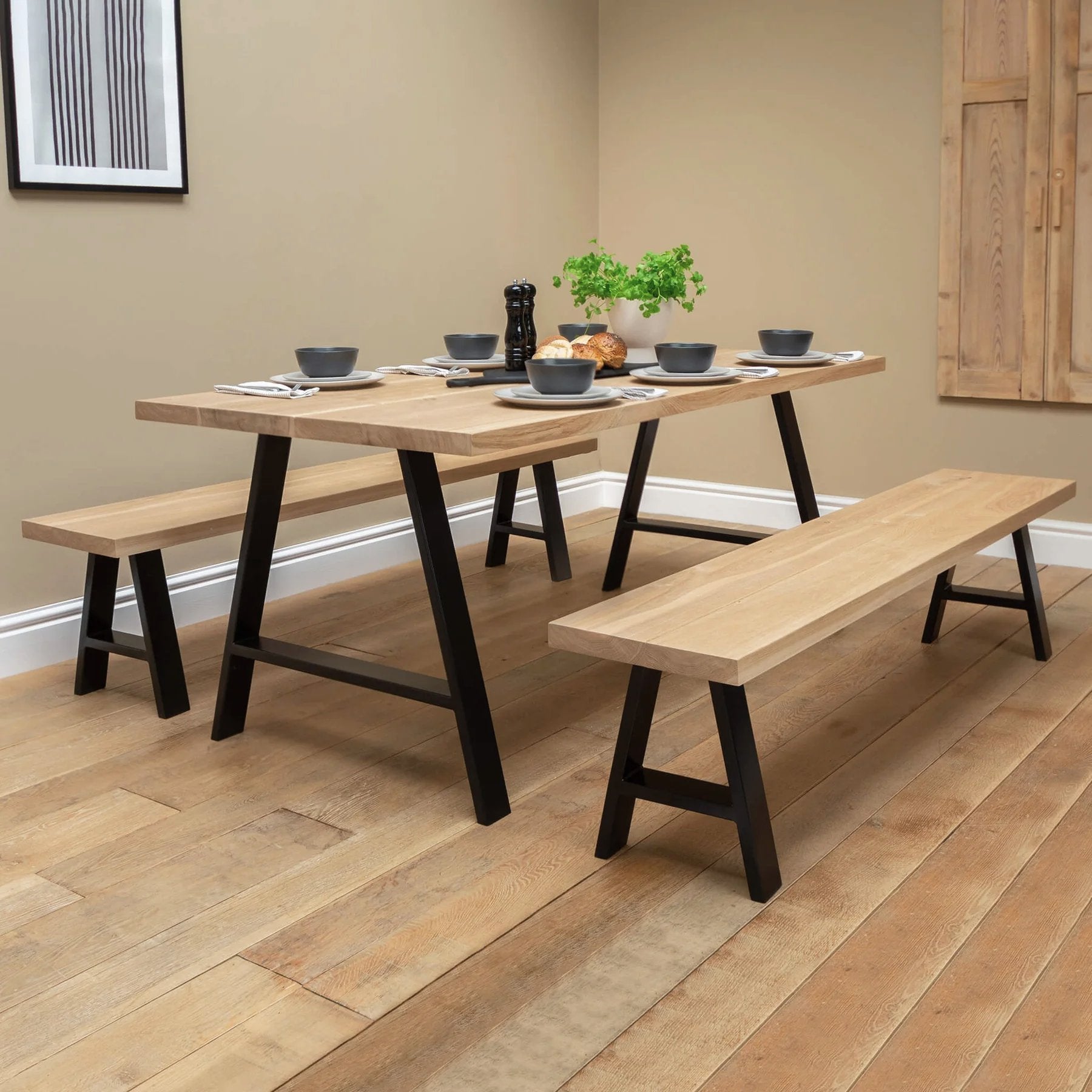
Oak is remarkably versatile. It can look clean and contemporary, rustic and farmhouse, or slightly industrial when paired with steel legs and a more architectural silhouette. The right choice depends on the rest of your home and on how much of a statement you want the table to make.
A rustic oak top with visible knots and natural edges has warmth and texture. It feels relaxed, grounded and welcoming, especially in family kitchens and open-plan spaces where the table is in constant use. A cleaner, straighter grain with a smoother finish gives a more pared-back look that sits well in modern interiors.
Leg design matters more than many people expect. Thick turned legs bring a traditional feel. Metal frames create contrast and lend an industrial edge. Tapered wooden legs can keep the whole piece looking lighter, which is useful in smaller rooms where a heavy design may feel dominant.
It is worth being honest with yourself here. If you love the idea of a dramatic, chunky table but your room is narrow and your chairs are used daily by children, a slightly simpler design may serve you better. Good furniture should still work hard when the styling moment has passed.
The finish matters as much as the timber
Any solid oak dining table guide should spend time on finishes, because the finish is what stands between everyday life and the timber itself. It affects colour, texture, maintenance and how forgiving the surface will be.
Oiled oak tends to preserve a natural look and lets the grain speak for itself. It can usually be refreshed more easily over time, which appeals to households who like furniture to age gracefully. Lacquered finishes often offer stronger initial protection against spills and marks, though they can look slightly less natural depending on the product used.
There is no universal right answer. If your table will host young children, frequent meals and plenty of mugs left where coasters should have been, a durable protective finish can be a wise choice. If you value a softer, more organic appearance and do not mind occasional upkeep, oil may feel more in keeping with the character of solid oak.
Always ask how the finish will behave in daily use. Water rings, heat marks and stains are easier to prevent than remove. A trustworthy maker will explain the reality rather than promise a completely maintenance-free surface, because no real wood table is entirely without care.
Look beyond the top
Many buyers focus on the tabletop and forget the construction underneath. Yet the unseen details often tell you the most about quality. Well-made oak furniture should have thoughtful joinery, a sturdy underframe and proportions that feel balanced when you sit at it, lean on it and use it properly.
Ask how the top is fixed to the base. Because solid oak moves naturally, it should not simply be rigidly screwed down in a way that fights the timber. Ask about thickness too, but do not be distracted by thickness alone. An overly thick top can look impressive in photographs and still be poorly built elsewhere.
Craftsmanship shows in the small decisions: eased edges that feel pleasant under the hand, joints that sit neatly, and bases that do not wobble after a few months of use. In a family-run workshop, those details tend to matter because the piece carries the maker's reputation with it.
Why bespoke can be the better long-term choice
Standard sizes suit some homes, but plenty of British houses have awkward alcoves, open-plan kitchen diners or period rooms where off-the-shelf furniture always feels slightly wrong. This is where made-to-order oak tables come into their own.
A bespoke table lets you adjust length, width, height, finish and leg style to suit your room and your way of living. That might mean making a table slightly narrower so the space still feels generous, or choosing a bench on one side to keep circulation easier. It might mean matching the tone of existing oak furniture rather than introducing a finish that clashes.
For many households, this is not about extravagance. It is about avoiding compromise on a piece you expect to use every day for a long time. At Willen Rose, that is often where the value lies - not in chasing trends, but in making something that feels settled in your home from the start.
A few practical checks before you buy
Before making a final decision, take another look at access. Measure doorways, hallways, stair turns and any tight entrance points. A large solid oak table has real weight to it, and delivery is much easier when those details are planned early.
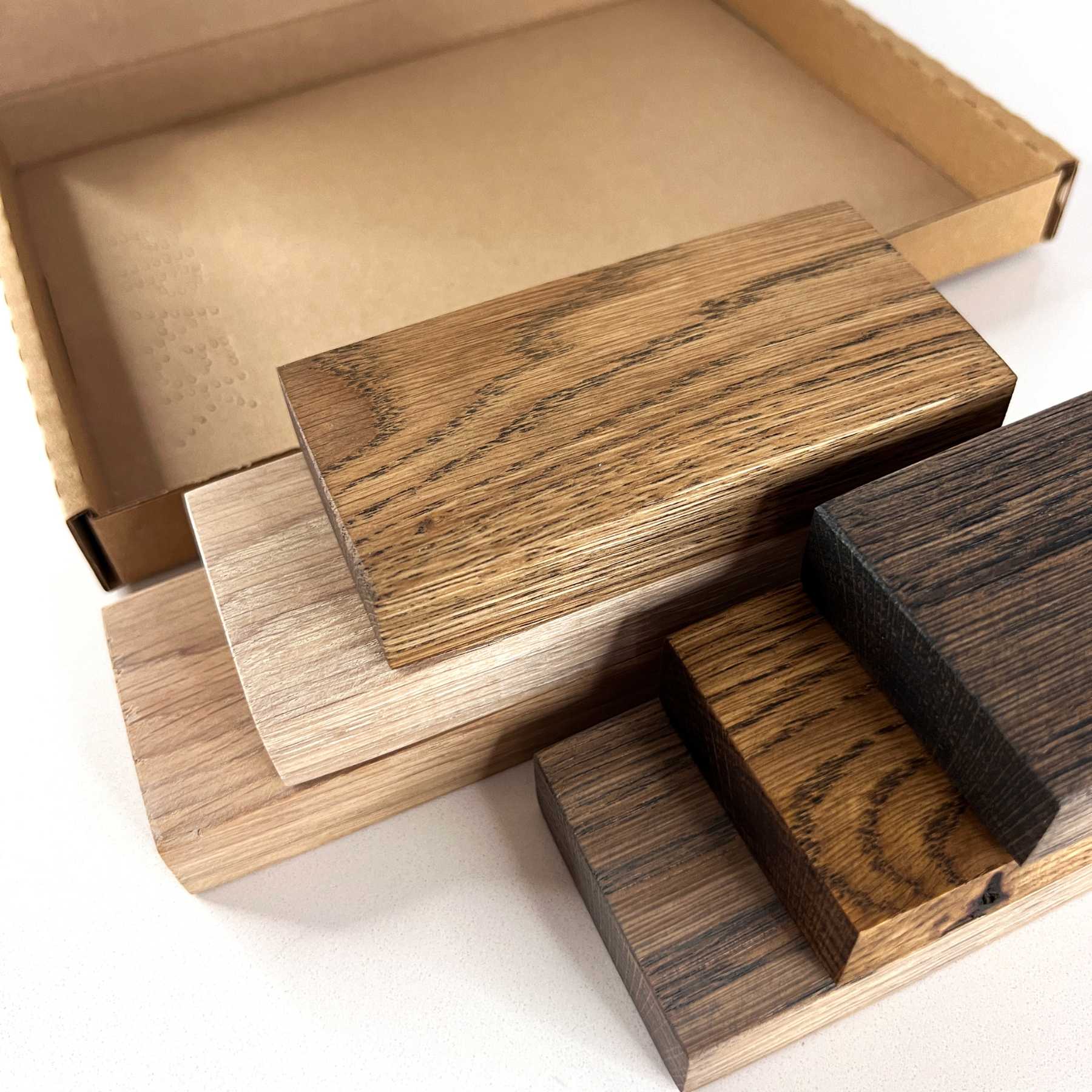
It is also worth ordering timber samples if they are available. Oak changes with light, and the tone that looks perfect on a screen can read differently in your own kitchen or dining room. Seeing the wood and finish at home is often what gives buyers real confidence.
Finally, think beyond this year. Will the table still work if children grow, if you move chairs around more often, or if the dining room becomes a more flexible family space? The best choice is usually the one that leaves a bit of room for life to shift.
A solid oak dining table is one of the few pieces of furniture that can genuinely become part of a family's story. Choose it with care, trust good materials and honest craftsmanship, and it will return the favour every day.