



Farmhouse Dining Table UK Buying Guide for Homes
The best meals rarely happen around a perfectly dressed table. They happen with homework spread beside supper, extra chairs pulled close for Sunday lunch, and a surface that has earned its marks over time. A farmhouse dining table UK homeowners can rely on should feel just as natural during a busy weekday as it does when the house is full.
That is the lasting appeal of the farmhouse look. It is generous, grounded and made for living. Yet choosing the right table is about more than picking a rustic finish. The timber, dimensions, base design and finish all affect how a table works in your home for years to come.
What makes a farmhouse dining table feel right?
A proper farmhouse table has presence without feeling precious. Traditionally, it is built around a substantial solid wood top, visible grain and straightforward, honest construction. It may have turned legs, a trestle base or a simple framed undercarriage, but its character comes from the material rather than decoration.
Oak is a natural choice for this style. Its close grain, strength and warm colour suit both old cottages and newer homes that need a little texture and permanence. Reclaimed timber offers a more weathered character, with knots, tonal variation and the occasional sign of its former life. Neither is automatically better. New oak tends to give a cleaner, more consistent finish, while reclaimed wood brings deeper individuality and a more relaxed rustic feel.
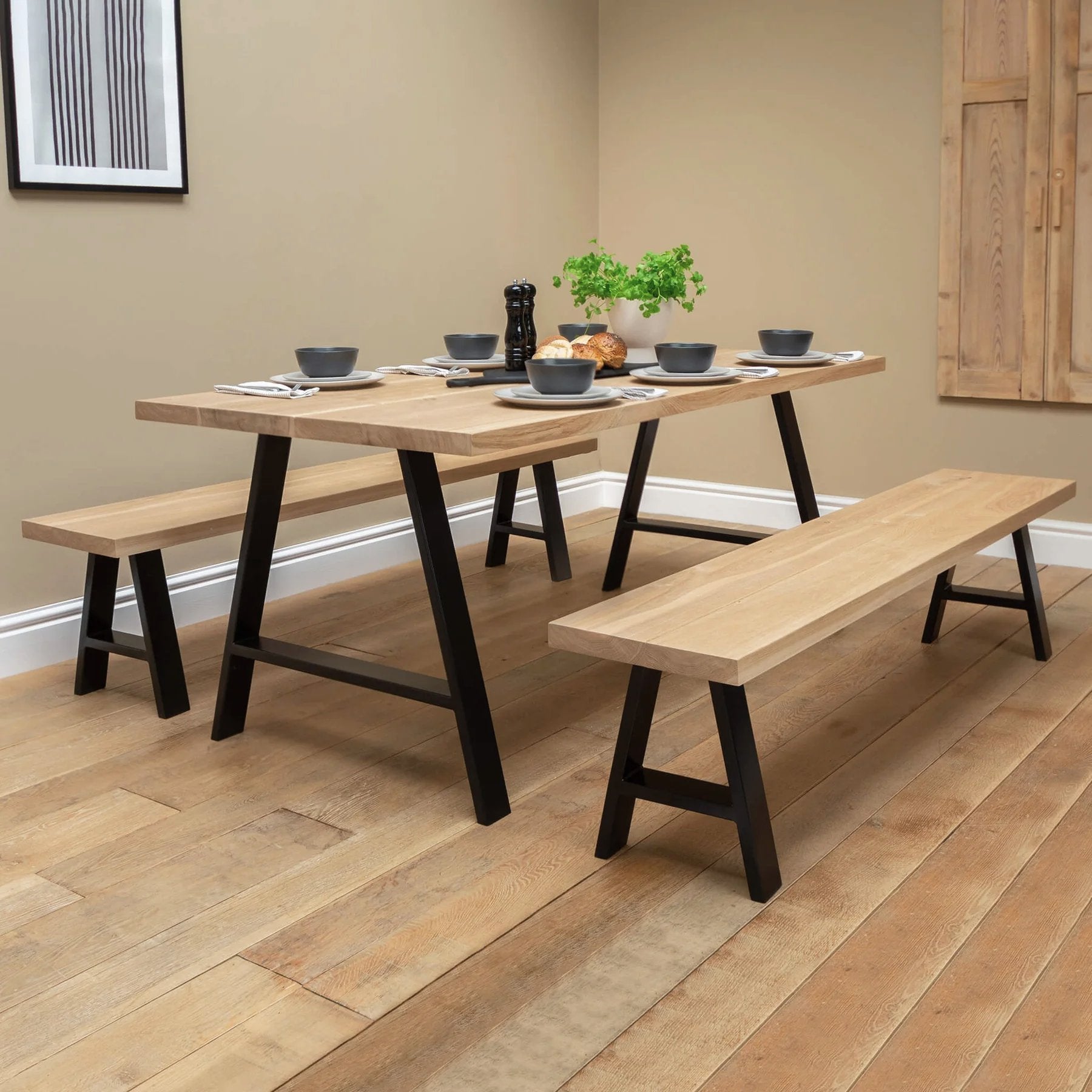
The most successful farmhouse interiors also leave room for contrast. An oak table can sit beautifully with painted shaker cabinetry, linen curtains and soft upholstered chairs. Equally, a timber top paired with black metal legs can bring farmhouse warmth into a more industrial or contemporary dining space.
Choosing the right farmhouse dining table UK size
A table can look generous in a showroom or photograph and still feel awkward once it is in your dining room. Start with the room, not the number of people you hope to seat once a year. Measure the available floor space, including door swings, radiators, sideboards and the route people take through the room.
As a useful guide, allow around 90cm between the edge of the table and a wall or other furniture. If people regularly need to pass behind dining chairs, 100-110cm will make the room much easier to use. It is this breathing space, rather than the table alone, that stops a dining area feeling cramped.
For seating, allow roughly 60cm of table length per person. A 160cm table usually seats six comfortably, while 180cm to 200cm gives six people more elbow room or accommodates eight for relaxed gatherings. A 240cm table makes a wonderful centrepiece in a large room, but only if chairs can be moved freely and the proportions still feel balanced.
Width matters too. A table around 90cm wide is often a practical sweet spot: broad enough for serving dishes and candles down the middle, yet narrow enough for easy conversation. If your family likes shared platters, board games or a full festive spread, 100cm or more may be worth considering.
Think about everyday seating first
Many people buy for the largest possible occasion, then find they are living with a table that overwhelms the room for the rest of the year. If your household is usually four, a beautifully made six-seater with room to expand for visitors is often the more comfortable choice.
Benches can be especially useful where flexibility is needed. They tuck neatly beneath the table, soften the formality of a dining room and make it easier to fit children in at the end of a meal. However, they are not everyone’s favourite for long dinners, particularly for older guests who may prefer a supportive dining chair with a back. A combination of chairs and a bench often gives the best of both worlds.
Select a base that suits the room and seating
The table base changes more than the look. It determines where chairs can go, how many people can sit along the sides and whether knees are likely to meet a table leg.
Four-legged farmhouse tables have a familiar, traditional profile and work well with individual chairs. The trade-off is that legs at the corners can limit end seating, especially on smaller tables. A trestle base creates a strong country feel and leaves the corners open, making it excellent for benches and larger gatherings. It does, however, need a well-proportioned room so its substantial form does not feel too heavy.
A central pedestal base keeps the floor area around the table clearer, although it is more commonly seen on round tables. For a farmhouse-industrial approach, a solid oak top with a steel frame or X-shaped legs gives a pleasing mix of warmth and structure. This can be a particularly good answer in open-plan homes, where a very traditional table might otherwise feel out of step with modern kitchen finishes.
Solid wood is worth understanding
A dining table is one of the hardest-working pieces of furniture in a home. It meets hot plates, dropped cutlery, sticky fingers, school projects and the occasional enthusiastic guest leaning back in their chair. That makes the construction behind the appearance especially important.
Solid wood has weight, repairability and a depth that veneers and printed finishes cannot replicate. It can be sanded and refinished when needed, and small knocks tend to become part of its story rather than a reason to replace it. Natural timber also moves gently with changes in temperature and humidity. This is normal, which is why thoughtful joinery and an appropriate finish matter.
Look closely at the top thickness, the way the base is fixed, and whether the wood has been selected and prepared with care. A handmade table should feel reassuringly sturdy without being clumsy. The grain should be allowed to show, not hidden under a thick, plastic-looking coating.
At Willen Rose, tables are lovingly made in Derbyshire from solid sustainable timber, allowing the size, finish and details to be considered around the home they are being made for rather than a generic warehouse specification.
Make the finish work for family life
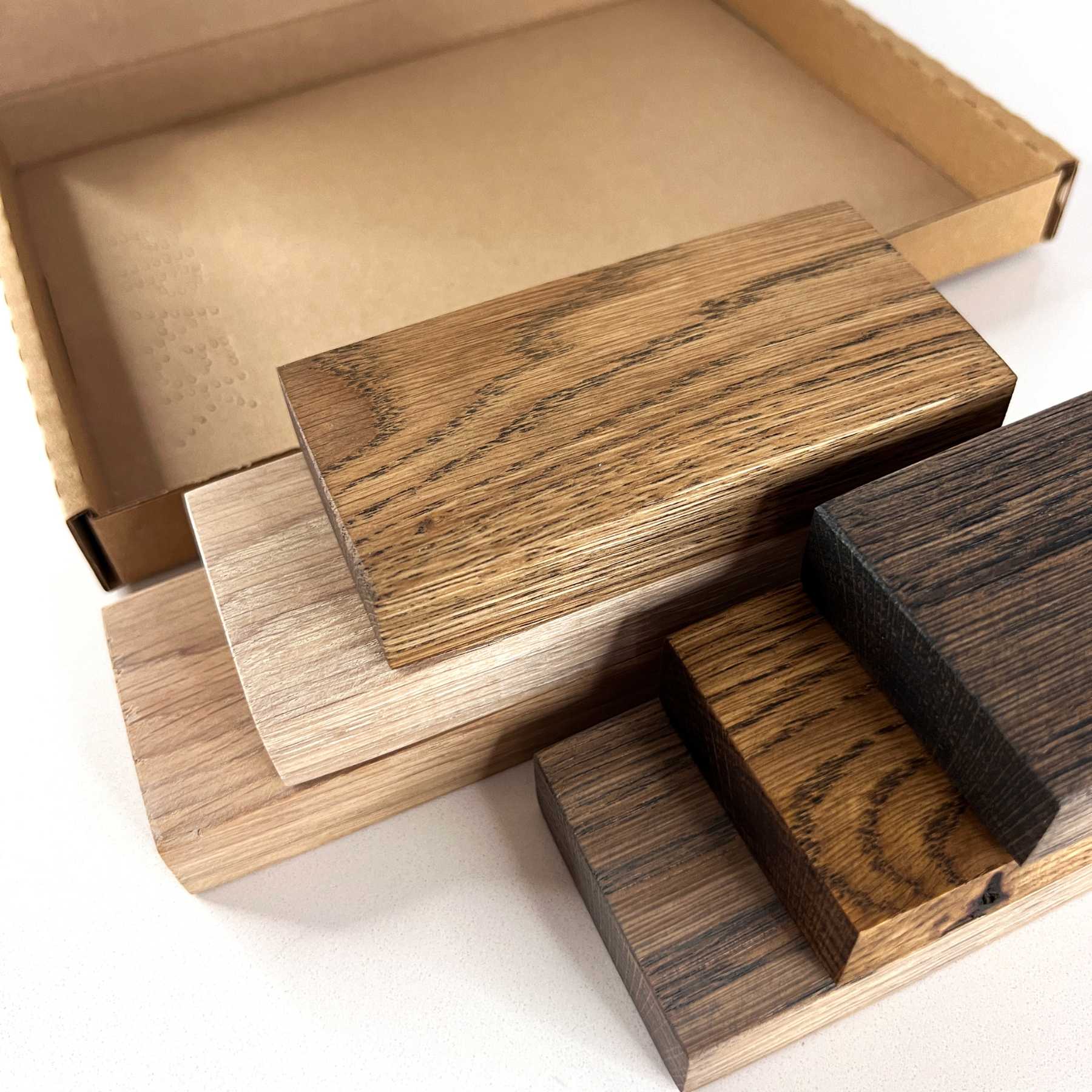
The right finish should protect the wood while still letting it feel like wood. A light natural oak finish keeps a room airy and shows off the grain, while warmer medium tones create a more settled, traditional feel. Darker finishes can be striking against pale walls, but they may show dust and crumbs more readily in a busy kitchen-diner.
For households with young children, an oiled finish is often appealing because it can be refreshed locally if a stain or scratch appears. Lacquered finishes generally offer a stronger initial barrier against spills and need less routine attention, though repairs can be less straightforward. There is no single right answer: it depends on how the table will be used and whether you prefer low-maintenance protection or the ability to renew the surface over time.
Whatever finish you choose, use mats for very hot dishes and wipe spills promptly with a soft, lightly damp cloth. Avoid harsh sprays and silicone polishes, which can leave residue or affect the finish. A solid oak table does not need fussy treatment, but a little regular care helps it mature beautifully.
Bespoke dimensions solve the awkward-room problem
Period homes, bay-window dining areas and open-plan kitchens rarely follow standard furniture measurements. A table that is 10cm narrower, 20cm shorter or built to an exact length can be the difference between a space that merely fits and one that works effortlessly.
Bespoke does not have to mean elaborate. Often, the most useful choices are practical ones: adjusting the width to preserve a walkway, choosing a base that allows a bench to tuck in, matching the tone of existing oak flooring, or selecting a corner detail that suits the rest of the room. Samples are valuable here. Timber has natural variation, and seeing a finish beside your flooring, paint and kitchen units is far more reliable than judging it from a screen.
Before ordering, measure access as carefully as the dining room. Check front doors, stair turns, narrow hallways and any tight corners between the delivery point and the final room. A substantial solid wood table is built to last, but it still needs a clear route into the house.
A farmhouse table becomes more personal with every meal, celebration and ordinary Tuesday evening spent around it. Choose one with the right proportions, honest materials and enough room for the life you want to lead, and it will soon feel as though it has always belonged there.