



How Long Should a Dining Bench Be for Your Table?
How long should a dining bench be? The answer is not simply “as long as the table”. A well-proportioned bench gives everyone room to settle in, tucks away neatly after supper, and makes a solid oak dining table feel generous rather than crowded. Get the length wrong and even a beautiful dining set can become awkward at the busiest moments of family life.
For most homes, the best starting point is a bench that is 20-30cm shorter than the table overall. This leaves a pleasing margin at each end, helps the bench sit comfortably beneath the tabletop, and avoids a heavy, overfilled look. Yet the right measurement also depends on how many people you need to seat, where your table legs sit, and how much space surrounds the dining area.
How Long Should a Dining Bench Be?
Allow 45-60cm of bench length per person. At the tighter end, 45cm can work for children or occasional extra guests. For everyday dining, 55-60cm per person is far more comfortable, especially when people are using full place settings, serving dishes and elbow room in equal measure.
That gives you a useful guide for common bench sizes. A 120cm bench usually seats two adults comfortably. A 150cm bench is generous for two and can take three at a pinch. A 180cm bench is a natural choice for three adults, while a 220cm bench can seat four for relaxed family meals.
These are guides, not fixed rules. If your household gathers around the table every evening, comfort is worth protecting. If the bench is mainly there for Sunday lunch, birthdays and the occasional extra place at Christmas, you may be happy with a little less room per person.
Match the bench to the table, not just the room
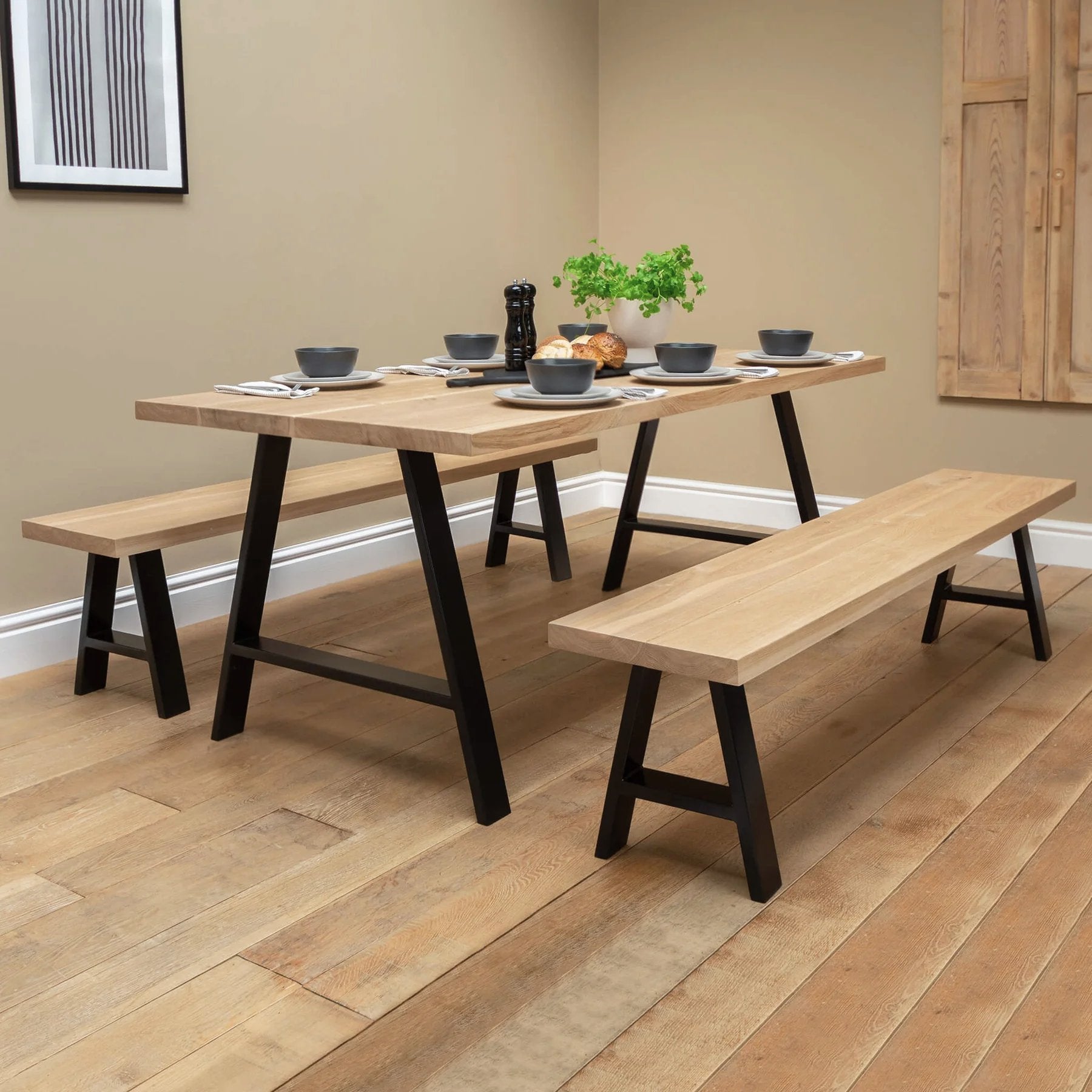
The visual relationship between bench and table matters as much as the seating calculation. As a rule, leave around 10-15cm of tabletop visible at either end of the bench. For example, a 180cm table often pairs beautifully with a 150cm or 160cm bench. A 200cm table can carry a 170cm or 180cm bench with ease.
A bench that runs exactly to the ends of the table can look deliberate on a simple trestle table, particularly in a rustic farmhouse setting. However, it needs careful planning. It can make access at the corners more difficult and may feel too dominant in a narrower room. A slightly shorter bench is usually the more forgiving choice.
The construction of the table is also crucial. On a pedestal or centrally based table, the bench can often be close to the table’s full length because there are no corner legs to contend with. On a four-legged table, check the distance between the legs rather than relying on the overall tabletop length. If the bench needs to tuck fully underneath, it must clear the legs and any lower stretchers comfortably.
Plan for How the Bench Will Be Used
A dining bench has a wonderfully relaxed quality. Children can shuffle along to make room for one more, and it keeps the view through a kitchen-diner open when pushed beneath the table. But that easy-going character comes with a few practical trade-offs.
Unlike individual chairs, a bench is not as easy to move when somebody needs to leave the table. It is best suited to the side used by children, close family members, or guests who are happy to stay seated through a long meal. If your dining table is used for homework, working from home and leisurely suppers, consider placing chairs on the opposite side for people who need more individual support and flexibility.
Think, too, about whether people will sit at the ends of the table. A bench designed for three people along one side does not necessarily turn a six-seat table into an eight-seat table. End seats still need knee room, and table legs, aprons and a deep tabletop can affect comfort. The honest test is to picture the table fully laid: plates, glasses, serving bowls, arms and all.
Leave room behind the bench
The bench itself is only part of the footprint. You need enough space to pull it out and for people to sit down without brushing against a wall, sideboard or radiator.
Aim for at least 90cm of clear space behind a dining bench in a room where people will need to pass. If it sits against a wall and is only used occasionally, you may be able to work with less, but everyday seating becomes less convenient. For a main walkway through an open-plan kitchen or dining room, 110-120cm feels far more comfortable.
Measure from the outer edge of the bench, not from the table. A deep bench, especially one with a thick solid timber top, changes the clearance more than people expect. Mark the outline on the floor with masking tape before committing to a size. Then pull out an existing chair to represent the bench’s access space. It is a simple exercise that can prevent an expensive squeeze later on.
Get the Height and Depth Right Too
Length may be the first question, but a bench only works well when its other proportions are right. Most dining tables are around 75-76cm high. A dining bench seat is generally most comfortable at around 45-47cm high, giving roughly 28-31cm between the seat and the underside of the tabletop.
Allow for the table apron, not just the top surface. A substantial oak apron can reduce leg room considerably. If the bench includes a cushion, factor in its compressed height as well. A cushion may feel wonderfully welcoming, but one that is too thick can leave diners sitting too high.
For depth, 35-40cm suits most dining benches. A narrower bench has a lighter profile and tucks away easily, but it can feel perchy during a long meal. A deeper seat feels more substantial and comfortable, particularly for adults, though it takes up more floor space and may not slide as far beneath the table.
Backless benches remain a favourite for their clean silhouette and practicality in smaller spaces. A bench with a back offers more support, but it behaves more like a fixed dining chair and needs extra room behind it. Neither is inherently better - the right choice depends on whether you value an uncluttered room or longer, more leisurely sitting.
Choosing a Bench Length for Popular Table Sizes
For a 140cm dining table, a 110-120cm bench is usually the sensible limit. It will seat two people without making the table feel compressed. With a 160cm table, a 130-140cm bench works well for two adults or three children.
A 180cm table is one of the most versatile family sizes. Pair it with a 150-160cm bench for three seats, leaving a neat overhang at each end. At 200cm, a 170-180cm bench offers generous seating for three and creates a strong, balanced look beneath a substantial solid wood top.
For tables measuring 220cm and above, a 190-200cm bench can seat three adults comfortably or four more closely. At these longer lengths, consider the weight of the finished piece and how it will be moved into the home. Solid oak is made to last, but it deserves sensible delivery access and careful placement from the outset.
When a Bespoke Bench Makes Sense
Standard dimensions are helpful, but made-to-order furniture earns its place when your room has its own rules. Perhaps a chimney breast interrupts one side of the dining space, a radiator limits how far the bench can project, or your table has an unusual leg position. A bespoke bench lets you work around those details rather than accepting a compromise.
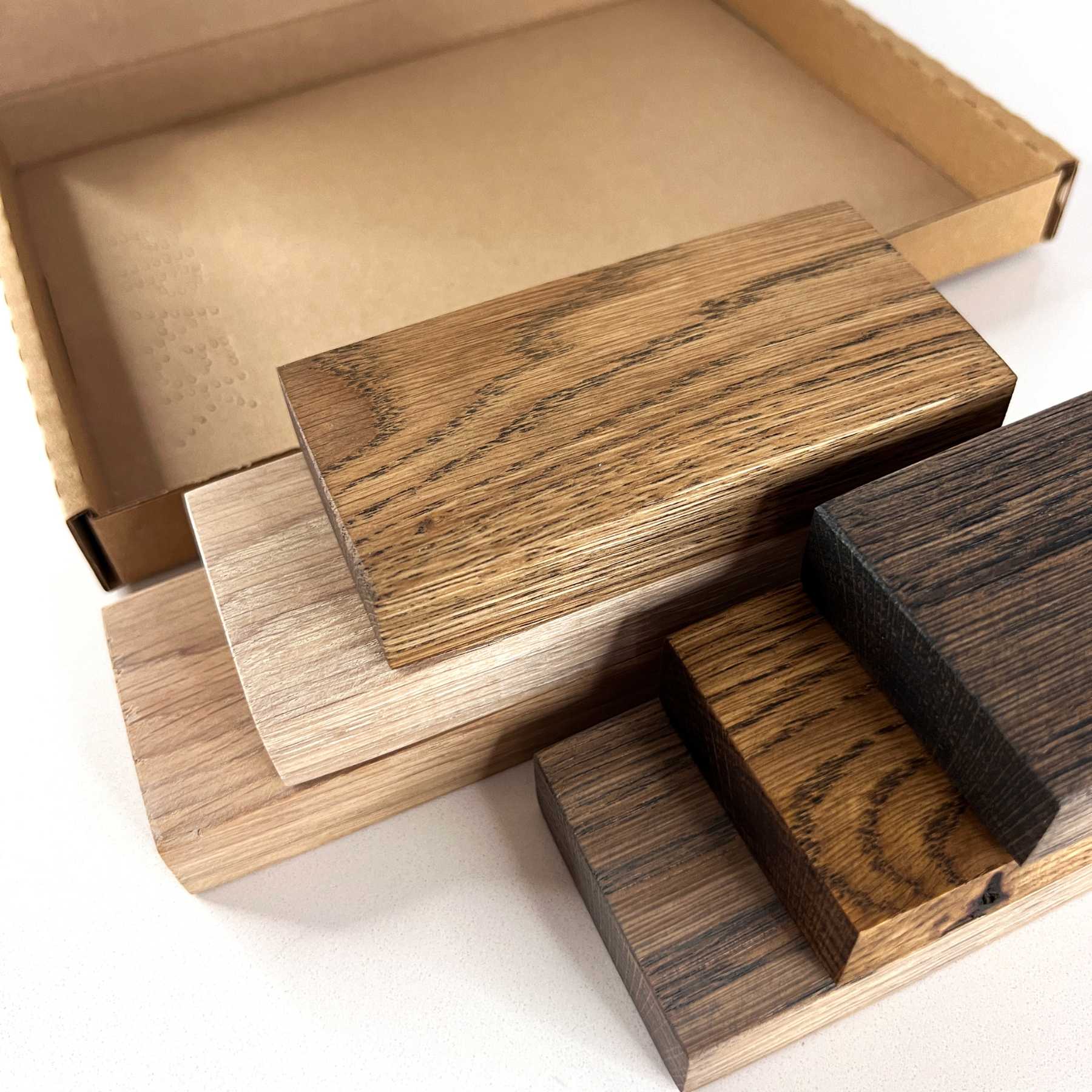
It also gives you control over the character of the piece. A clean-edged oak bench can suit a contemporary extension, while a chunkier reclaimed timber top and industrial metal frame bring warmth and presence to a farmhouse kitchen. Matching the timber tone and finish to the table creates a considered set, but a contrasting bench can look equally at home when the proportions are right.
At Willen Rose, benches are crafted to sit naturally with the table and the life around it, rather than being treated as an afterthought. A conversation about dimensions should include your table measurements, leg positions, room layout, preferred seating numbers and the route into your home. Those practical details are where a piece becomes truly yours.
Before choosing the final length, sit at your table with a tape measure or a row of dining chairs and give each person their proper space. The best bench is not the one that claims the most seats on paper. It is the one that welcomes people in, leaves room for a shared meal, and still tucks quietly into the heart of the home when the plates are cleared.